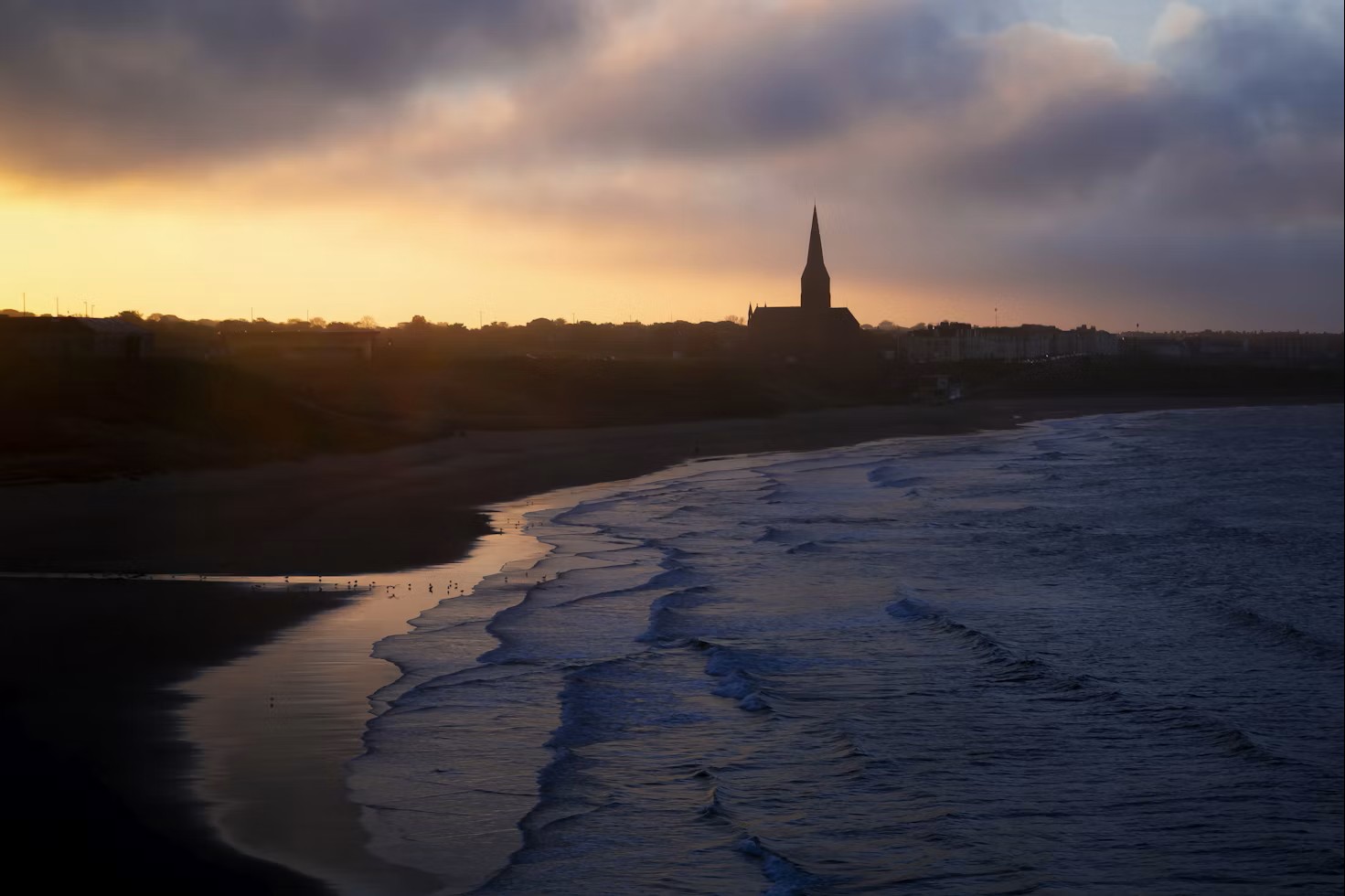
 Photo credit: Matt Clark
Up to 25 tonnes of plastic pellets have entered the River Tyne after the Wind Orca collided with the berthed container ship BG Orange at the Port of Tyne on Sunday 19 July. The environmental charity Fidra estimates the release at approximately one billion nurdles. According to the Port of Tyne, the Wind Orca was leaving dock at about 1300 BST when it struck the BG Orange, and a gantry crane on the quayside sustained significant damage. One person was taken to hospital. South Tyneside Council has warned residents to avoid handling the pellets and to keep dogs on leads, after nurdles washed up on sections of Littlehaven beach in South Shields, less than three miles from Marsden Bay, home to one of England’s most important seabird colonies.
Small pellets, wide reach
Nurdles are the lentil-sized plastic pellets used as feedstock for almost all plastic manufacturing. Because they float and are easily moved by tides and wind, spills of this kind typically spread far beyond the immediate impact site and are near-impossible to fully recover. Fidra has documented nurdles in the stomachs of species ranging from North Sea seabirds to green turtles off the Brazilian coast. Its most recent UK-wide survey found nurdles at 84% of the Sites of Special Scientific Interest sampled, meaning the Tyne spill enters an environment already carrying a substantial baseline of pellet pollution. The Guardian reported that Heather McFarlane, senior project manager at Fidra, said most pellet pollution can be prevented with simple measures such as better packaging and safer stowage, and called for stronger UK regulation and mandatory measures at sea.
Comparisons and lessons
The Tyne incident follows another significant nurdle release last year. In March 2025, the Portuguese-flagged Solong collided with the US-flagged tanker Stena Immaculate off the East Yorkshire coast, releasing burnt and unburnt pellets that were subsequently washed ashore across Norfolk and Lincolnshire and around the Wash. Fidra’s one-year review of that spill, published in March, questioned whether the lessons had been learned and whether the UK’s response, prevention and clean-up arrangements were fit for purpose. Nurdles are not currently classified as a hazardous substance under international maritime rules, which limits the response obligations placed on shipping companies and ports.
What happens next
South Tyneside Council, the Environment Agency, the Maritime and Coastguard Agency and the Port of Tyne are coordinating clean-up on affected beaches, with specialist contractors deployed and residents asked to report sightings rather than handle the pellets. The council has said it will organise supervised volunteer clean-up sessions but has asked people not to attempt clean-up alone for now. Environmental groups are likely to renew calls for nurdles to be reclassified as hazardous under the International Maritime Organization’s regime and for tighter pellet-loss controls in shipping and manufacturing. For the Tyne, the more immediate question is how much of the release can be recovered before it disperses further along the North East coast, and how quickly Marsden Bay’s cliff-nesting seabirds, currently in the tail end of their breeding season, might encounter the pellets.
Sources:
- The Guardian: Around a billion plastic pellets spilled into UK river after two ships collide
- Shields Gazette: Council working with Port of Tyne and Environment Agency for plastic clean-up operation
- Shields Gazette: Port of Tyne to ‘cooperate fully’ with investigation after ship hits crane
- Fidra / The Great Nurdle Hunt
- BBC News: Plastic nurdles washed up after North Sea ship collision (March 2025)