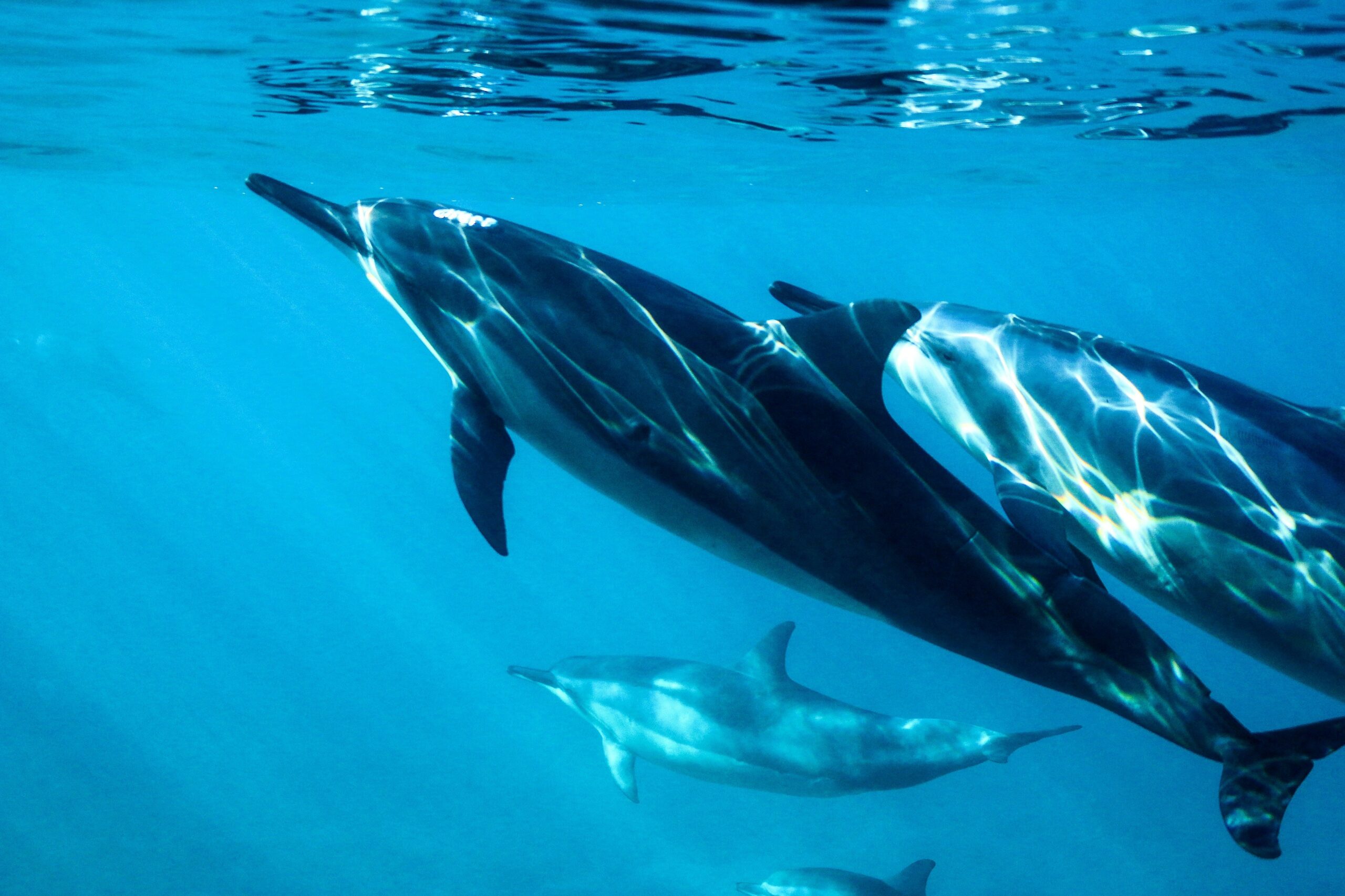
Photo by TJ Fitzsimmons
A major new peer-reviewed study has found that oil and gas exploration activities in Greek waters are causing serious harm to some of the Mediterranean’s most endangered marine species, and that the environmental assessments used to approve those activities were conducted on the basis of flawed, incomplete and outdated science.
The paper, Impacts of hydrocarbon-related activities on marine megafauna: case studies from the Mediterranean Sea, was published last week in the journal Ethics in Science and Environmental Politics and authored by a group of world-renowned marine biologists. It was commissioned by ClientEarth, the environmental law charity, and funded with support from WWF Greece.
What the research found
The study focuses on the effects of seismic surveys, the process by which airgun arrays are used to map the seabed ahead of oil and gas drilling. These airguns produce extremely loud, low-frequency sound pulses that, according to research cited in the paper, can travel up to 4,000 km and ensonify entire ocean basins. They are among the loudest sounds produced in the ocean, louder than any known biological source.
The paper documents impacts on cetaceans, turtles and Mediterranean monk seals ranging from physical hearing damage to chronic stress, hormonal disruption and altered feeding and resting patterns. Navigation and communication are impaired as noise interferes with vocalisation signals, and species such as beaked whales have been recorded avoiding noisy areas for days after surveys. In the most serious cases, the paper links seismic activity to strandings and mortalities, including three goose-beaked whales that stranded on Corfu in February 2022 while surveys were underway in the nearby Ionian sea block. This stranding was not mentioned in the relevant environmental assessment.
The paper also found that mitigation measures taken during the surveys were insufficient, including the decision to conduct surveys in winter to avoid affecting cetacean breeding, which the authors found did not prevent harm in practice. It criticises assessments for relying on the assumption that animals could simply “move away” from noise, rather than accounting for species with high site fidelity that have nowhere else to go.
A legal battle with the European Commission
Two of the paper’s three case studies relate directly to an ongoing legal complaint brought by ClientEarth, WWF Greece and Greenpeace Greece against the Greek state. The NGOs filed a formal complaint with the European Commission in December 2023, arguing that hydrocarbon projects approved in close proximity to the Hellenic Trench – an IUCN-designated Important Marine Mammal Area and critical habitat for fin whales, sperm whales, beaked whales, loggerhead turtles and Mediterranean monk seals – were approved in breach of EU nature conservation law. After an initial threat to close the case, the Commission confirmed at the end of 2024 that it would pursue an investigation.
Francesco Maletto, Oceans Lawyer at ClientEarth, said: “The Hellenic Trench is one of the most biodiverse areas in the Mediterranean. Yet a cacophony of noise from oil and gas exploration is devastating its much-loved whales and dolphins. Will the Commission let this continue in a clear breach of EU law, or step in to protect some of Europe’s most endangered marine wildlife?”
Anna Vafeiadou, Legal sector leader at WWF Greece, said: “Greek seas are still among the healthiest in Europe, precisely thanks to the absence of destructive activities, such as oil and gas drilling. We are sleepwalking into an environmental disaster, in case these new plans for petroleum drilling go ahead. The scientific evidence is clear; there are limitations to the mitigation measures to hydrocarbon exploration in the unique ecosystem of the Hellenic Trench. We urge the European Commission to step in and ensure that EU law is upheld before irreversible harm occurs.”
The threat is growing
The urgency behind the paper is compounded by recent expansions of offshore oil and gas activity in the region. Contracts for four new concession blocks off the Peloponnese and southern Crete have been ratified by the Hellenic Parliament under Law No. 5287/2026, and international oil major Chevron has expressed formal interest in further areas. Costas Kaloudis, climate and energy campaigner at Greenpeace Greece, said: “With 20% of Greece’s marine areas conceded for hydrocarbon exploration and with an extremely weak institutional framework for marine protection, the future of the marine mammals that we strive to see protected seems bleak.”
In April 2026, the NGOs again wrote to the Commission highlighting the study’s implications for the adequacy of impact assessments already used to approve activities in the region, and renewing their call for enforcement action.