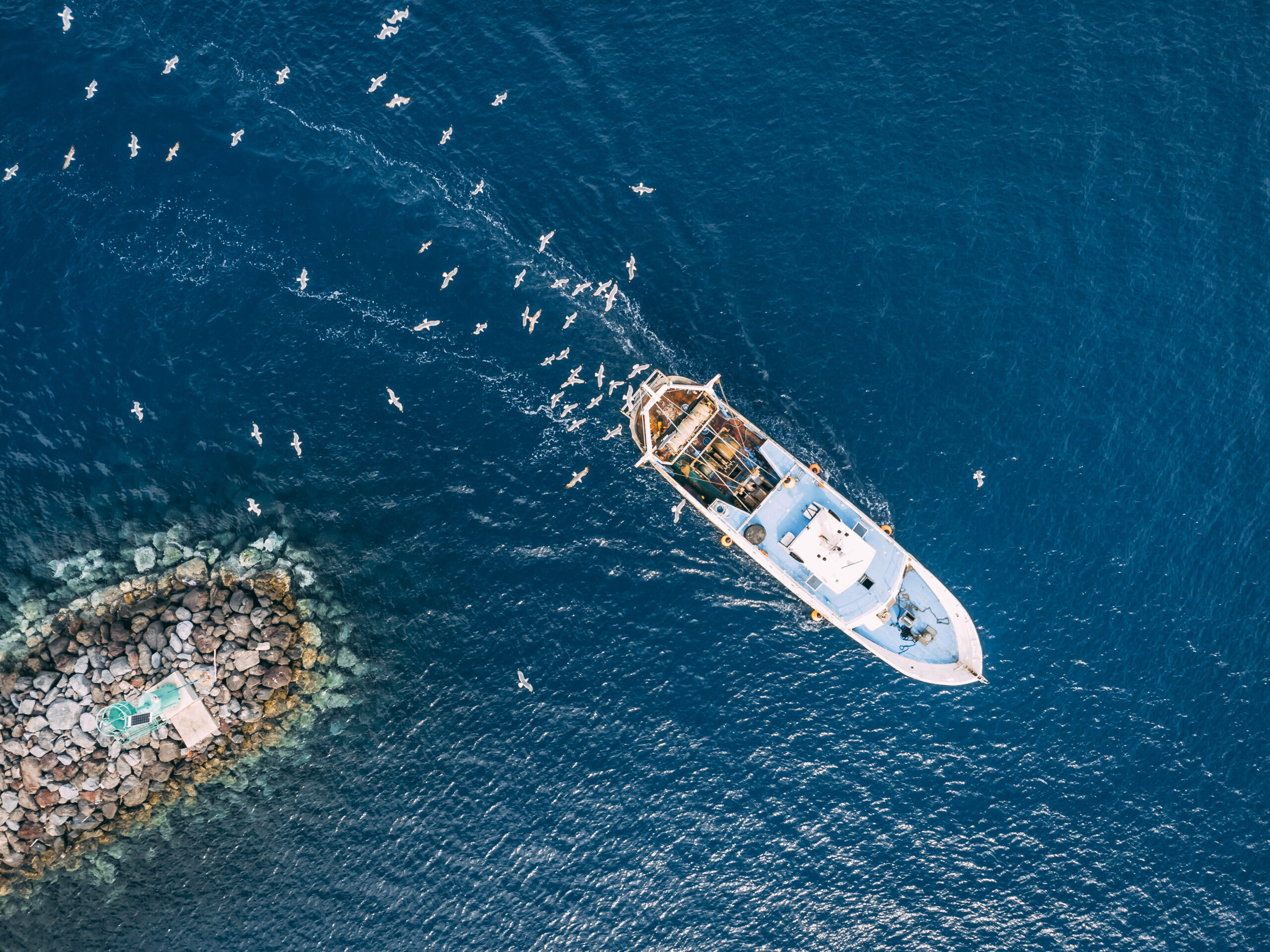
 Photo credit: Adobe Stock
Bottom trawling is damaging the seabirds, dolphins and porpoises that many UK marine protected areas were created to safeguard, and should be banned across those sites, according to a new report from the campaign group Oceana UK. The report, Trawled and Mauled, argues that protection existing on paper is not being delivered in the water.
The core finding
Bottom trawling involves dragging heavy weighted gear and nets across the seafloor, catching or crushing much of what lies in the path. Oceana found that none of the UK marine protected areas designated for whales, dolphins or porpoises is fully closed to bottom trawling across the whole site, and only two of those designated for seabirds are. That is out of 113 such protected areas in total. The UK government’s own assessments identify bottom trawling as a threat in three-quarters of them.
The report draws on satellite tracking data from Global Fishing Watch to estimate fishing activity. It found that one harbour porpoise sanctuary, the Southern North Sea Special Area of Conservation, saw 30,936 hours of apparent bottom trawling during 2025, the equivalent of more than 1,289 days of activity packed into a single year. Oceana notes that this figure is an estimate derived from vessel-tracking algorithms rather than a precise count.
The ecological case
Oceana sets out several ways the practice can harm species near the top of the marine food web. By disturbing the seabed it can deplete prey such as sandeels, the small fish that feed whales including minke and humpback, and seabirds such as kittiwakes. The gear also generates underwater noise and clouds of sediment, which can disrupt hunting for animals that rely on sound, like porpoises, and those that rely on sight, like puffins and terns. Animals can also become entangled in fishing gear directly.
Professor Emma Sheehan, a marine ecologist at the University of Plymouth, said allowing bottom trawling within protected areas undermined the purpose of their designation, since seabirds and cetaceans depend on the healthy ecosystems those areas are meant to conserve.
The policy context
The report lands as the UK government prepares a public consultation on managing bottom trawling in five marine protected areas designated for seabirds and cetaceans. Oceana argues the practice should be banned outright across those sites, and points to the UK’s commitment to effectively protect 30 per cent of the ocean by 2030, warning that the target risks becoming what its executive director Hugo Tagholm called blue washing if protection is not delivered in practice. To mark the report’s launch, Oceana projected footage of bottom trawling onto the chalk cliffs of Botany Bay in Kent, overlooking a protected area that is home to the little tern.
The National Federation of Fishermen’s Organisations, which represents commercial fishers in England and Wales, has argued in response to the wider push for MPA trawling bans that a single blanket measure is being applied across many different sites with different habitats, conditions and levels of fishing activity, some of which are in favourable condition or see little trawling at all. The NFFO contends that modern trawl gear is designed to skim the seabed rather than dig into it, that the same grounds have been fished for generations, and that decisions should follow the Fisheries Act’s duty to balance conservation with social, economic and food-production objectives rather than defaulting to closure. It has urged targeted, evidence-led management developed with fishers instead.
Sources: