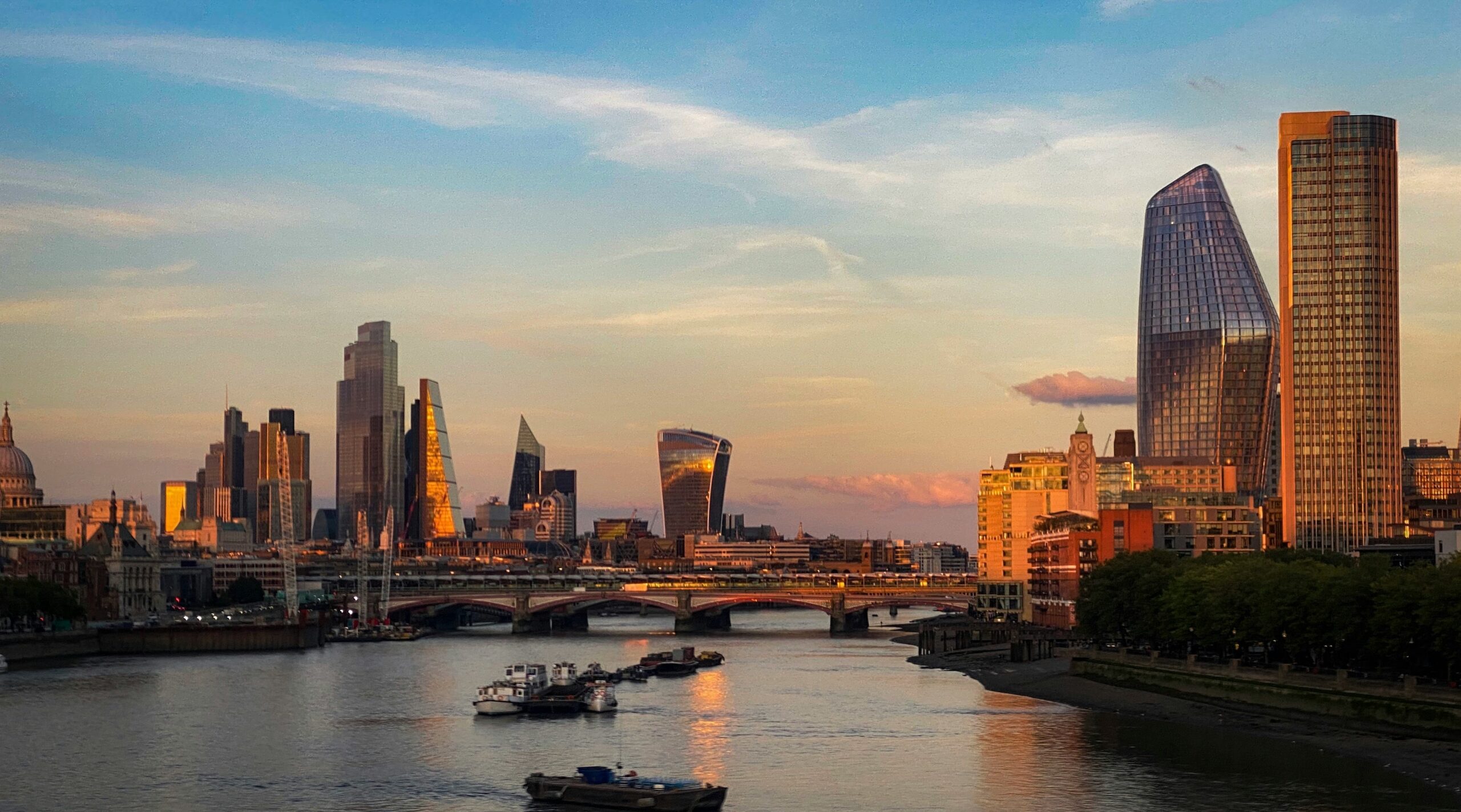
Photo by Bosh Ar
London Climate Action Week (LCAW) closed on 28 June after nine days of talks and events across the city. Europe’s largest city-wide climate gathering, now in its eighth year, brought together nearly 50,000 participants. Ironically, a record-breaking heatwave forced the cancellation of at least one LCAW session and many side events, after risks to public health and disruption to the Tube and rail services. However, for the marine sector, a major funding announcement and a high-level diplomatic dialogue were the two most notable ocean-related developments.
A $260m boost for ocean protection
On 24 June, Bloomberg Philanthropies announced a $260 million commitment to expand its Bloomberg Ocean Initiative, made at the Earthshot Prize Impact Assembly, an LCAW event held at the Guildhall. The funding takes the organisation’s total ocean spend to $635 million to date and is aimed at the gap between protection commitments and what is actually enforced on the water: countries have so far pledged around 10% of the ocean towards the global 30×30 target, with only four years left to reach the full 30%.
The next phase of the initiative breaks down into five areas: turning existing commitments into managed and enforced protected areas, scaling satellite and AI tracking of fishing activity, establishing the first marine protected areas under the now-active High Seas Treaty, building legal and technical capacity for small island and coastal states in ocean negotiations, and funding coral reef science and community-led restoration. The UK is named as one of three new countries the initiative will expand into, alongside Mexico and the Marshall Islands.
The announcement also set out the initiative’s record to date, including help securing the world’s largest marine protected area in French Polynesia, new mangrove protections along Brazil’s Amazon coast, reforms strengthening protection for Australia’s Great Barrier Reef, and Ghana’s first-ever marine protected area. Closer to home, the release credits the initiative with helping advance new protections against bottom trawling in parts of the UK’s marine protected areas, alongside its role in the Mombasa Declaration on fisheries transparency.
Patricia Harris, chief executive of Bloomberg Philanthropies, said: “Our new commitment marks the next phase of the Bloomberg Ocean Initiative. Over the years, we have made important progress in protecting our ocean, but we still have a long way to go.”
Diplomats call for the ocean to be built into COP31
A separate high-level dialogue, co-hosted by the Commonwealth Secretariat and Defra, brought together the past, present and incoming UNFCCC COP presidencies, alongside US Secretary of State John Kerry, to push for the ocean to be embedded in the formal COP process ahead of COP31 in Antalya this November. Commonwealth Secretary-General Shirley Botchwey said: “The ocean is absorbing the costs of a warming planet at a rate that is economically, environmentally and politically unsustainable. For the Commonwealth, this is urgent.” She added that 49 of the Commonwealth’s 56 members have coastlines, and 25 are large ocean states for whom “the ocean is not a sector of the economy, but the foundation of national life.” Emma Hardy MP, the UK’s Parliamentary Under-Secretary for Water and Flooding, co-hosted the session.
A commercial case for the ocean
A related argument, that the ocean should be treated as economic infrastructure rather than a purely environmental concern, ran through the World Ocean Summit at LCAW, an Economist Enterprise event which opened with the statistic that trade in ocean goods and services has now hit roughly £500bn and £950bn respectively. The event, which reached capacity, brought together speakers including WWF’s Lucy Holmes, The Nature Conservancy’s Robert McDonald and Ocean 14 Capital’s Chris Gorell Barnes to discuss how protection, investment and nature-based solutions can work together to scale a sustainable ocean economy.
With COP31 and CBD COP17 both due in November, ocean finance and implementation of the High Seas Treaty are likely to remain recurring themes between now and then.