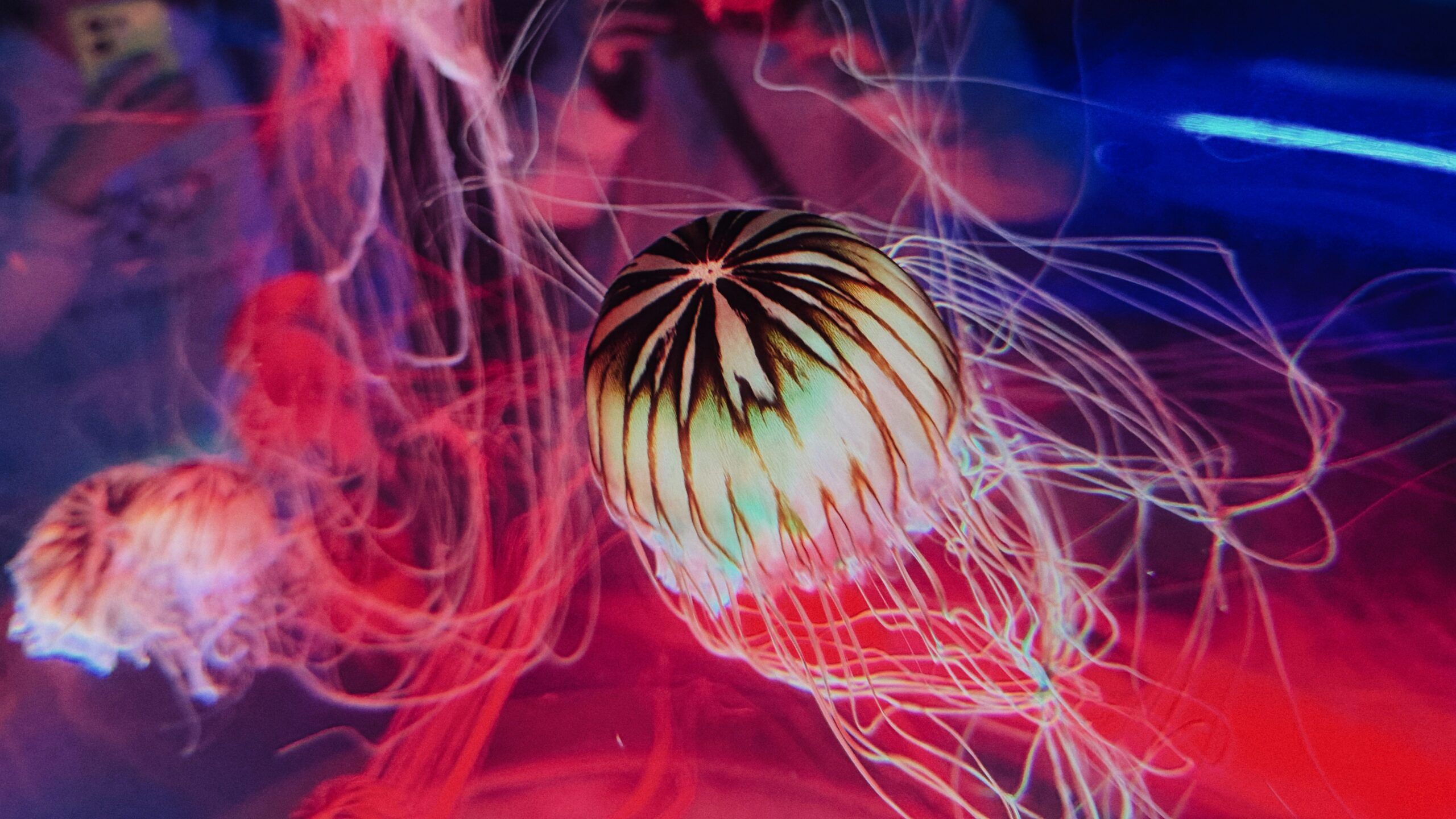
Photo by hahaxo
Scientists have named 1,121 previously unknown marine species in a single year, the most significant discovery milestone to date for the Nippon Foundation-Nekton Ocean Census, a global effort to map life beneath the waves involving more than 1,000 researchers across 85 countries. The figure represents a 54% increase on the previous year’s annual identifications.
Over the course of 2025, 13 expeditions fanned out across some of the world’s least-explored waters, each conducted in partnership with JAMSTEC, CSIRO and the Schmidt Ocean Institute. The finds span an extraordinary range of depth, geography, and biology, from the abyssal depths of the Coral Sea to a Mediterranean sea cave just off the coast of Marseille.
What was found
Among the 1,121 discoveries, four species illustrate just how much the ocean still conceals. In the Coral Sea Marine Park off Queensland, a CSIRO expedition found a new species of chimaera – a “ghost shark” – at depths of 802 to 838 metres. These fish are distant relatives of sharks and rays that diverged into a separate evolutionary lineage nearly 400 million years ago; today, a third of all sharks, rays, and chimaeras are considered vulnerable to extinction.
Off Japan’s Shichiyo Seamount Chain at 791 metres depth, scientists found a polychaete worm living inside a glass sponge, a translucent, silica-structured organism whose intricate chambers have earned the nickname “glass castle.” The sponge and worm share a symbiotic relationship: the worm gains a stable, nutrient-rich home, while it removes debris that could otherwise harm its host.
In Timor-Leste, researchers discovered a ribbon worm less than 3cm long, its vivid orange colouring a warning signal of potent chemical defences. The toxins produced by members of this group have been investigated as potential treatments for Alzheimer’s disease and schizophrenia. And in a sea cave off Marseille at just 15 to 35 metres depth, a striking orange-banded shrimp species proved that major marine discoveries are still being made on Europe’s doorstep.
CNN also reported on a carnivorous “death ball” sponge found at nearly 12,000 feet in the North Trench of the South Sandwich Islands, covered in microscopic velcro-like hooks that ensnare passing crustaceans before enveloping and ingesting them.
Breaking the taxonomy bottleneck
Historically, the average time between a species’ first collection and its formal description in scientific literature has been 13.5 years – a delay so severe that species routinely face extinction before they are even catalogued. Ocean Census is tackling this directly with the launch of NOVA, a new open-access digital platform that makes collected data available within days or weeks, with “discovered” recognised as a formal scientific status from the moment a specimen is validated by an expert.
Tammy Horton, a research scientist at the UK’s National Oceanography Centre, told CNN that the formal description process “carries out the actual work to confirm novelty and provides the ‘passport’ for that new species, its official record. Without this the formally recognised name the species effectively does not exist for science, and therefore also for policy, unnamed species cannot be protected.”
The stakes for conservation policy
Despite the scale of the achievement, up to 90% of marine species remain undocumented. Dr Michelle Taylor, Head of Science at Ocean Census, said: “With many species at risk of disappearing before they are even documented, we are in a race against time to understand and protect ocean life.”
The Census’s findings feed directly into the scientific foundations required for the High Seas Biodiversity Beyond National Jurisdiction Treaty and the Kunming-Montreal Global Biodiversity Framework, international mechanisms that depend on precisely the kind of high-quality baseline data Ocean Census is designed to produce.
Three years in, the programme has built the systems, networks and infrastructure to discover marine life at speed and at scale. Co-founder Nekton is now seeking $100 million in catalytic capital to unlock more than $75 million already pledged by partners, with the ambition of documenting 100,000 new species in the years ahead.
Oliver Steeds, Director of Ocean Census, put the case bluntly: “We spend billions searching for life on Mars or going to the dark side of the moon. Discovering the majority of life on our own planet – in our own ocean – costs a fraction of that. The question is not whether we can afford to do this. It is whether we can afford not to.”