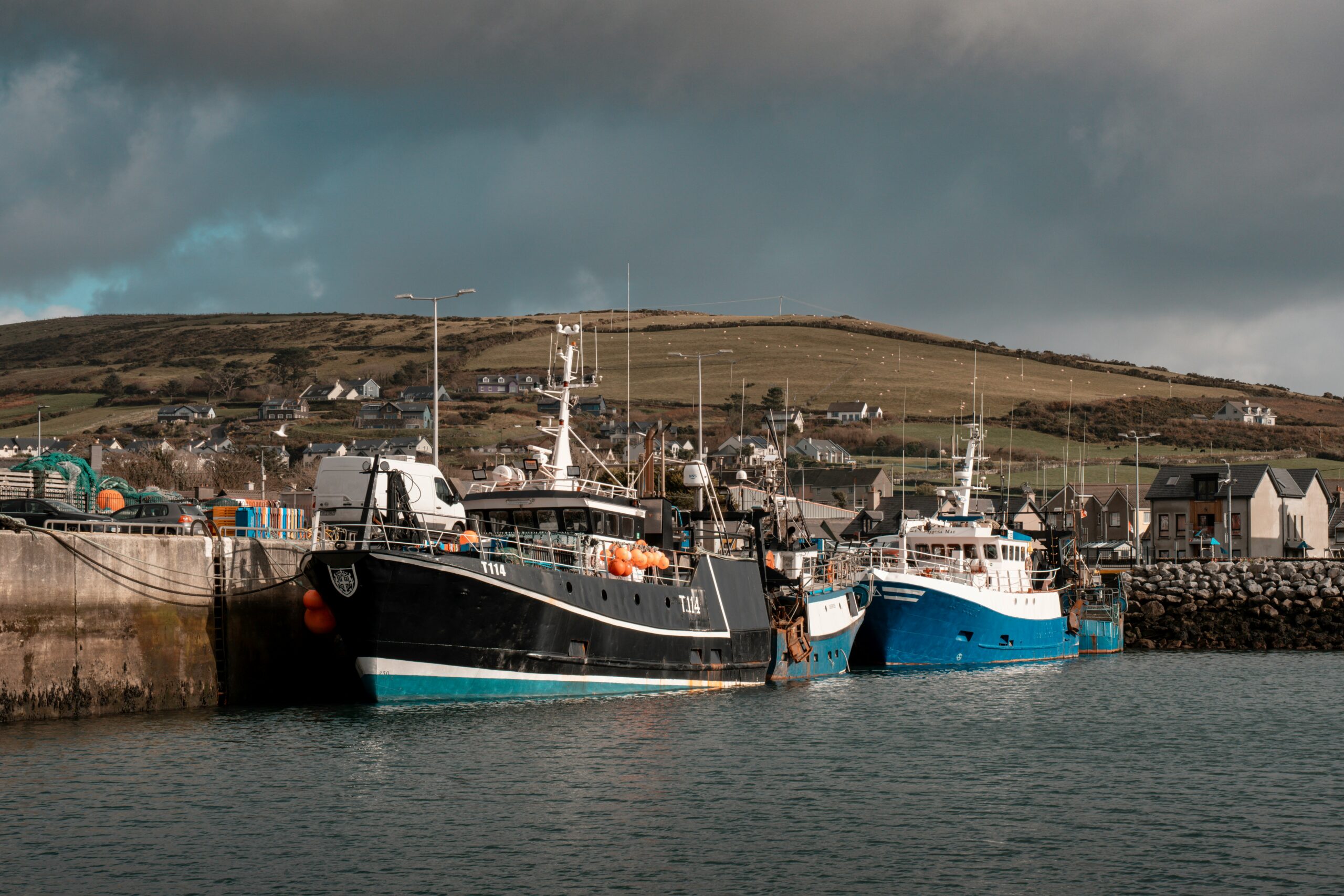
Photo by Rau Ling
Northern Ireland’s Department of Agriculture, Environment and Rural Affairs (DAERA) has launched a 12-week consultation on proposed fisheries management measures for three offshore Marine Protected Areas (MPAs) in the Irish Sea, with restrictions on bottom trawling for nephrops among the measures under consideration.
The three sites, the Pisces Reef Complex Special Area of Conservation (SAC), South Rigg Marine Conservation Zone (MCZ) and Queenie Corner MCZ, together cover approximately 298 square kilometres of sea between Northern Ireland and the Isle of Man. The protected habitats within all three areas are currently assessed as being in an unfavourable condition. The main commercial fishery operating across the zones targets Norway lobster, also known as nephrops or Dublin Bay prawns.
A sector already under pressure
The consultation arrives at a difficult moment for Northern Ireland’s fishing industry. As Down News noted when the consultation launched, the sector is already contending with high fuel costs, visa and immigration difficulties for crews, and other jurisdictions imposing regulations and extending their waters. Quota cuts agreed at the end of 2025 have compounded those pressures – the nephrops total allowable catch was cut by 21% for 2026, with herring, the sector’s second most important species, cut by 20%.
Northern Ireland Agriculture, Environment and Rural Affairs Minister Andrew Muir acknowledged these realities directly when launching the consultation. “I recognise the challenges that fishing businesses are facing on a daily basis, from rising fuel costs and visa restrictions to the increasing uncertainty created by proposals for offshore renewable energy and the impacts of climate change on fish stocks,” he said. “I acknowledge these realities and recognise the essential role the fishing industry plays in our coastal economy, cultural heritage and food security.”
The conservation case
The proposals are framed around evidence that protective measures can deliver meaningful habitat recovery. DAERA points to positive signs in Northern Ireland’s inshore waters, where fisheries management measures have already been introduced and habitat recovery has been observed, and argues that a similar approach can work offshore.
Minister Muir added: “Evidence increasingly shows that well-designed and effectively managed protective measures can allow damaged habitats to recover, increase resilience to climate change, and support the replenishment of fish stocks beyond protected areas.” He described the proposals as part of Northern Ireland’s commitment to international obligations for “clean, healthy, safe, productive and biologically diverse seas.”
Co-design approach
The measures were developed through the Co-Fish: Fisheries and Conservation Partnership, a stakeholder group established in 2023 to bring together the fishing industry, conservation organisations and government. The co-design approach was intended to ensure the proposals were grounded in industry knowledge as well as scientific evidence.
As The Fishing Daily noted, the consultation is likely to attract significant attention from the nephrops sector given the importance of Dublin Bay prawn fishing to Northern Ireland’s coastal economy and the wider debate across the UK and Europe about the role of bottom-contact fishing gears within protected marine areas.
The consultation is open until 24 August 2026. The consultation document can be downloaded from the DAERA website.