Photo by Ryan Fleischer
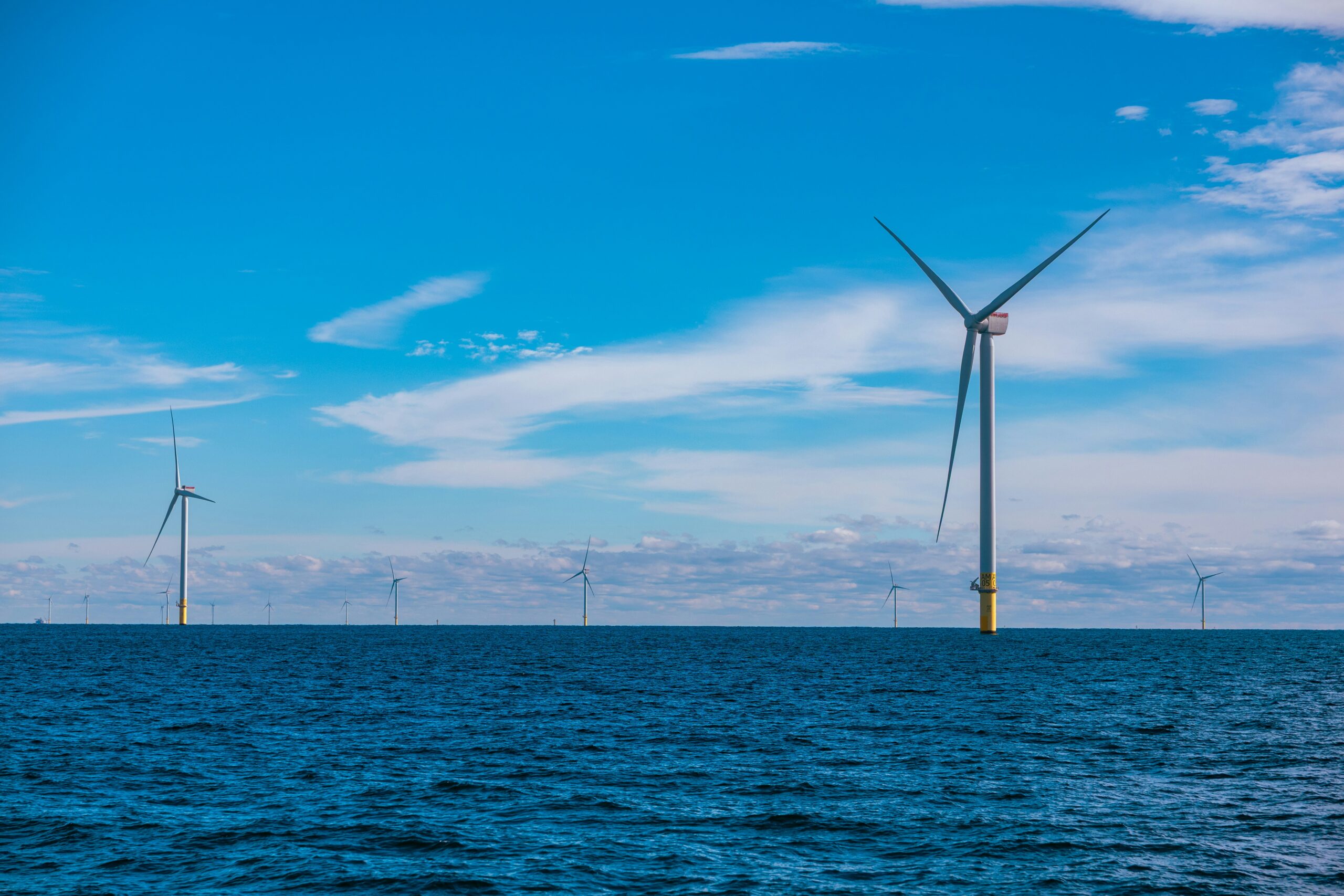
Nine European nations have signed a landmark offshore wind investment pact aimed at mobilising €1 trillion in economic activity and establishing the North Sea as the continent’s largest clean energy hub. The agreement, sealed at the North Sea Summit in Hamburg on 26 January 2026, commits governments, industry and transmission system operators to a coordinated buildout of 300 GW of offshore wind capacity by 2050.
The Joint Offshore Wind Investment Pact for the North Seas was signed by Belgium, Denmark, France, Germany, Ireland, Luxembourg, the Netherlands, Norway and the United Kingdom, alongside more than 100 offshore wind companies and transmission system operators.
Coordinated deployment and de-risked investment
Under the pact, governments pledged to ensure “a more evenly distributed offshore wind tender pipeline between 2031 and 2040 across the North Seas contributing to a European installation capacity of up to 15 GW per year,” targeting 100 GW through joint projects as an intermediate milestone.
German Federal Minister for Economic Affairs and Energy Katherina Reiche emphasised: “Together, we are strengthening our economic, security and energy policy interests. The consistent expansion and intelligent networking of offshore energy will create affordable, clean and secure energy, reduce strategic dependencies and increase Europe’s overall resilience.”
The pact includes a commitment to provide two-sided Contracts for Difference as the standard remuneration model for offshore wind auctions, guaranteeing developers minimum prices whilst capping revenues during high market periods. Governments also committed to removing regulatory obstacles to power purchase agreements, including cross-border arrangements.
Industry pledges cost reduction and job creation
In return for government de-risking measures, the offshore wind industry committed to reducing development costs to “ultimately reduce the levelized cost of electricity by 30 percent by 2040 compared to 2025 levels.”
WindEurope CEO Malgosia Bartosik said: “Today Europe doubles down on offshore wind. Government cooperation on offshore wind buildout can help crowd in €1 trillion of investments in the next decade. This is the best possible response to those who doubt Europe.”
Industry players agreed to mobilise €1 trillion in economic activity, hire 91,000 people by 2031 reaching 187,000 employees total, and invest €9.5 billion in supply chain capacities by 2030.
Cross-border cooperation
Transmission system operators aim to identify 20 GW of economically promising cross-border projects by 2027 for deployment in the 2030s, including hybrid offshore projects combining electricity production with interconnection. A concrete example is the bilateral agreement between Germany and Denmark on the Bornholm Energy Island project, described as “the first legally binding hybrid offshore co-operation project in Europe,” generating three gigawatts channelled to both countries via two new grid connections.
Energy security focus
EU Commissioner for Energy and Housing Dan Jørgensen stated: “In these turbulent geopolitical times, Europe must stand strong and united – and choose independence. That means doubling down on clean, safe, home-grown energy.”
UK Energy Secretary Ed Miliband argued that renewable power would help Europe to “get off the roller-coaster of fossil fuels,” pointing to the UK’s latest auction which awarded 8.4 GW of capacity.
Offshore wind developers welcomed the planning certainty. Rasmus Errboe, CEO of Ørsted, stated: “The Pact shows the leadership taken by the countries in realising the offshore potential of the North Sea, and Ørsted is ready to answer to the call by investing in the build-out.”
The ambition represents a significant acceleration from current deployment. As of early 2026, Europe has 37 GW of offshore wind capacity installed. The summit also addressed security concerns, with NATO represented at a high level for the first time to discuss protecting critical offshore infrastructure against hybrid threats and sabotage.