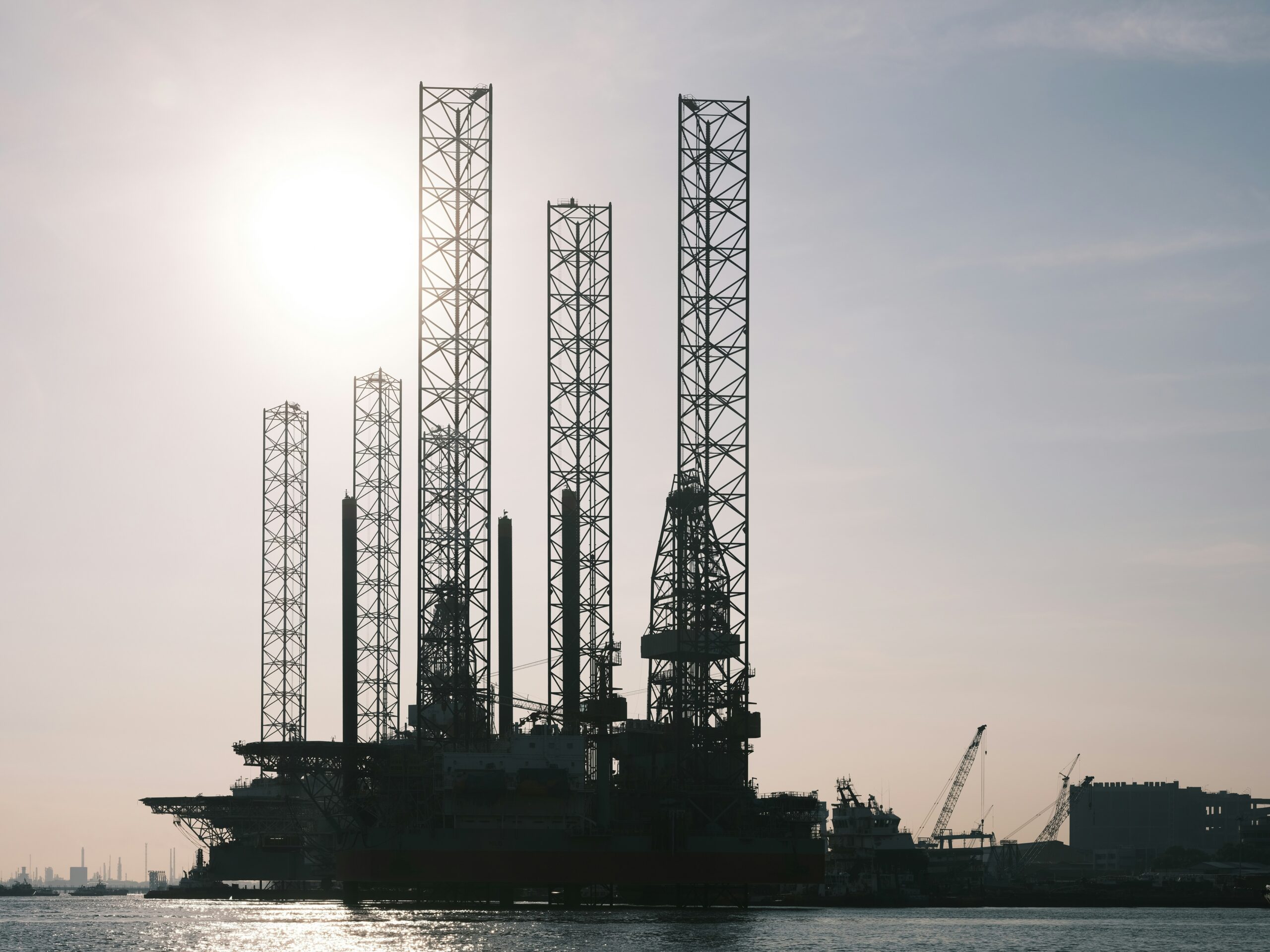
Photo by Galen Crout
Conservative leader Kemi Badenoch has launched a “Get Britain Drilling” campaign, calling on the government to lift its moratorium on new North Sea oil and gas licences as rising global energy prices – triggered by Iran’s blockade of the Strait of Hormuz – intensify the political debate over domestic fossil fuel production.
The three-point Conservative plan would end Labour’s ban on new exploration licences, scrap the Energy Profits Levy – the so-called windfall tax on oil and gas companies – and provide additional financial support to the fossil fuels industry. Badenoch has also proposed a Get Britain Drilling Now bill, which she says would “stop the lawfare and free our oil and gas industry” by removing the requirement for downstream emissions to be considered in planning decisions. The Conservatives claim the package would cut household energy bills by £200.
Appearing on the BBC’s Sunday with Laura Kuenssberg, Badenoch made the case for unlocking specific fields: “What we want to see is the licences for Jackdaw and Rosebank lifted so that they can start drilling.” She acknowledged that the link to household bills would be indirect, arguing that revenues and profits from drilling could be used to subsidise costs. “Drilling in the North Sea is a bigger issue,” she added. “This is about our energy security.”
The government’s position
Labour MPs voted down the Conservative opposition day motion by 297 votes to 108 last week. At Prime Minister’s Questions, Sir Keir Starmer insisted the decision on Rosebank and Jackdaw – both stalled since a Scottish court ruled their original approvals unlawful in early 2025 – rested with the Energy Secretary, not himself. He said: “It’s absolutely clear that the quasi-judicial duty of the legislation rests with the Secretary of State.”
Starmer reiterated the government’s strategic direction: “Oil and gas is coming out of the North Sea 24/7. It will be part of the energy mix for many years to come. We fully support all existing oil and gas fields throughout their lifespan… But we need to take control of our energy prices. The only way to do that is through renewables.”
Energy Minister Michael Shanks dismissed Badenoch’s plan, pointing out that “her own shadow energy secretary admitted that new licences in the North Sea would not take a penny off bills.” He added: “The Conservatives and Reform want to outsource Britain’s energy security to fossil fuel markets over which we have no control.”
Unlikely voices in the debate
The row has produced some unexpected interventions. Greg Jackson, founder and chief executive of Octopus Energy, and a government adviser, has said he is “perfectly relaxed” about continued North Sea extraction. “For as long as we’re using a lot of gas, I personally am perfectly relaxed. I prefer it to come from the North Sea than the other side of the world,” he told The Times. However, he firmly rejected the argument that more drilling would lower consumer costs. “It ain’t going to make a difference on the price. It’s not going to make a difference on the security of supply,” he argued.
Meanwhile, Tara Singh, chief executive of RenewableUK, has called for Britain to produce more energy “of every kind” and urged politicians to “take energy out of the culture wars.”
The Oxford verdict
A new analysis from Oxford’s Smith School of Enterprise and the Environment directly challenges the Conservative case. Even if the UK maximised North Sea extraction and returned all tax revenues directly to households, the saving would amount to just £16–£82 per year per household – roughly 1–4.6% of the current average bill of £1,776. By contrast, a transition to a fully renewable electricity system could cut bills by £105–£441 per year, and those savings would recur indefinitely.
Dr Anupama Sen, co-author and Head of Policy Engagement at the Smith School, said: “The idea that draining the North Sea would make the UK more energy secure or significantly save on household bills is sheer fantasy. We show that regardless of the remaining lifetime of North Sea oil and gas, a ‘drill baby drill’ approach to extraction would actually cost households more money versus continuing on our path to clean energy.”
Campaign group Uplift, which has successfully challenged North Sea licences in court, warned that hundreds of licences granted by the Conservatives between 2010 and 2024 had produced just 36 days’ worth of gas. Executive director Tessa Khan accused Badenoch of “peddling a dangerous fantasy.”
Industry pressure mounts
Offshore Energies UK (OEUK) has warned that at the current trajectory, the UK could be three times more reliant on imported liquefied natural gas by 2035. Chief executive David Whitehouse said: “We urgently need greater supplies of secure, domestically produced energy including oil and gas, which will remain a critical part of the UK energy system and economy for decades.”
The industry body has also proposed abolishing the windfall tax in 2026 – four years ahead of schedule – replacing it with a threshold-based levy of 35% that would kick in only when prices exceed certain levels. It says such reforms could unlock £50bn in fresh investment in the offshore sector.
With the Rosebank and Jackdaw decisions still pending, the Strait of Hormuz still effectively closed, and Scottish Parliament elections on the horizon, the North Sea debate shows no sign of cooling.