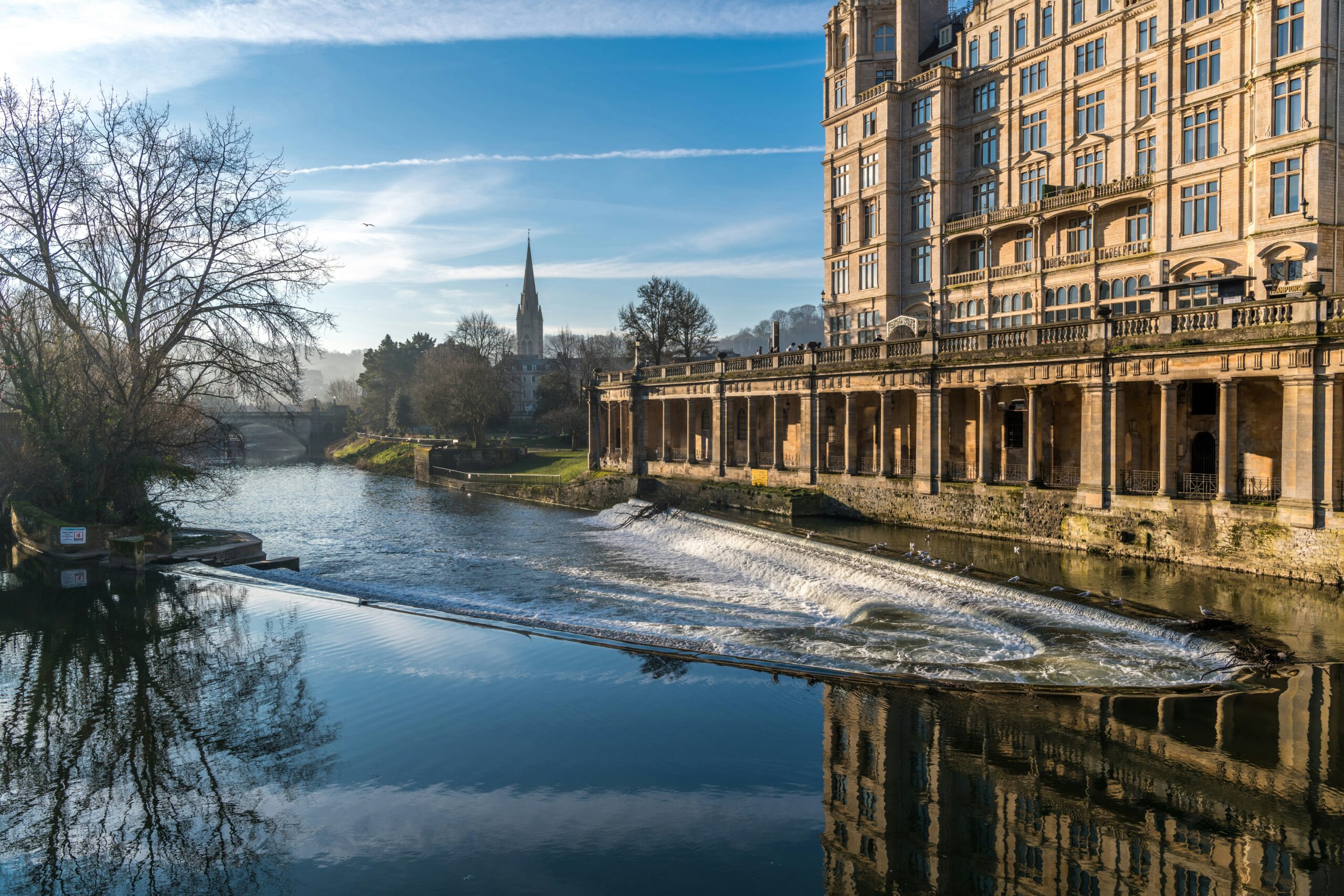
Photo description: A view of the Weir from Pulteney Bridge, looking at a brown concrete building near the river Avon. Photo by Jane Ackerley on Unsplash
What began with twelve people walking 100 miles from the source of the Bristol Avon to the sea has culminated in a significant moment for river advocacy in England. On World Rivers Day, councillors, environmental groups, river guardians and members of the public gathered in Bath to sign the Avon Bioregional Charter of River Rights – a document enshrining the river’s rights to exist, flow sustainably, remain free from pollution, preserve its biodiversity, and be represented and advocated for. Nine councils have endorsed it, including Bath and North East Somerset, Bristol City and North Somerset, with more expected to follow. The Guardian describes it as breaking new ground among the approximately 40 river charters that have emerged across England since the Sussex River Ouse became the first to have its rights recognised by a local authority in February 2025.
What river charters can, and cannot, do
River charters occupy an interesting space in environmental governance. They do not replace statutory duties, create legal obligations, or resolve competing rights. But proponents argue that they serve as powerful social contracts between communities and their rivers, aligning governance bodies around shared moral principles, empowering grassroots stewardship and holding institutions to account. Josh Levene of the UK River Rights Network told the Guardian that the strongest charters are those most integrated with existing institutions, such as councils, catchment partnerships and regulators. The Avon charter appears to be moving in that direction: We Are Avon has convened cross-council workshops on bioregional river governance, increasing communication between councils, Wessex Water and the West of England Combined Authority. Bath and North East Somerset has appointed a river advocate to represent the Avon, and the charter’s principles are expected to be embedded in the council’s climate and nature strategy due in early 2027.
A parallel story on the Severn
On the same day, the BBC reports campaigners gathered in Ironbridge to mark World Rivers Day on the River Severn, and to call for a charter of their own. Residents and anglers described a river in decline, with fish numbers reported at just 15-20% of historical levels and concerns about persistent sewage pollution along what is the longest river in the country at 220 miles. Campaigner Joanne Kowalski called for “a charter for the Severn like other rivers around the country.” Severn Trent said it had invested £2bn across the region on improvements in the past year and reduced storm overflow spills, spending £140m specifically on sewage treatment in the area. The BBC’s coverage of the Ironbridge gathering is worth watching: if a Severn charter gains traction, it would represent one of the most significant river rights initiatives yet, given the scale and complexity of the catchment.
How River Rights are shifting the conversation on river health
The river rights movement may not yet carry legal force, but its growing political and community traction is significant for the water sector. Charters are increasingly drawing in councils, catchment partnerships and water companies as named stakeholders, creating reputational expectations and governance frameworks that sit alongside, and may increasingly inform, statutory obligations. The Avon example demonstrates that sustained community organising, combined with cross-institutional engagement, can shift the terms of the conversation around river health. As the movement expands to larger catchments, water companies will need to consider how they engage with and respond to these emerging frameworks.
Read more
The Guardian: Feature on the signing of the Avon Bioregional Charter of River Rights.
BBC News: Coverage of World Rivers Day campaigning on the River Severn in Ironbridge.