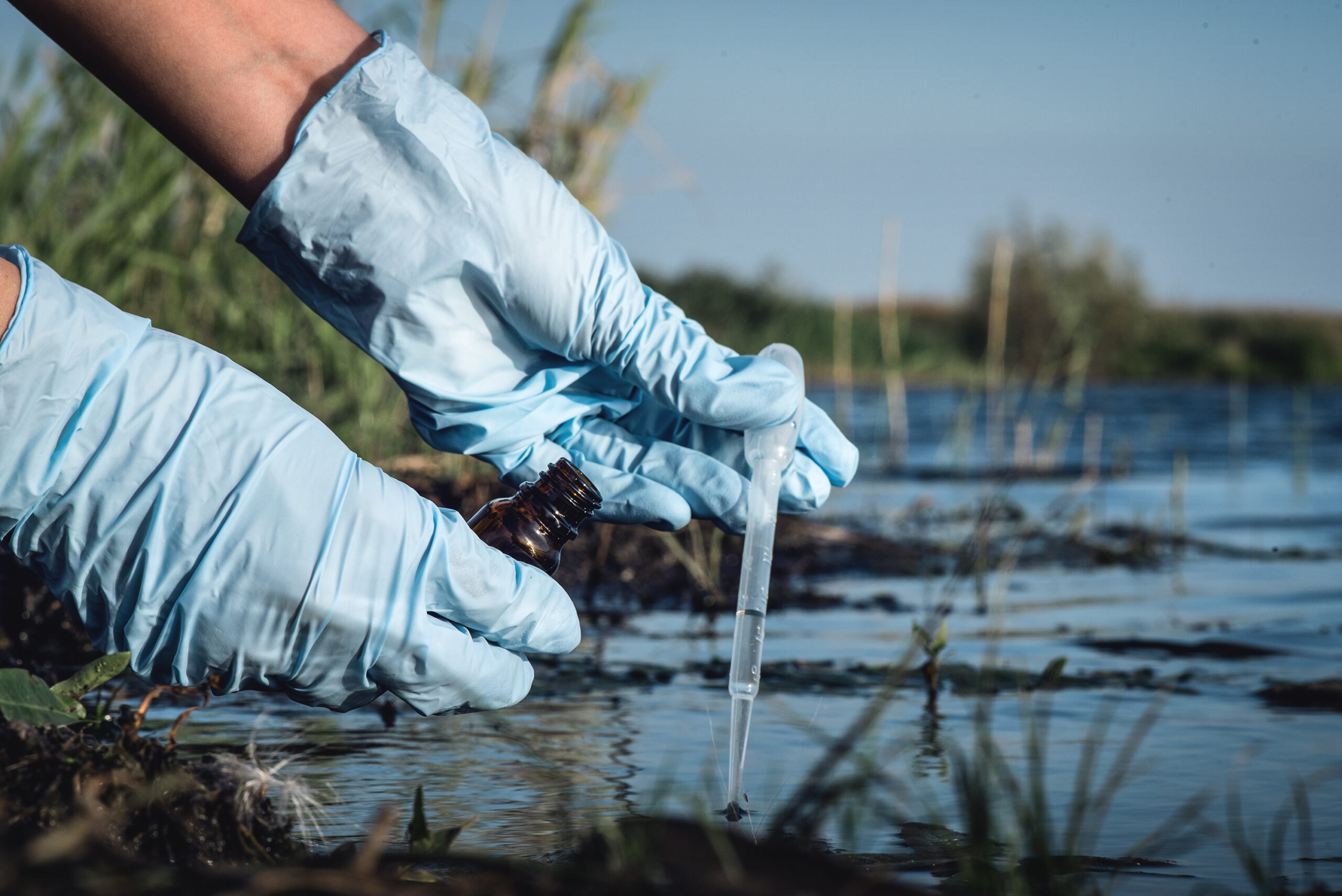
Image description: Hands wearing blue plastic gloves taking a water sample from a pond using a pipette and brown glass sampling bottle.
New data published by EA paints a ‘very concerning’ picture for England’s waterways
The Environment Agency’s (EA) latest data, published 6 August 2026, showed that just 14% of England’s rivers, lakes, estuaries and coastal waters achieved good ecological status, down from 16% in 2019, and every single English water body is contaminated with toxic chemicals.
The EA said this failure was driven almost entirely by the presence of mercury, Pfos (a type of Pfas with links to cancer) and PBDEs, which were formerly used as flame retardants. These chemicals are persistent, meaning they do not break down and can accumulate in the environment.
Each of the country’s rivers, lakes and estuaries was assessed by the EA as part of a six-yearly evaluation of England’s water quality. The EA checked for a range of toxic chemicals, from Pfas (also known as “forever chemicals”) to microplastics. Waters were also checked against a range of standards covering wildlife, water quality and physical habitat.
If concentrations of the chemicals exceed the set standards, the water body fails to meet good chemical status. In the latest assessment, every surface water body in England failed on this measure.
Government accused of failing to comply with environmental law
Prior to the release of these latest figures UK government was already being accused of failing to take action on toxic chemicals after its plan to tackle Pfas chemicals failed to match the tougher stance being taken in Europe. As per the Guardian, the government has also been accused of failing to tackle mercury pollution, with Britain being one of the few countries yet to ban mercury in dental fillings. Mercury is a potent neurotoxin that can harm the nervous, digestive and immune systems, as well as the lungs, kidneys, skin and eyes, even at low levels of exposure.
While the figures themselves attracted widespread attention, Water Magazine reports that the responses from the Office for Environmental Protection (OEP) and The Rivers Trust have focused on whether the monitoring framework is providing a sufficiently complete picture of the country’s water environment.
Helen Venn, OEP Chief Regulatory Officer, said: “The latest update on the condition of water bodies under the Water Framework Directive (WFD) Regulations released today is very worrying given the already poor state of our country’s precious waterways.
“This is why we have an open investigation because it is our view that Defra and the Environment Agency are failing to comply with environmental law and these failures are leading to a continued failure to improve water quality.
“While there is an understandable focus in government on longer-term reform of the water sector, there is an urgent need for action now to better protect and improve water quality, alongside those forward-looking plans.
“The WFD Regulations require plans to be in place for individual water bodies. These plans define the environmental objectives for each water body, and should set out the measures that will be implemented to achieve them. When we looked in detail at these plans, however, we found they didn’t address specific issues at individual sites. We continue to engage with Defra and the EA in relation to the action they are taking to ensure compliance with the law, are also considering our next steps, which could include further enforcement action.”
Echoing these concerns, The Rivers Trust have called for urgent improvements in how rivers are monitored and assessed.
The charity said the figures reveal “little progress” in improving river health over the past five years and warned that gaps in monitoring could mean some problems are going undetected.
In particular, The Rivers Trust questioned the EA’s use of risk-based monitoring, arguing that sites considered to be lower risk may not receive sufficient long-term attention. It is calling for publication of site-level monitoring data to improve transparency and enable a better understanding of how individual monitoring locations contribute to overall water body classifications.
The charity also wants monitoring to draw on a wider range of information sources, including citizen science programmes and remote sensing technologies, alongside regulatory sampling.
The Environment Agency said it was undertaking a range of activities to improve understanding of chemicals in the environment and identify potential sources affecting rivers, groundwater and drinking water catchments.The environment secretary, Angela Eagle, said the results “underline the need for wholesale change across the water sector”