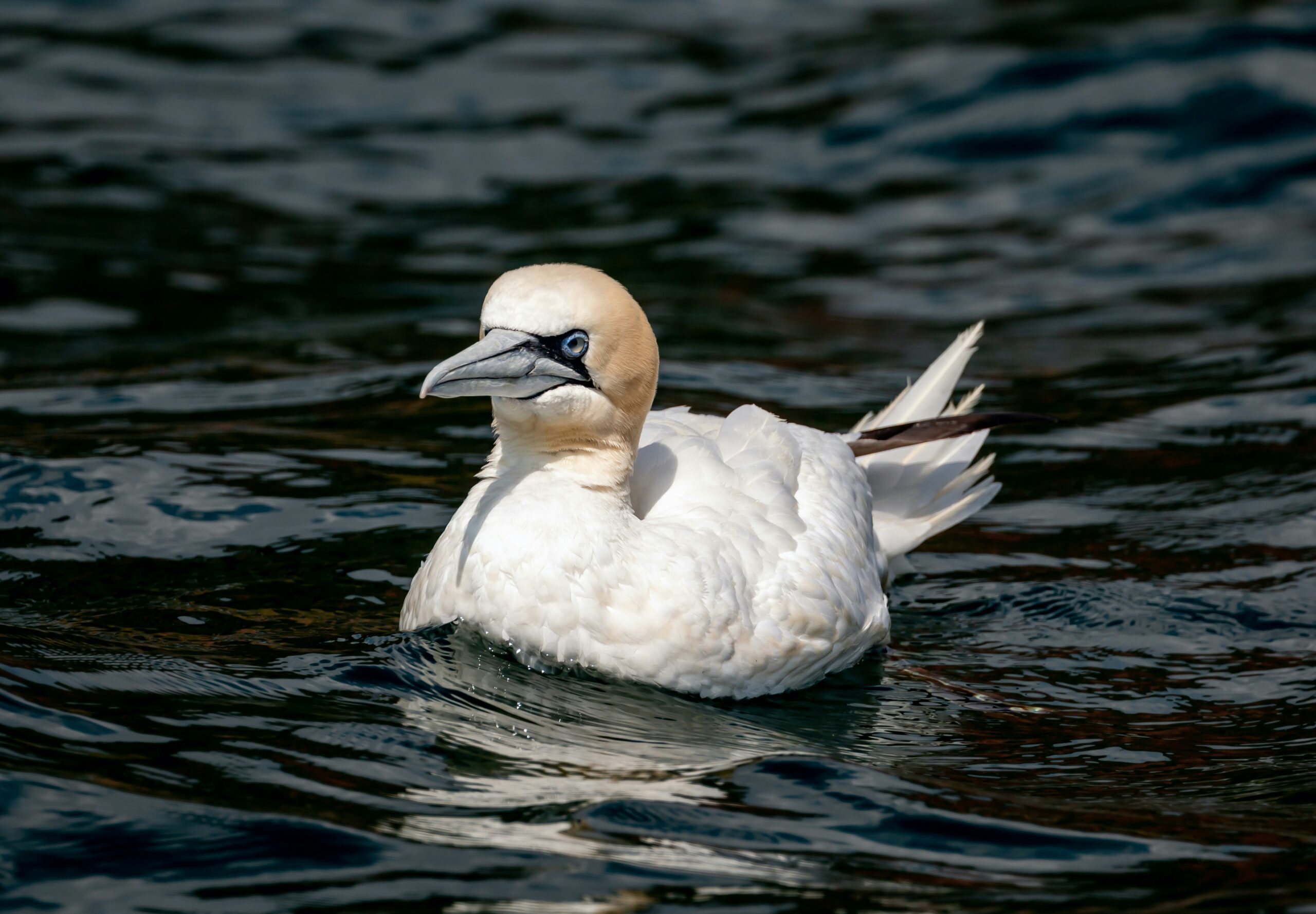
Photo by Ray Harrington
Permission has been refused for this year’s guga hunt, the centuries-old harvest of young gannets on the uninhabited Hebridean island of Sula Sgeir, after NatureScot’s board concluded the cull could harm a gannet population still recovering from avian flu. The decision, confirmed on 3 August, brings to a halt Scotland’s last remaining licensed seabird hunt, at least for this season.
A centuries-old tradition
Hunting seabirds on Sula Sgeir, a small rocky island 40 miles north of Ness on the Isle of Lewis, is understood to date back to the time of the Vikings, according to historian Donald S Murray, author of The Guga Hunters. Murray told BBC Radio Scotland that birds were historically a vital food source for a community facing what he called “geographical difficulties,” with rough seas making fishing hazardous and poor-quality moorland limiting what the land could provide. “It was a case of survival,” he said.
Each August, a party of ten islanders known as the Men of Ness has traditionally spent around ten days on Sula Sgeir harvesting chicks, known as guga, using long poles fitted with a noose before the birds are killed, gutted, plucked and salted on the island, as detailed in a Scottish Seabird Centre assessment of the hunt. No hunt took place in 2022, 2023 or 2024 owing to concerns around avian flu, and 485 birds were taken when it resumed in 2025. This year the Men of Ness had sought a licence to take either 2,000 or 500 birds.
The scientific evidence
The refusal follows a period of steep decline at the Sula Sgeir colony. According to the Seabird Centre’s assessment, the island’s gannet population fell by around 17% between 2017 and 2024, from 12,271 to 10,200 apparently occupied sites, and Sula Sgeir is now the only Scottish gannet Special Protection Area where numbers have dropped below the population recorded when the site was first designated. Last year’s licence had already been cut from a historic limit of 2,000 chicks to just 500, after interim modelling found that was the highest harvest level at which the colony could be expected to remain broadly stable over 25 years, though growth would still be suppressed.
The Seabird Centre’s own report, published ahead of this year’s decision, went further, recommending that licensing of the hunt be ended permanently, citing sustained seabird declines, the unpredictable impact of disease, and poorly understood disturbance effects on other species nesting on the island, including Leach’s storm petrel, of which Scotland holds the entirety of Britain’s breeding population. Emily Burton, the charity’s conservation manager, said in the report that “at a time when the latest evidence shows a 17% decline across the North-East Atlantic population, every avoidable pressure matters.”
Reaction for and against
The decision has divided opinion sharply. Devon Docherty, Scottish campaigns manager at Protect the Wild, described it as “a victory for compassion, for science and for common sense,” adding that “thousands of young seabirds have been spared from a brutal death because NatureScot chose to follow the evidence rather than simply rubber-stamp another licence to kill.” Jason Rose, chief executive of OneKind, said the charity was “very relieved that the lives thousands of young gannets will be spared this year, and many more birds won’t bear the emotional toll of disruption to their lives, families and communities.” Emily Burton, speaking separately to the BBC, said: “Gannet populations have suffered significant declines, and many colonies are still recovering from the impacts of avian influenza.” More than 106,000 people had signed a Scottish Parliament petition calling for the hunt to be banned.
In Ness, the response has been one of dismay. Agnes Rennie, chair of the local community land group Urras Oighreachd Ghabhsainn, said the hunt “is a centuries-old tradition which reinforces our unique communal identity and helps families keep ancient Gaelic customs alive and relevant in the modern world.” Murray, for his part, argued food security in the islands was not guaranteed and pointed out the hunt was not unique, noting that sooty shearwaters, or muttonbirds, are traditionally hunted on Rakiura in New Zealand; he described the campaign against the guga hunt as “monstrous.”
Murdo MacRitchie of the Save Our Guga Harvest group said there was “deep disappointment” in Ness, but added: “That decision has to be respected and we will continue to work with NatureScot to help us fully understand the scientific grounds on which it was based.” He stressed that welfare concerns had also been examined: “It should be noted that NatureScot addressed the issue of welfare and, having taken advice from Scotland’s chief veterinary officer, again confirmed the method of dispatch is humane.” Torcuil Crichton, Labour MP for Na h-Eileanan an Iar, has lodged a Freedom of Information request over how the decision was reached, arguing that “the numbers haven’t changed, the situation hasn’t changed but the way of measuring the numbers has changed,” and describing the outcome as a “hollow victory” for objectors.
The dispute has also turned confrontational at times: NatureScot’s Inverness headquarters were vandalised with anti-hunt graffiti in February, followed by a rooftop protest in March.
What NatureScot said
A NatureScot spokesperson said the application had been assessed against legislation using the most recent scientific evidence, including an updated population model. “As a result, we have concluded an adverse impact is possible, both at the applicants’ requested application limit of 2,000 juvenile gannets, and at a reduced limit of 500,” the spokesperson said. They confirmed the refusal was not necessarily permanent: “This decision does not prevent the Men of Ness applying for, and obtaining, a licence in future years. The hunt is recognised in law under the Wildlife and Countryside Act and NatureScot has a duty to consider any licence application based upon the best available science.”