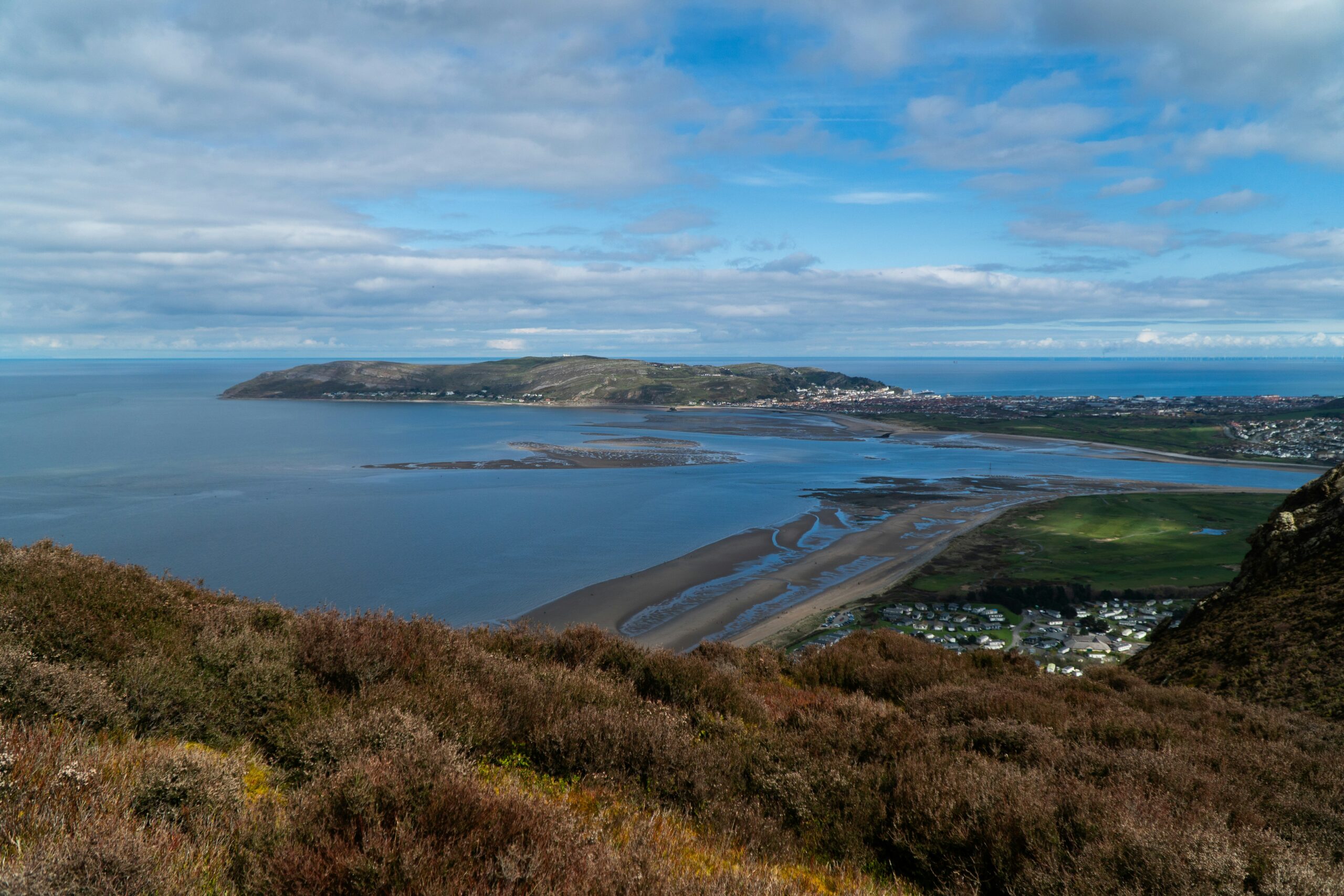
Photo by Markus Freise
Scientists at Bangor University and the Zoological Society of London (ZSL) have completed a landmark restoration project to return native oysters to Conwy Bay, the first scheme of its kind in North Wales and a significant step in the fight to save a species that has lost more than 95% of its UK population over the past century.
The project, part of the partnership programme Restoring Wild Oysters to Conwy Bay, placed shell material known as cultch onto the seabed to form the foundation of a new underwater habitat, onto which 2,000 mature European flat oysters (Ostrea edulis) were deployed across a restored 640 square metre area. The ambition is to create a self-sustaining biogenic reef, a living structure built by the organisms themselves, for the first time in over a hundred years.
A species lost from living memory
The European flat oyster was once central to Welsh coastal life, supporting fishing communities across North Wales. Centuries of over-harvesting, habitat loss, deteriorating water quality, and disease drove the species to the edge of extinction. Across the UK, wild populations have declined by more than 95% since the mid-nineteenth century, and research published in late 2024 confirmed that European native oyster reef ecosystems are now universally collapsed across their former range, a finding that ZSL’s Alison Debney described at the time as a signal that the loss had reached the point where it had been “lost from living memory.”
The Conwy Bay project has been running since 2021, when oyster nurseries were first suspended from pontoons at Conwy Marina and Deganwy Marina to allow juvenile oysters to reproduce in protected conditions. The results have been encouraging: survival rates of around 83%, approximately 240 million larvae released during recent spawning seasons, and an estimated 112 million litres of water filtered by the nursery oysters. Monitoring recorded 79 different species using the nursery habitat between 2023 and 2025.
Each oyster filters 200 litres a day
Celine Gamble, Senior Restoration Project Manager at ZSL, highlighted the cumulative effect of returning even a small population: “Native oyster reefs have disappeared from our British coastline, and with that we have lost the many benefits they bring. We’re working to bring back the species from the brink of extinction, helping to create healthier and more resilient coastal waters. Despite their small size, oysters make a big impact. Each adult oyster is capable of filtering approximately 200 litres of water a day, around a bathtub’s worth, helping to improve water quality and clarity.”
Maria Hayden-Hughes, Research Officer at Bangor University, described the deployment as the product of years of multidisciplinary effort: “The culmination of a huge amount of work — expert teams from across industries coming together, guidance from our local work group and technical group members, more than 1,460 hours dedicated to monitoring oysters by volunteers, and research to inform site suitability – marks a major step towards recovering this vital lost marine habitat and gives the native oyster population a chance to recover.”
Community reconnection at the heart of the project
The project has been supported throughout by a working group of local community members, and included a substantial public engagement programme. Between 2023 and 2025, the team engaged more than 11,280 members of the public, delivered education programmes reaching 3,060 students, and trained 303 citizen scientists. Rhianna Parry, Engagement Officer at Bangor University, said: “In many coastal communities, the living memory of native oysters has faded. By restoring oysters to Conwy Bay, we are helping reconnect people with their natural heritage.”
The project was funded through the National Lottery’s Nature Networks Fund (round 2), awarded by the Heritage Fund on behalf of the Welsh Government. The site will continue to be monitored, with results informing whether and how the project scales up. A next phase, under the name Connecting Conwy, is already in development.
The Conwy Bay work sits within a wider network of 18 native oyster restoration projects currently active across the UK and Ireland, coordinated through the Native Oyster Network and linked to the pan-European Native Oyster Restoration Alliance. Separately, a project off the North Norfolk coast, backed by Purina and described as the UK’s largest oyster reef restoration to date, aims to embed four million oysters by the end of 2026, a sign that momentum around the species is building nationally.