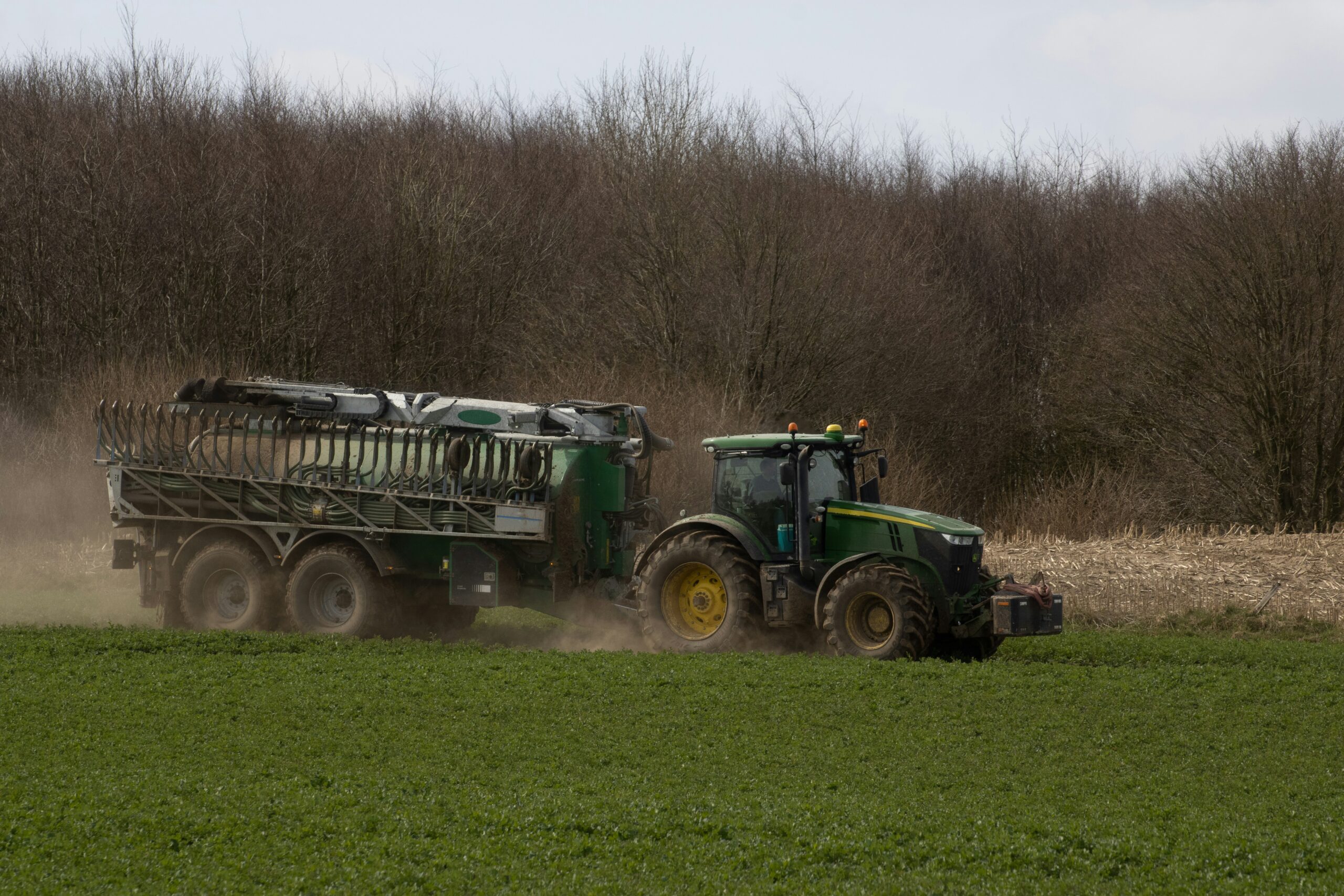
 Image description: John Deere tractor towing a slurry tanker. Photo by Mirko Fabian on Unsplash
Years of river protection effort under review
The Welsh government has signalled it will unwind the ban on spreading muck between mid-October and January, a rule introduced specifically to prevent slurry being washed into rivers during winter rainfall. Cabinet Minister for Rural Resilience and Sustainability Llyr Gruffydd said the regulation “doesn’t work” and indicated a shift towards a technology-led system rather than reliance on fixed dates. The original rules were brought in by the previous Welsh Labour government in 2021.
Slurry mismanagement is recognised as a leading cause of agricultural pollution in Wales, with runoff stripping oxygen from rivers and harming fish populations. An independent review in 2024 concluded the regulations were necessary for protecting water quality, while suggesting refinements to make them more targeted and clearer.
Environmental campaigners express concerns
Environmental groups have voiced reservations about reopening the winter window. River and conservation organisations have long pressed for stricter measures, citing farm run-off as a significant driver of poor water quality across Welsh rivers. Regulators and conservation bodies continue to flag river water quality as a pressing concern as the policy review begins. The original regulations themselves emerged after almost a decade of debate and repeated warnings from environmental bodies.
Farming sector welcomes change despite environmental concerns
The new Plaid Cymru administration has framed the change as a partnership with farmers. NFU Cymru welcomed the minister’s comments, arguing that fixed dates have left growers unable to act when soil and weather conditions are right and put pressure on slurry storage. The farming sector mounted the largest protest seen outside the Senedd in 2024, with the slurry restrictions one of several grievances.
Gruffydd also outlined a net zero target of 2040, ten years ahead of the rest of the UK, and rejected the idea of tension between farming and environmental aims. He suggested changes could be in place by the coming winter, subject to implementation timescales.