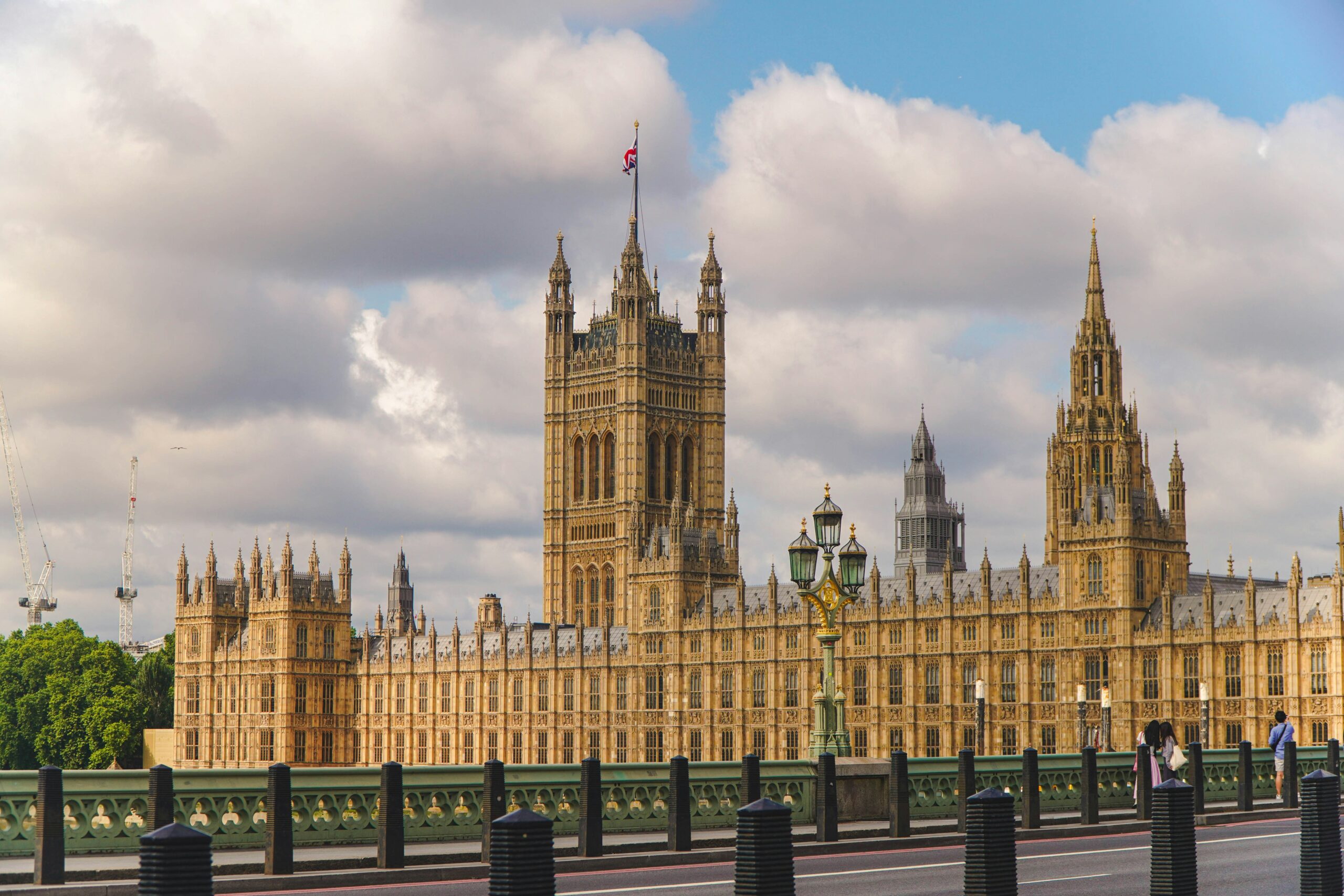
 Image description: The Palace of Westminster, commonly known as the Houses of Parliament, located in London, England. Photo by Martine Mussies on Unsplash
MPs debate national referendum on public ownership of water industry
The future of the private companies that run England’s water industry has been debated in Westminster after more than 200,000 people signed a petition calling for change.
Launched by Ash Smith, from Windrush Against Sewage Pollution, the e-petition called for a national referendum on whether the water industry should be returned to public ownership.
The debate did not have the power to grant a referendum, but did give MPs the opportunity to put forward their opinions on the current ownership model.
MPs agree current model “broken” but differ on how to repair the system
The BBC reports that while MPs who took part in the Westminster Hall debate did not agree with the need for a referendum, there was broad consensus that the current model was “broken”, with differing opinions on how to fix it.
For example ,Oxfordshire MP Olly Glover argued against nationalisation, instead proposing the creation of mutually owned, public benefit corporations, “owned by customers, professionally managed and not driven by shareholder profit with effective regulation”. Liberal Democrat spokesperson Roz Savage similarly said her party “share the petitioners’ diagnosis that the present model has failed”, but advocated mutually owned public benefit water companies rather than conventional nationalisation.
Meanwhile, Water Minister Emma Hardy said the Government was working across Whitehall on a new Water Bill and that the change of Prime Minister had opened up options that were previously unavailable. Hardy did not commit the Government to a particular ownership model during the debate, but said significant reform was required. She added that the Government would “look at all possible solutions for the water industry” and that its 10-year plan for Britain would set out plans for “stronger public control” over essential services including water.
“10-year plan” for Britain due in November
Andy Burnham plans to release a “10-year plan” for Britain in November, part of which will spell out how he intends to bring utilities such as water and energy companies under public control.
Under plans first revealed by the Telegraph on the 15th of September, Burnham is understood to be considering creating nine regional bodies, roughly matching the geography of the biggest water companies in England and Wales. They will be tasked with setting company objectives and holding bosses to account over bills, shortages and sewage discharges. Government sources have allegedly described the reports as “speculation”, and added that there would be more details in the 10-year plan.
The Guardian also recently revealed prime minister Burnham is considering changing the law to take Thames Water into special administration, which could be the first step to nationalisation.
PM’s allies tell him not to back down on pledge to put water firms under public control
However, Mathew Lawrence and Mark McVitie, who the Guardian reports helped provide an intellectual underpinning to Burnham’s project over the summer, have both warned that merely giving politicians oversight of key utilities rather than financial control will fall short of what the prime minister promised.
Lawrence, the director of the Common Wealth thinktank, said: “Putting mayors in charge of water services is a successful model the world over. But the critical question is, will public oversight without ownership provide meaningful control over privatised companies or not?”
McVitie, the former director of the Labour Growth Group, said: “Local leaders having real power over water investment would be a positive step. But public control has to mean more than public scrutiny…. The question is whether the public interest can actually be enforced in the face of the interests of monopoly operators.” He added: “Regional boards may improve planning, but unless the financial model is made to work for the British people, rather than the other way round, we risk giving local leaders more responsibility for a system they don’t have the power to fundamentally change.”
The House of Commons Library published a new research briefing examining ownership of the water sector in England and Wales
Published on 10 September, the research briefing entitled ‘Ownership of the water sector’ provides background on the history, ownership and regulation of the industry, as well as examining the potential legal and financial implications of bringing water companies into public ownership.
The Commons Library describes its briefings as impartial research and information for MPs and their staff. The latest briefing notes that the water industry in England and Wales has been in private ownership since its privatisation in 1989, while also setting out the UK Government’s programme of water-sector reforms. You can see a full analysis of the briefing via Water Magazine’s coverage.