Photo credit: Nick Russill
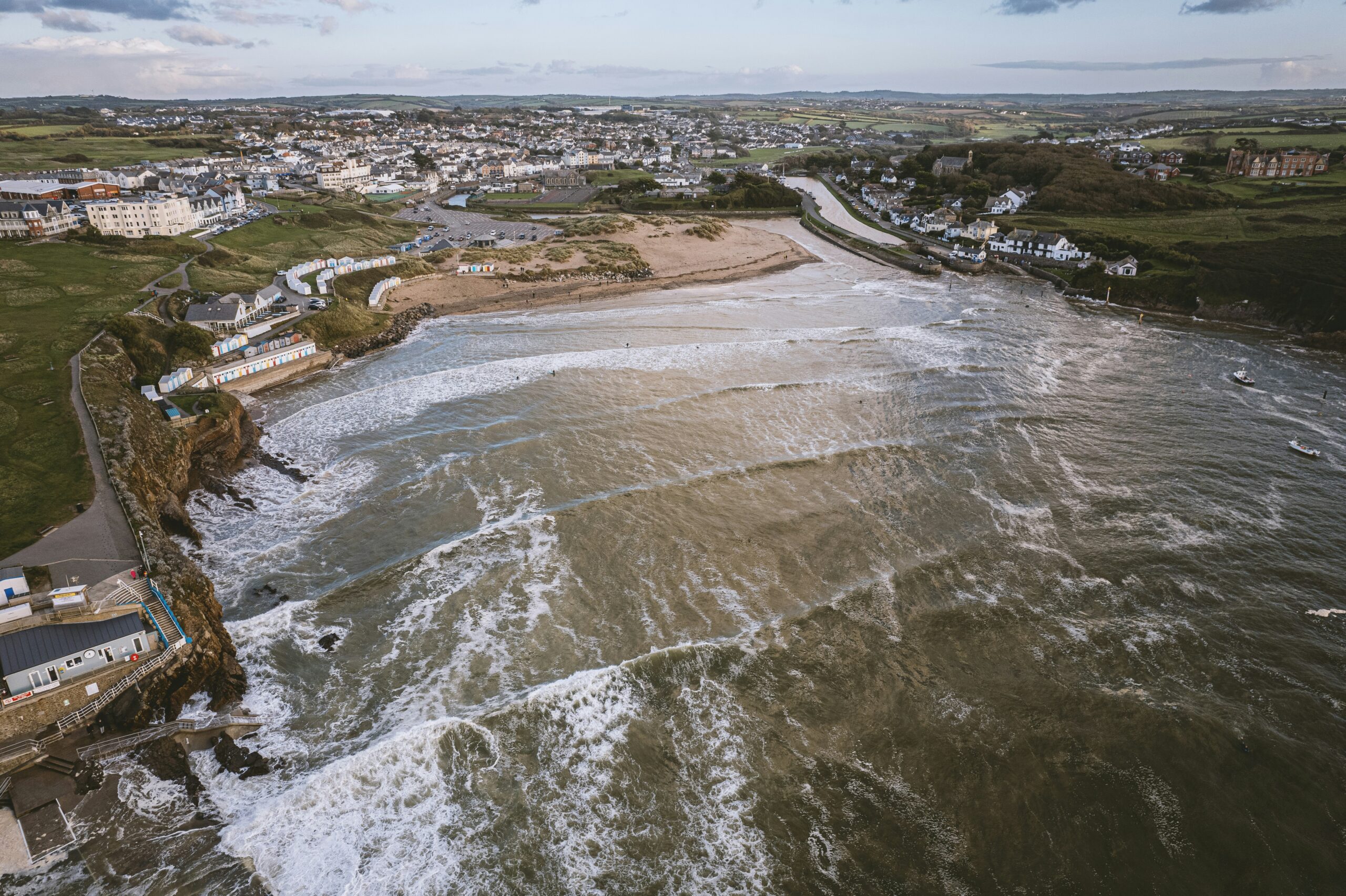
Hundreds of jellyfish washed ashore at Summerleaze Beach in Bude, Cornwall, on 2 July, drawing crowds to a striking purple carpet of stranded animals beside the town’s sea pool wall. Scientists at Plymouth Marine Laboratory, who documented the stranding, said the mound was made up mostly of moon jellyfish, alongside blue jellyfish and mauve stingers.
What drives a bloom
Professor Angus Atkinson, a senior marine ecologist at PML, said the exact cause of the recent blooms is not yet known, but that large aggregations can be a natural phenomenon shaped by weather, ocean currents, prey availability and changing ocean conditions. Some years produce enormous blooms while others see relatively few individuals.
He noted that warmer seas do not necessarily cause blooms, but can favour some species by speeding up their life cycles and extending the season in which they reproduce. Several factors combine to create the right conditions, including warmer water, abundant plankton, currents that hold jellyfish in feeding areas, fewer predators, and successful reproduction in earlier seasons. Blooms often reflect conditions over months or years, not just current weather.
The stranding followed an exceptionally warm spring and early summer. PML’s plankton monitoring at the Western Channel Observatory, one of the longest running marine datasets in the world, has recently recorded samples rich in diatoms, dinoflagellates and other microscopic life that feed jellyfish in their larval stages.
Part of a wider pattern
The jellyfish are not the only species responding to warmer waters. An octopus bloom off the south-west, which accelerated from January 2025 and is still continuing, is having significant effects on fisheries and ecosystems. The common octopus is native to UK waters but usually rare, favouring warmer seas further south. A study co-authored by PML scientists found that all major octopus blooms have coincided with unusually warm conditions, which are becoming more frequent with climate change.
Fishers in the region have felt the shift. One Mevagissey fisherman who moved from scalloping to octopus told PML that scallops are now almost non-existent in some bays, while octopus catches run between 800kg and 1.5 tonnes a day.
Though jellyfish can frustrate swimmers, they are an important part of marine food webs, feeding species including leatherback turtles, sunfish and some seabirds, while themselves feeding on plankton and fish larvae. PML said events like the Bude stranding, combined with long-term monitoring and public observations, give scientists valuable clues about how warming seas are reshaping coastal waters.