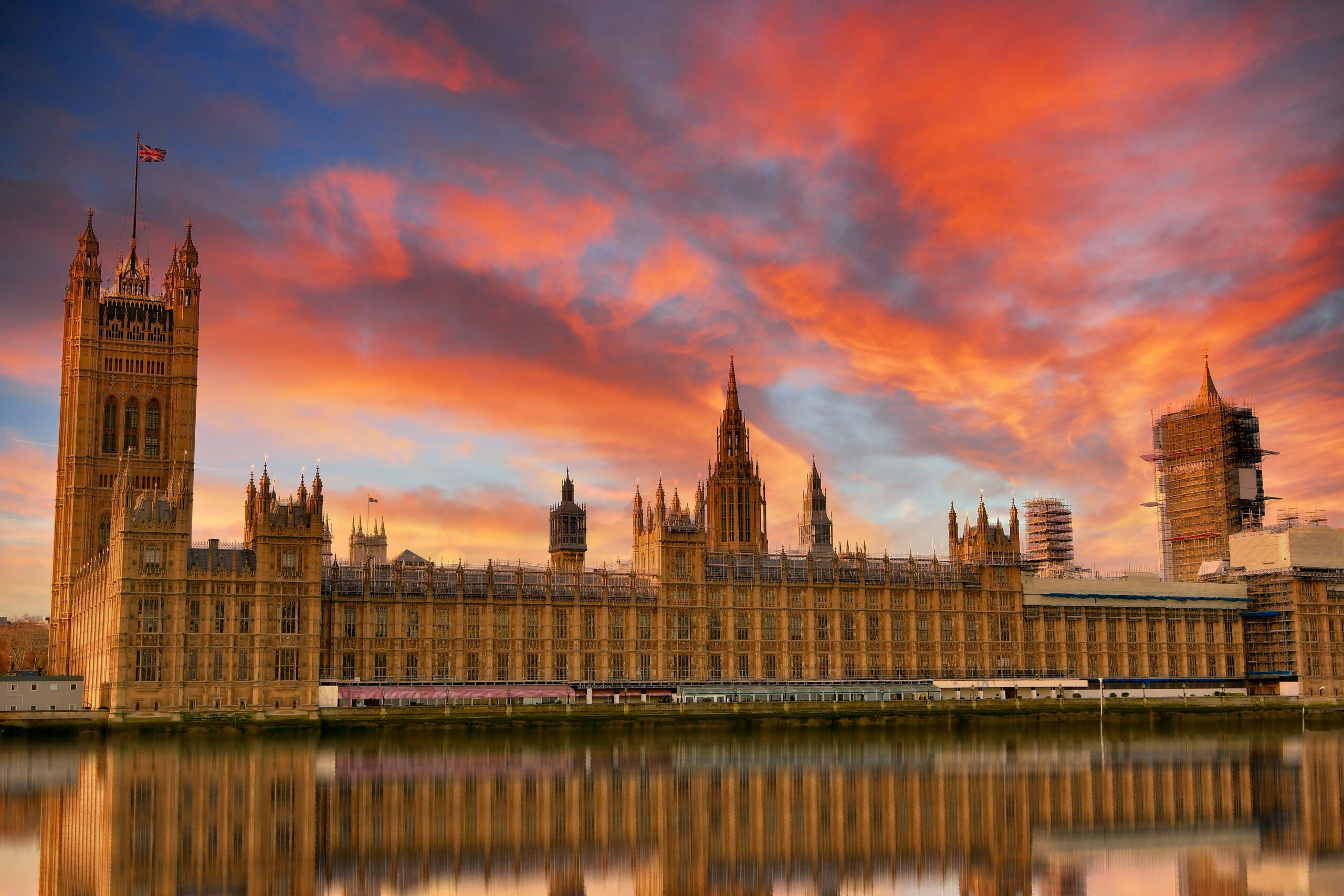
Photo by Peter Kostov
Speaking at the State Opening of Parliament on 13 May, King Charles III confirmed a sweeping legislative programme for 2026–27, anchored by an Energy Independence Bill and a Clean Water Bill. For marine professionals, the speech contained both significant opportunity and pointed omissions.
“My Ministers believe that energy independence must be a long-term goal of national security and that the nation’s energy security requires long-term investment and reform, as demonstrated by recent events in the Middle East,” the King said. “Increased production of clean British energy will help to ensure that enemies of the United Kingdom cannot attack the economic security of the British people.”
Energy and offshore infrastructure
The Energy Independence Bill is expected to fast-track grid infrastructure, including pylons, substations and sea cables, to connect new renewable projects more quickly, and to accelerate the rollout of offshore wind farms and hydrogen technology by reforming planning and regulatory frameworks. A permanent statutory ban on new North Sea oil and gas exploration licences sits at its heart, underpinning the government’s ambition to reach at least 95% clean electricity generation by the decade’s end. The bill builds on January’s Hamburg Declaration, in which the UK and North Sea nations pledged to jointly deliver 100GW of offshore wind, including hybrid assets connecting wind farms directly to multiple countries via undersea interconnectors.
A companion Nuclear Regulation Bill will implement the Fingleton Review’s recommendations, while the Clean Water Bill proposes abolishing Ofwat and replacing it with a new integrated regulator consolidating the functions of Ofwat, the Drinking Water Inspectorate and the water functions of the Environment Agency and Natural England. Mark Lloyd of The Rivers Trust described it as “a significant moment for the water environment”, though his organisation has previously cautioned that significant government funding will be needed to deliver the reforms.
The ocean emergency that wasn’t
Conservation groups were pointed about what was absent. As Inside Ecology noted, there was no flagship Nature Bill, no new river protections and no major biodiversity legislation, despite the UK remaining one of the most nature-depleted countries in the world, with legally binding targets to halt nature decline by 2030 rapidly approaching.
The Wildlife Trusts, publishing their own King’s Speech for Nature ahead of the event, proposed eight bills they say are urgently needed, including an Ocean Emergency Bill that would give Defra emergency powers over marine by-laws and planning processes, fast-track a whole-site ban on bottom trawling in Marine Protected Areas, and establish a Marine Spatial Plan across English seas. Matthew Browne, the Trusts’ head of public affairs, said: “The UK has just four years left to meet its legally binding target to halt the decline in nature by 2030. The Government needs to act fast to step up nature recovery before it is too late.”
RSPB chief executive Beccy Speight said: “Today’s King’s Speech was an opportunity for the UK Government to press the reset button for nature. Failing to invest ambitiously to stop species disappearing and restore degraded habitats at scale has been a political choice made by successive governments. It is a mistake that will only make the challenges we face as a society, including adapting to climate change, worse and the cost of rectifying them more painful in the years to come.”
Marine Connection criticised the speech’s failure to address animal welfare, warning that “the absence of any substantial mention sends a discouraging message to campaigners, charities, and millions of people who believe animal welfare should remain a national priority rather than an afterthought.”
Scotland and the devolution dimension
For Scottish stakeholders, the SPICe research service noted that several bills extend to Scotland or touch on devolved matters, including the Clean Water Bill and the EU Partnership Bill – which will require dynamic alignment with EU law on emissions trading and animal and plant health. The Scottish Parliament will consider legislative consent memorandums for relevant bills, though SPICe researchers Sarah McKay and Iain McIver cautioned that secondary legislation made by UK Ministers in devolved areas is scrutinised by Westminster, not Holyrood – a significant gap in Scottish parliamentary oversight.
The Energy Independence Bill alone is estimated to be comparable in length to the Energy Act 2023, meaning Royal Assent could be up to 18 months away. With four government ministers having resigned on the day of the speech, the bill’s parliamentary trajectory remains uncertain.