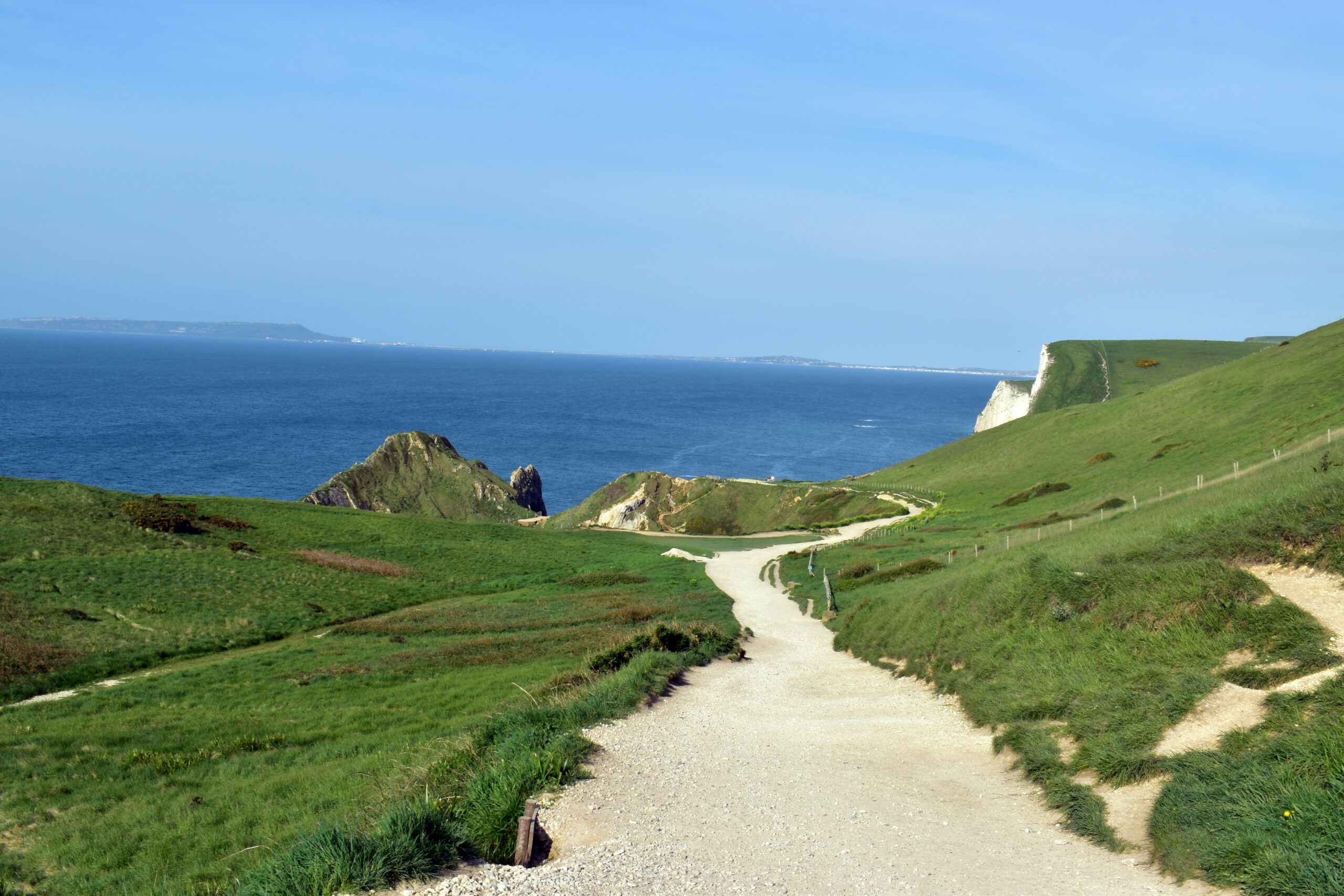
Photo by Jay Gomez
King Charles has inaugurated the longest managed coastal walking route in the world, opening a continuous footpath stretching around the entire coast of England.
The King Charles III England Coast Path runs approximately 2,689 miles and, for the first time, allows walkers to follow England’s shoreline without interruption, passing through salt marshes, sandy beaches, cliff tops, dunes and historic coastal towns. The King walked a two-kilometre section of the newly completed route at the Seven Sisters in East Sussex on 19 March, accompanied by Natural England Chair Tony Juniper and Environment Secretary Emma Reynolds, where a new National Nature Reserve was also announced.
The project was initiated during Gordon Brown’s government and required the passage of the Marine and Coastal Access Act in 2009 – described by ExplorersWeb as the most significant expansion of public walking rights in England in modern times. It has taken 18 years, seven prime ministers, and the collaboration of over 50 local authorities, landowners, National Parks, conservation groups and walking organisations to reach this point.
More than 1,000 miles of new paths have been created, with sections resurfaced, stiles removed, boardwalks built and bridges installed. Around 80% of the route is currently open, with the remainder due to be completed by the end of 2026.
Climate-proofing the path
One notable legal innovation built into the route is a “rollback” provision, the first of its kind in English law, allowing sections to be moved inland if the coastline erodes or shifts due to climate change. The provision has already proved its worth: when heavy winter rains caused a landslip on the cliffs near Charmouth in Dorset in February, a 15-metre rollback was arranged with the local landowner within weeks.
Lorna Sherriff, who manages the South West Coast Path, told the BBC: “Without this rollback provision in place that would have taken us months.”
Access and coastal rights
Natural England says the route has opened previously inaccessible land, including beaches, dunes and cliff tops, to the public for the first time. Jack Cornish, director of England for the Ramblers, which has campaigned for greater coastal access since the end of World War II, described the path as “transformational”. He said: “It creates a band of access land from the trail to the high water mark, so that means you can leave the trail to go and roam the beaches. You can picnic – and on an island nation you can really enjoy our coast for the first time.”
Juniper called the completed path “a testament to how public enjoyment, conservation, heritage, history and community can come together, helping make life better for millions of people.”
The new English path links with the 870-mile Wales Coast Path, completed in 2012. Together with Scotland’s largely accessible coastline, navigable under the country’s right-to-roam legislation, a continuous coastal walk around the entire island of Britain of around 9,000 miles is now theoretically possible.