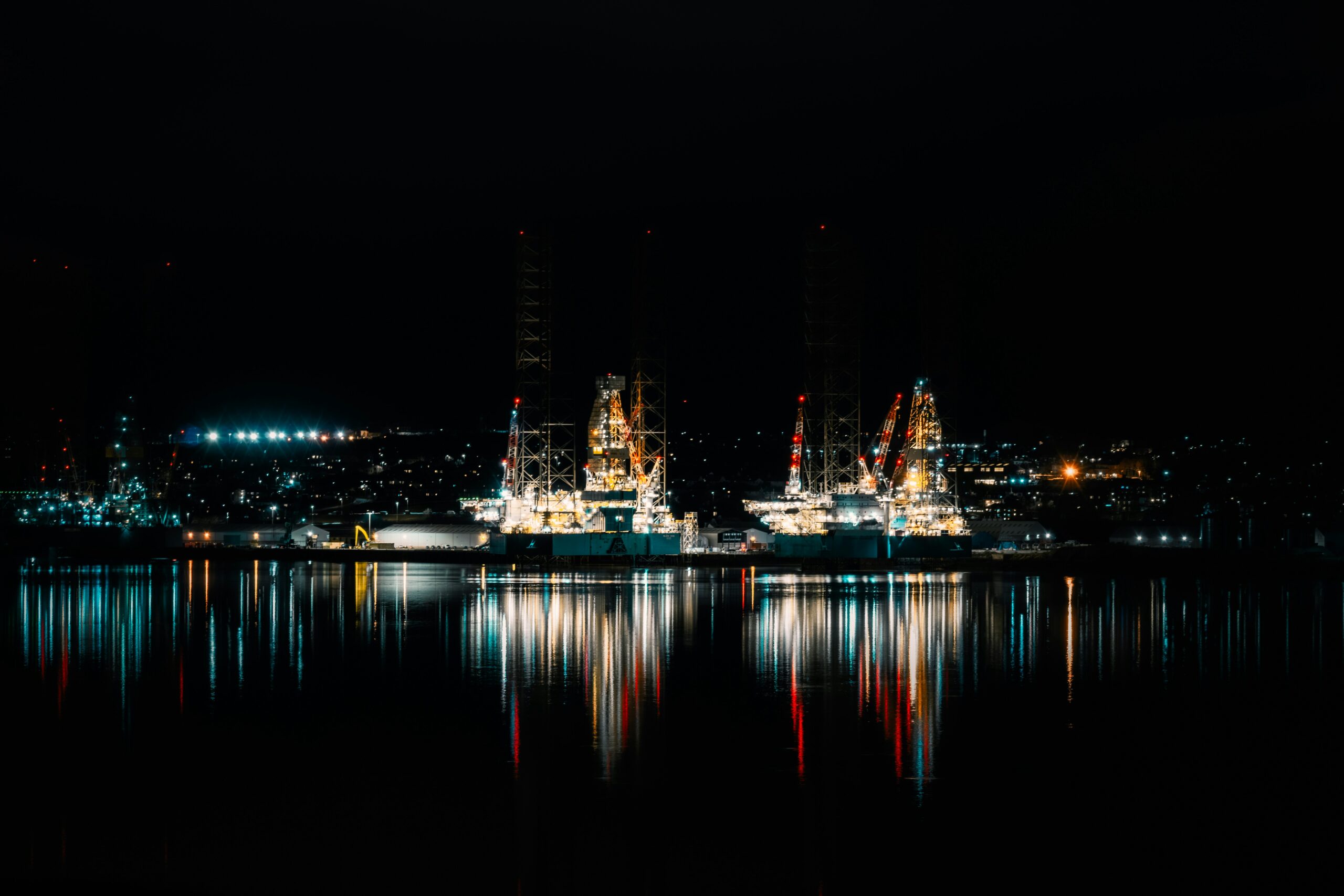
Photo by Saul Brotheridge
A public consultation on the Jackdaw gas field, east of Aberdeen, closed on 10 August, with a consultation on the neighbouring Rosebank oil field, off Shetland, set to close on 17 August. Both consultations covered updated environmental impact assessments for the two fields, and attention now turns to Prime Minister Andy Burnham facing the first major climate test of his premiership, one that has already drawn in figures from US President Donald Trump to London Mayor Sadiq Khan.
Two fields, one decision
Jackdaw, about 150 miles east of Aberdeen, is a gas field its operators say could be connected to the UK network within months if approved. Rosebank, about 80 miles north-west of Shetland, is Britain’s largest untapped oil field, containing an estimated 300 to 500 million barrels of oil, plus gas equating to roughly 1% of current UK demand. It would take longer than Jackdaw to become operational but is scheduled to be running by 2027 if approved. Both fields are operated by Adura, a joint venture between Equinor and Shell, with Aberdeen-based Ithaca Energy also holding a 20% stake in Rosebank.
Licences for both fields were granted by the then Conservative government in 2022 and 2023, prompting legal challenges from Greenpeace and Uplift. The Court of Session in Edinburgh ruled last year that both had been unlawfully approved because the government had failed to take into account the climate impact of burning the extracted oil and gas, and ordered more detailed climate assessments to be published, which formed the basis of the consultations now closing. The final call rests with Energy Secretary Miatta Fahnbulleh, who is currently on leave and has not indicated when a decision will be announced.
Two accounts of one phone call
Burnham has given his own account of a phone call held with Trump the week before last. “I indicated in the phone call that we had a week last Monday that I would take a pragmatic approach when it comes to the North Sea, and that is my intention as we go forward from here,” he said, adding: “There is a resource there – when people are struggling, we can’t ignore that.” Trump’s account, given separately in the Oval Office, went further. “The new gentleman, when I spoke to him, said he’s going to open up the North Sea,” Trump said, adding: “If you use the North Sea, the UK will be a really rich country.” Burnham has not confirmed Trump’s characterisation of the call, and has separately described himself as “open-minded” about further drilling without announcing any change of policy.
The case for approval
Adura’s chief executive, Neil McCulloch, described both fields as “advanced projects of national significance” that could “strengthen the UK’s energy security, sustain high-quality jobs and apprenticeships, support businesses across the country and generate billions of pounds of economic activity and tax revenues.” David Whitehouse, chief executive of Offshore Energies UK, said Jackdaw would be “one of the lowest emission fields in the world,” noting one in 30 jobs in Scotland were in the oil and gas industry. Enrique Cornejo, the same body’s Head of Energy Policy, put it more bluntly, arguing the government “needs to deliver a genuine change in policy” and must “back North Sea oil and gas over imports.” OEUK estimates the fields would together support 880 jobs throughout production, at an average salary of £85,850, plus a peak of more than 3,500 construction jobs, and would generate £1.4bn in tax revenue by 2029, rising to £3.8bn by 2034.
Trade union support has come chiefly from Unite and GMB. Unite general secretary Sharon Graham has called for both fields to be approved immediately, arguing that “blocking oil and gas production in the North Sea, especially now, is simply an act of monumental political self-harm,” and that “domestic gas from Jackdaw and oil from Rosebank are essential for jobs and for energy security.” GMB general secretary Gary Smith has taken a similar line, warning that the existing pause on the fields is “reckless and damaging.”
Scottish First Minister John Swinney has also indicated support, saying the current geopolitical situation “changes the balance of the arguments” and that Scotland “need[s] oil and gas for the foreseeable future,” while maintaining that “that assessment on climate compatibility has to be undertaken.” I was unable to verify this quote against a primary Scottish Government source, so would flag it for checking before use. Dunfermline and Dollar MP Graeme Downie has argued the UK should “manage the decline of the North Sea in a way that protects workers, supports communities and builds the industries that will power Britain’s future,” warning that without approval, “investment will leave the UK, jobs will disappear and expertise will be lost.”
The case against approval
Opposition has been broader and louder. WWF Scotland director Lang Banks said “there is a clear choice to be made by our politicians: continue to fuel climate chaos or support a fair transition to a safer future,” pointing to a summer of extreme heat and devastating wildfires, including fires in the Cairngorms where smoke could reportedly be smelled as far away as Aberdeen. “It would be irresponsible to approve new oil and gas developments that would accelerate climate change and do nothing to lower the energy bills of UK households,” he said. “Instead, governments should be working together to invest in renewable energy and create secure new opportunities for the workers and communities currently reliant on an oil and gas sector that is already in decline.”
Ten trade unions, including Unison, the NEU, the FBU, PCS, CWU, UCU, Equity, BFAWU, UVW and IWGB, together with more than 1,900 individual trade unionists, published an open letter calling on the government to reject Rosebank, describing it as a “climate-wrecking project” they say would produce CO2 equivalent to 70% of Britain’s annual emissions. UNISON general secretary Andrea Egan said members were “more worried than ever” about energy bills given the ongoing Iran war, but argued “new oil fields won’t do anything to reduce the prices they pay in the coming months.” FBU general secretary Steve Wright said there was “no option for a safe future other than a transition away from fossil fuels,” while BFAWU general secretary Sarah Woolley framed the choice as one between “funnelling more money to oil company shareholders” and investing in affordable, low-carbon energy.
Uplift’s executive director, Tessa Khan, was blunt about the political stakes, saying it would be “a terrible look if the first thing Andy Burnham does is cave to the demands of oil and gas profiteers.” Ami McCarthy, head of politics at Greenpeace UK, said: “Trying to squeeze the last few drops of expensive oil and gas out of the North Sea while the world is reeling from climate impacts is beyond ridiculous.” Greenpeace UK chief scientist Doug Parr has separately argued that opening a new field would be “wholly incompatible” with the Paris Agreement. Within Parliament, Green MP Adrian Ramsay has called new drilling “the wrong response,” arguing it “will do nothing to bring down bills,” while Labour backbencher Rachael Maskell has said it remains important to “follow the climate science because we have got a climate emergency.” Green Party leader Zack Polanski has separately argued approval would represent “a dereliction of duty” and a breach of Labour’s manifesto pledge, noting that Adura’s own figures put Jackdaw’s direct job creation at just 27 full-time roles.
Sadiq Khan used a Guardian column to press the government to hold firm, describing the summer’s “terrifying scenes” as evidence the world had entered an “era of extremes.” “My fear is that – without urgent action – the worst is still to come,” he wrote. Nicholas Stern, a professor at the London School of Economics, made a similar case on economic grounds, arguing “new drilling and decelerating climate action would be bad for growth and for energy security in the UK, and a damaging signal for the world.”
Energy bills, security and emissions
On the central question of whether either field would meaningfully affect UK energy bills or security, the evidence cited by both sides diverges. Fatih Birol, executive director of the International Energy Agency, has said new North Sea drilling “would not change much for the UK’s energy security” or bring down bills, since the UK would remain reliant on internationally priced imports regardless. The UK Energy Research Centre has taken a similarly sceptical view, stating that “assertions that drilling the North Sea will provide energy resilience and affordability in the face of current fuel price shocks are a delusion.” Most of Rosebank’s oil would in fact be sent to the Netherlands for refining, as the UK’s remaining refineries cannot process the heavier crude extracted from this part of the North Sea.
On emissions, Adura’s own estimates put Jackdaw’s output at up to 35.8 million tonnes of carbon over an 11-year lifetime, equivalent to around 90% of Scotland’s total 2023 emissions, though the company says a more likely figure is 23.6 million tonnes, or about 60% of that total. Rosebank’s projected emissions are considerably higher, at almost 250 million tonnes. Adura argues Jackdaw’s emissions would “not materially influence” global warming and that displacing imported US liquefied natural gas would save the equivalent of 4 million tonnes of CO2; campaign groups dispute this, arguing displaced gas would simply be sold and burned elsewhere.
The marine dimension
Beyond emissions, campaigners have also raised concerns specific to the marine environment around the sites. Andrea Sanchez Quiroz, a Shetland resident and campaigner with the Shetland Stop Rosebank group, told Al Jazeera she is concerned about damage to the protected Faroe-Shetland sponge belt, a sensitive deep-water habitat close to the proposed Rosebank development. Energy transition researcher Greg Muttitt has separately disputed the energy security argument on export grounds, noting that around 80% of existing North Sea crude is exported rather than used domestically. “At a UK level, it’s wrong to say we need this oil because it’s not oil for the UK,” he said.
Government position
A UK Government spokesperson has said that “the North Sea remains a vital national asset, supporting jobs, growth and the UK’s energy security,” and that “oil and gas will continue to play an important role in our energy system for decades to come, alongside renewables, nuclear and other low-carbon technologies.” Fahnbulleh herself has struck a similarly cautious note in a recent interview, saying: “We’ve always been clear that oil and gas are part of the mix… We are doing the hard trade-offs to make sure that we are doing this transition in a way that still delivers affordability.”
What happens next
With the Jackdaw consultation closed and Rosebank’s window running to 17 August, a formal decision from Fahnbulleh is expected in the coming weeks, though no timeline has been confirmed. It remains unclear whether the two fields will be decided together or separately, and reports that oil and gas executives consider approval “near certain” should, as the Guardian notes, be treated cautiously given the source’s evident interest in the outcome.