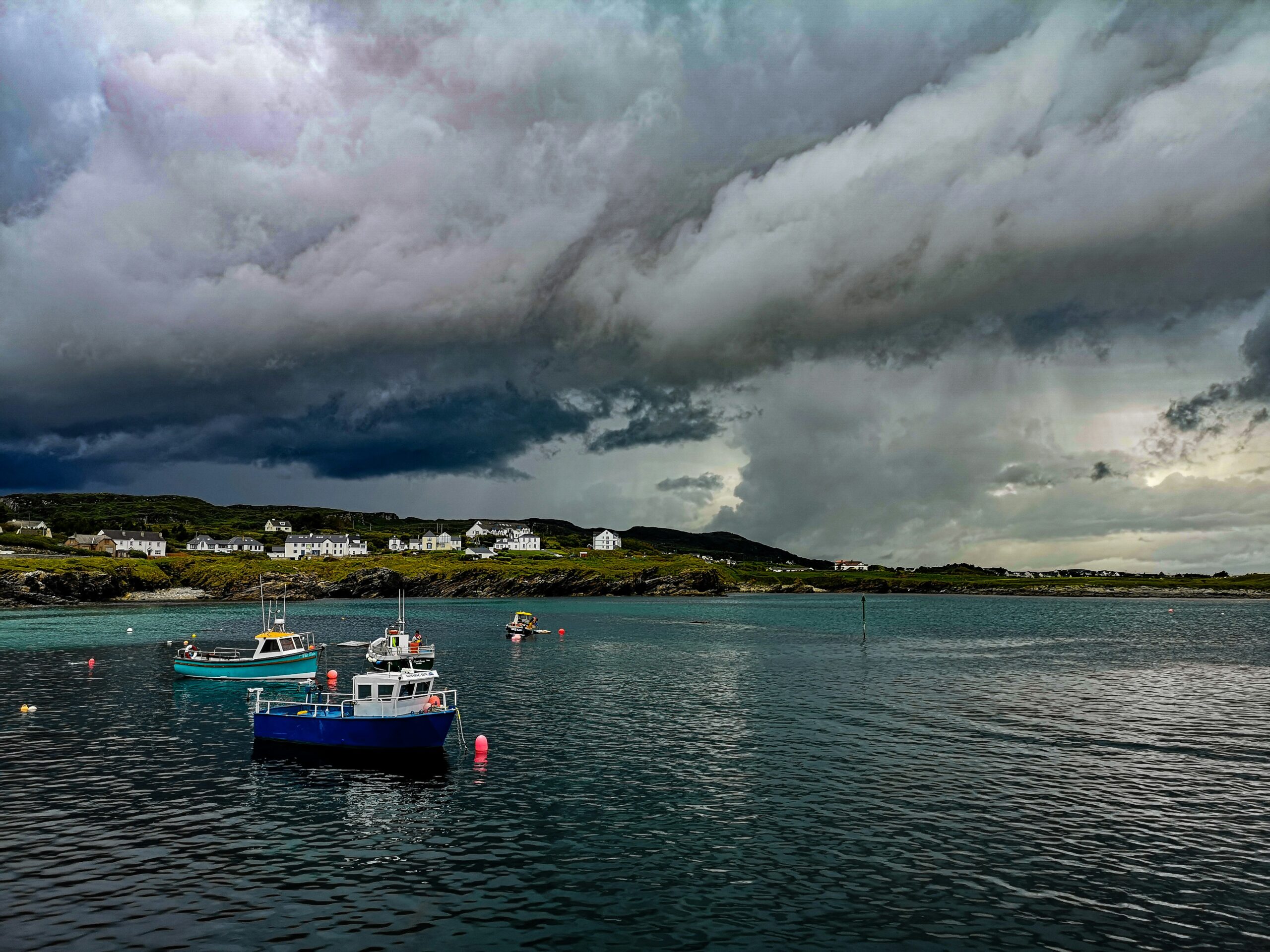
Photo by Duncan Smith
The National Inshore Fishermen’s Association (NIFA) has issued a stark warning that Ireland’s inshore fleet is facing collapse due to a combination of soaring fuel costs, years of quota cuts, and what the association describes as deliberate government policy choices.
Speaking on The Fishing Daily Podcast, NIFA Chair Michael Desmond and Vice-Chair John Menarry outlined how many fishermen can no longer afford to go to sea, with several reporting that operating costs now exceed potential earnings. Desmond said he receives daily calls from fishermen in this position.
Fuel costs hitting small operators hardest
The recent surge in fuel prices has pushed many small vessels to breaking point. Petrol prices for outboard engines have risen dramatically, and operators of petrol-powered inshore craft are not eligible for VAT refunds on fuel — a relief available to larger diesel-powered vessels. Marine diesel prices have also doubled for some operators. NIFA argues that recent government fuel reductions did nothing for the sector, pointing out that Ireland excluded marine fuels from these measures while other EU countries moved swiftly to support their fleets.
Quota system locking out small boats
A major frustration for NIFA is the recent allocation of €32 million worth of additional mackerel quota to Ireland, which the association says overwhelmingly benefits a small number of large RSW vessels. More than 300 inshore members, it argues, will receive no benefit. Under current quota management rules, only around 40 inshore boats can access the hook-and-line mackerel fishery, capped at 10 tonnes each — despite Ireland holding a national quota of 20,000 tonnes.
NIFA leaders highlighted how successive policy decisions have stripped inshore fishermen of access to traditional fisheries including mackerel, herring, salmon, and bass. In the North West herring fishery alone, 1,500 tonnes of quota went uncaught this year while the inshore sector was limited to 350 tonnes — the result, NIFA argues, of systematic quota consolidation in favour of large pelagic vessels. Fishermen also voiced concern that they have become almost entirely dependent on crab and lobster, while other potential avenues such as the spurdog fishery have been restricted for years under EU rules that NIFA says were counterproductive to stock sustainability.
Task force stalled
The government’s seafood task force, which NIFA was directed to engage with on financial supports, appears to have stalled. Meetings have been delayed, and NIFA claims that neither the chair nor the secretariat communicated these delays officially, leaving the fleet with no pathway for emergency assistance despite a worsening crisis.
Communities at risk
Both Desmond and Menarry warned that Irish coastal communities are becoming “ghost towns” as boats sell up or sit idle. They also raised concerns about official reports claiming increased profitability in the Irish seafood sector, arguing these figures are distorted by a large volume of imported seafood being processed and sold as Irish while Irish-caught landings continue to fall. They further claimed that small-boat operators are being pushed aside to make way for offshore wind energy development.
NIFA’s demands are clear: meaningful financial support, the reopening of closed inshore fisheries, and a fairer share of national pelagic quotas. Without swift action, the association warns that hundreds more jobs at sea and ashore will be lost, further eroding Ireland’s food-production capacity.