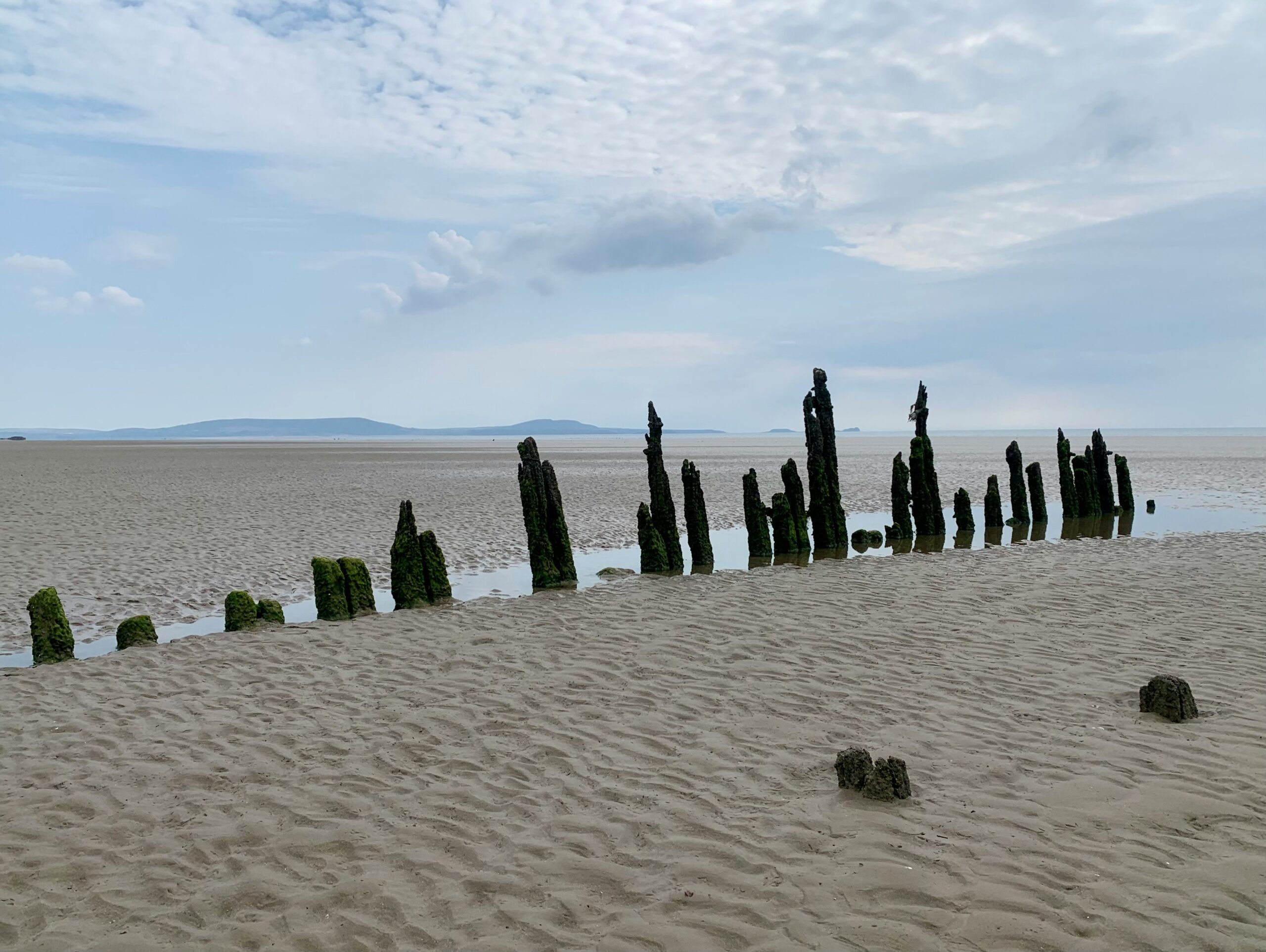
Photo by Wayne Gourley
Around 200 dead sharks have washed up on a beach in Carmarthenshire in what conservationists believe was likely a discarded or abandoned catch, raising fresh concerns about bycatch practices and unregulated gear disposal in Welsh waters.
The net was discovered on 24 May at Pembrey Beach, also known as Cefn Sidan, by dog walker Pauline Morris. “It was a shocking thing to see, because of the size of it,” she told BBC Wales. “It was over a quite big area, with fish and sharks held in a big net.”
The incident followed a separate find just days earlier at Saundersfoot beach in neighbouring Pembrokeshire, where hundreds of dead sharks and fish, believed to be catshark, also known as dogfish, were discovered by another walker.
What was in the net
Marine Environmental Monitoring, a conservation organisation that attended Pembrey Beach to investigate, confirmed the net was a gill type fishing net that would have been set at sea. A spokesperson said it contained “around 200 adult female and male Tope and Smooth-hound sharks,” along with a small number of smaller catsharks, and that all had recently died, most likely within the net itself.
The organisation collected specimens of each species and sex for further investigation. Pembrey Country Park arranged disposal of the remaining animals and netting.
The conservation significance of the species involved is considerable. Tope (Galeorhinus galeus) are listed as Critically Endangered on the IUCN Red List globally, with a declining population of mature individuals. Under UK law, tope are listed under Schedule 5 of the Wildlife and Countryside Act 1981, and commercial targeting is banned except by rod and line. Smoothhound sharks, also present in the net, are classified as Endangered on the IUCN Red List. Both species are slow-growing, late to mature and produce few offspring – characteristics that make population recovery from losses particularly slow.
Suspected cause
It remains unclear who is responsible. Marine Environmental Monitoring suggested it could have been a hobby fisherman who “didn’t know how to deal with it, or was maybe hand hauling from a small boat and couldn’t get it aboard due to the weight and cut it loose.” The organisation said it would be working with the Welsh Government, Natural Resources Wales (NRW) and the local authority to understand what happened and find ways to prevent it in future.
Cliff Benson, founder of Sea Trust Wales, said the scale of the Saundersfoot find pointed towards a fishing vessel rather than a natural stranding event. “We quite often see dogfish or catsharks seemingly intent on suicide and beaching themselves, though nobody seems to know why,” he said. “However, this is on a different scale and looks like they might have been caught by some fishing boat that was hoping to catch more commercial species and thrown overboard dead.”
NRW, which investigated the Saundersfoot incident, found no evidence of a pollution event. A spokesperson said the fish appeared to be dogfish and the incident was “likely linked to fishing by-catch being discarded at sea.” Tides had cleared the majority from the shoreline by the time officers attended. NRW said the Pembrey Beach incident had not been reported to them.
Carmarthenshire Council said it believed the find was likely linked to a trawler operating offshore that may have discarded nets and bycatch. Councillor Hazel Evans, deputy leader and cabinet member for Regeneration, Leisure, Culture and Tourism, said: “While it is always disappointing and concerning to see such incidents along our coastline, they are unfortunately difficult to trace back to a specific vessel or operator.”
A recurring problem
The incidents are not isolated. Dozens of dogfish washed up at Burry Port in 2019, attributed at the time to bottom trawling. Hundreds more appeared on Cold Knap beach in Barry in 2021, some with hooks and tackle still attached. A few dozen dogfish were found on Prestatyn beach in 2023.
More broadly, the incidents highlight the ongoing problem of ghost gear – abandoned, lost or discarded fishing nets that continue to trap and kill marine life long after they leave a vessel. Whale and Dolphin Conservation estimates that up to one million tonnes of ghost gear enters the ocean each year globally. The Ocean Conservancy describes abandoned fishing gear as the single most harmful form of marine debris. A single abandoned net is estimated to kill an average of 500,000 marine invertebrates, 1,700 fish and four seabirds.
As the Senedd’s own research has noted, ghost fishing is largely undocumented in Wales, and there is currently no financial incentive for fishers to bring lost or end-of-life gear ashore, a structural gap that conservation groups have long argued needs to be addressed by government.