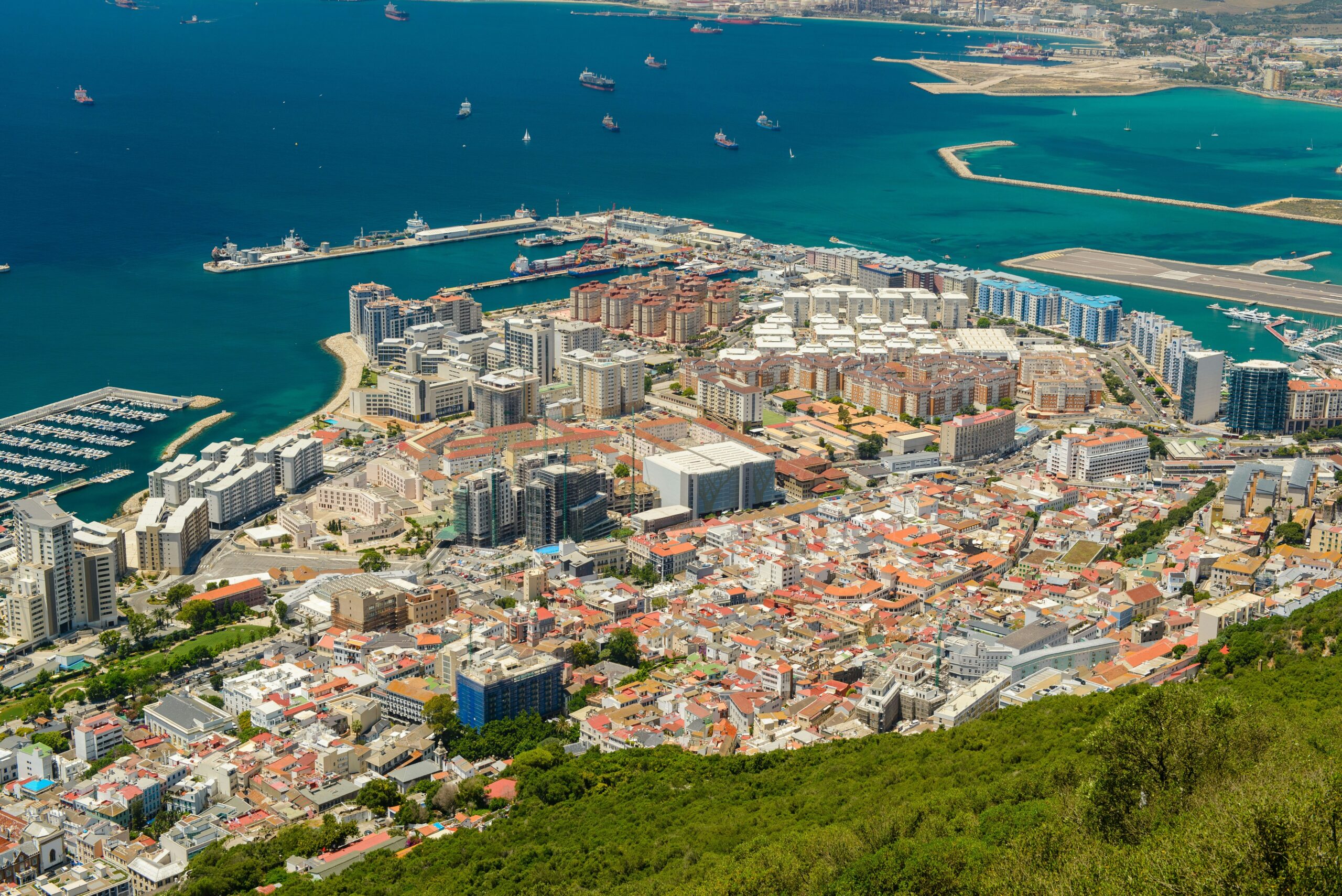
Image description: Aerial view of a port in Gibraltar. Photo by Michal Mrozek on Unsplash
In an exclusive report, the Guardian reveals that Gibraltar, a British overseas territory, has never operated a wastewater treatment plant, meaning raw sewage from nearly 40,000 people and businesses has been discharged untreated into the Mediterranean Sea for decades.
Untreated waste has been discharged for decades from Europa Point at the southern tip of the peninsula, an area the government of Gibraltar describes as having “high levels of natural dispersion”.
However, the area is also designated for wildlife protection and according to local environmental charity the Nautilus Project there are frequent sightings of wet wipes and plastic pollution on rocks and in algae. In contrast, the Gibraltar government claims that the wet wipes “that appear occasionally on our beaches have … come from outlets in nearby Spain”.
A long history of failed attempts to fix the problem
The absence of treatment infrastructure is not for want of regulatory pressure. In 2017, the European Court of Justice ruled the UK to be in breach of wastewater law over Gibraltar’s sewage. However, Brexit subsequently removed the European Commission’s power to enforce the ruling.
A contract awarded in 2018 to a joint venture involving Northumbrian Water subsidiary NWG Commercial Services and Modern Water collapsed after a Modern Water subsidiary entered liquidation. Preliminary financing discussions with the European Investment Bank also fell through as a direct consequence of Brexit.
According to the Guardian, Northumbrian Water, which held a strategic partnership in Gibraltar from 2003 to 2024 through the AquaGib joint venture, has distanced itself from the failures, stating it was never responsible for wastewater operations and that all relevant decisions rested with the Gibraltar government.
A treatment plant is now under development
In June 2025, the Gibraltar government awarded a 25-year contract to Eco Waters to design and build a wastewater treatment plant at Europa Point. Advanced design and geotechnical works are underway, and a planning application was submitted in March 2026. The government has also pointed to a £15m investment in sewer infrastructure and ongoing relining works, and maintains that bacteriological water quality at all Gibraltar bathing areas currently meets excellent standards. Gibraltar’s use of seawater in its sewerage system, rather than freshwater which is more commonly used worldwide, has historically been cited as a significant technical complication.
Sewage across the British Isles
The environmental consequences of raw sewage discharge include toxic algal blooms, harm to marine mammals and fish, and risks to human health through pathogens and antibiotic-resistant genes.
Oceana UK’s director Hugo Tagholm called on the government to act both domestically and abroad, describing the continued discharge of untreated sewage into the Mediterranean as an environmental and economic injustice that demands an end. The Guardian highlights that revelations about Gibraltar’s approach to wastewater management arrives in the midst of ongoing scrutiny over England’s own water companies releasing untreated sewage into rivers, lakes, and seas nearly 300,000 times last year, despite having treatment infrastructure in place.