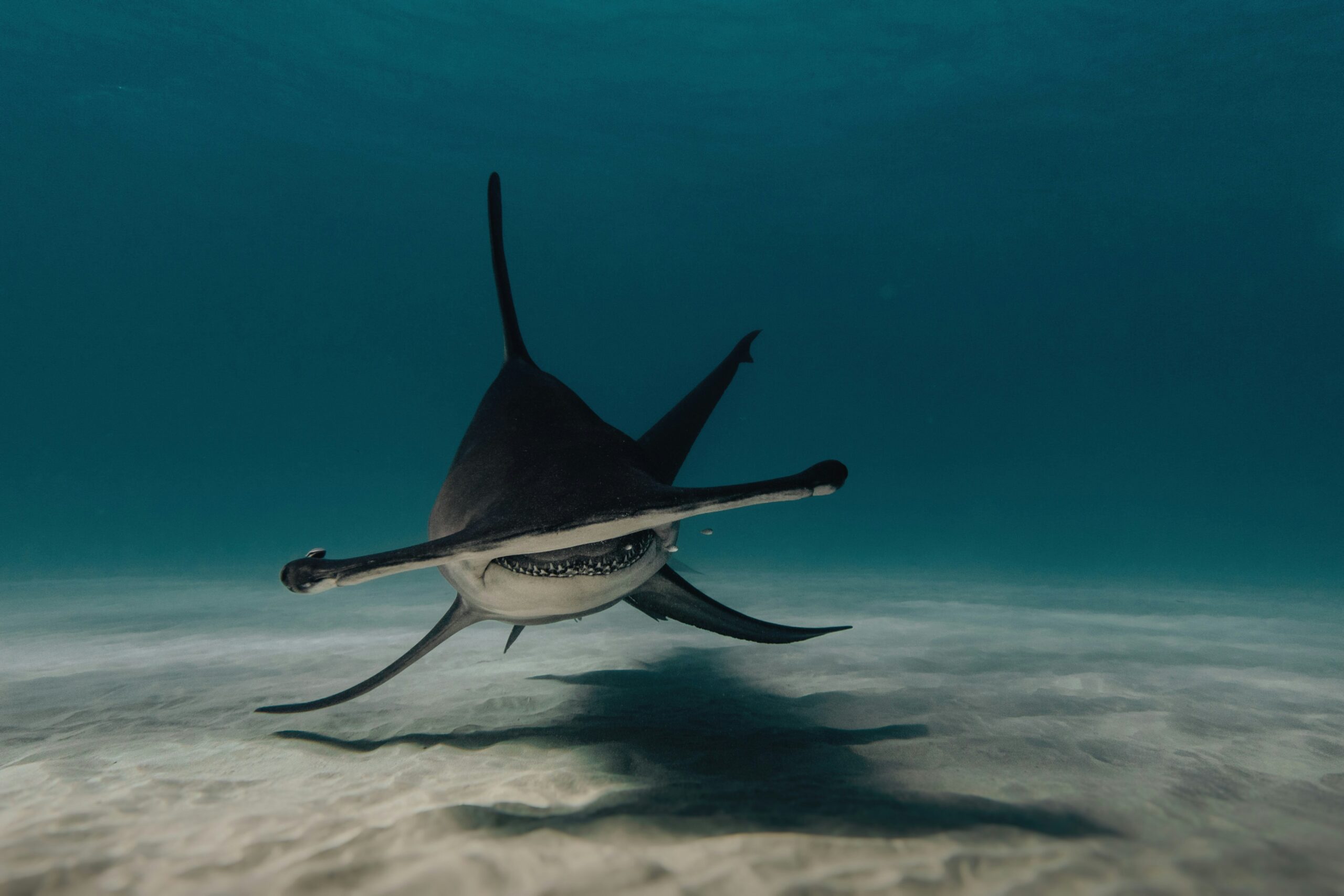
Photo by Gerland Schömbs
French Polynesia has become the world’s largest contributor to the global 30×30 ocean protection target, after President Moetai Brotherson announced on 7 June that a further 520,000 km² of the territory’s waters will be fully protected from extractive industries. The move brings the total share of French Polynesia’s exclusive economic zone under full protection to around 30%, an area covering roughly 1.4 million km², more than twice the size of continental France.
What is being protected
The newly protected zone, near the Austral, Marquesas and Western Society islands, will conserve 20 shark species including the critically endangered scalloped hammerhead and oceanic whitetip, and is one of the few known breeding sites for 22 bird species, among them the endangered Polynesian storm-petrel and the vulnerable Phoenix petrel. It also supports swordfish, bigeye tuna and opah, alongside 455 mollusc species, 60 pelagic fish species, three sea turtle species and ten marine mammal species. Conservation International notes the Marquesas and Austral archipelagos host species found nowhere else on Earth, including the Marquesan domino damselfish, and serve as a key spawning ground for tuna.
Building on last year’s milestone
The expansion builds on French Polynesia’s establishment of the Tainui Atea marine protected area in June 2025, which covers nearly 5 million km² of its EEZ, including roughly 900,000 km² of fully protected waters around the Society and Gambier Islands. Donatien Tanret, principal officer at the Pew Bertarelli Ocean Legacy, which helped develop the conservation plan, told Mongabay that French Polynesia has maintained a moratorium on seabed mining since 2022, reaffirmed in 2025 as part of that year’s protection commitments. Local people can continue artisanal fishing within designated zones, limited to single pole-and-line catch from boats under 12 metres, but industrial fishing is banned. Tanret said more than 8,000 km² of artisanal fishing zones will be added in 2026, on top of 190,000 km² created the previous year, and that the protections were established by consensus following more than a decade of advocacy from local mayors.
Local leadership, global significance
President Brotherson told AFP: “This is our mission as Oceanians. We also hope that it can inspire other countries, especially the larger ones, in the way they manage their relationship with the ocean.” Tom Dillon, senior vice president of environment and crosscutting initiatives at The Pew Charitable Trusts, said the announcement showed “that large-scale protections can be achieved through sustained political leadership, strong community engagement, and a clear long-term vision.” Maël Imirizaldu, a regional lead for the Blue Nature Alliance, a coalition co-founded by Conservation International, described the move as “the single largest national contribution to the global goal of protecting 30 percent of the planet’s lands and waters by 2030,” adding: “This cements French Polynesia’s place as the global leader in marine conservation.”
Financing long-term stewardship
A coalition of funders known as the Te Moana Collective, which includes the Blue Nature Alliance, has committed $15 million in seed funding for a conservation trust fund, intended to give the government and local communities the resources to manage the protected waters independently over the next 15 to 20 years.
The pressure beyond the boundary
Conservation International notes that foreign industrial fishing fleets have long operated just outside French Polynesia’s marine boundary, using fish aggregation devices that drift with ocean currents to draw in tuna and other species before they reach protected waters, a reminder that protection within an EEZ does not fully insulate the wider ecosystem from commercial fishing pressure nearby.