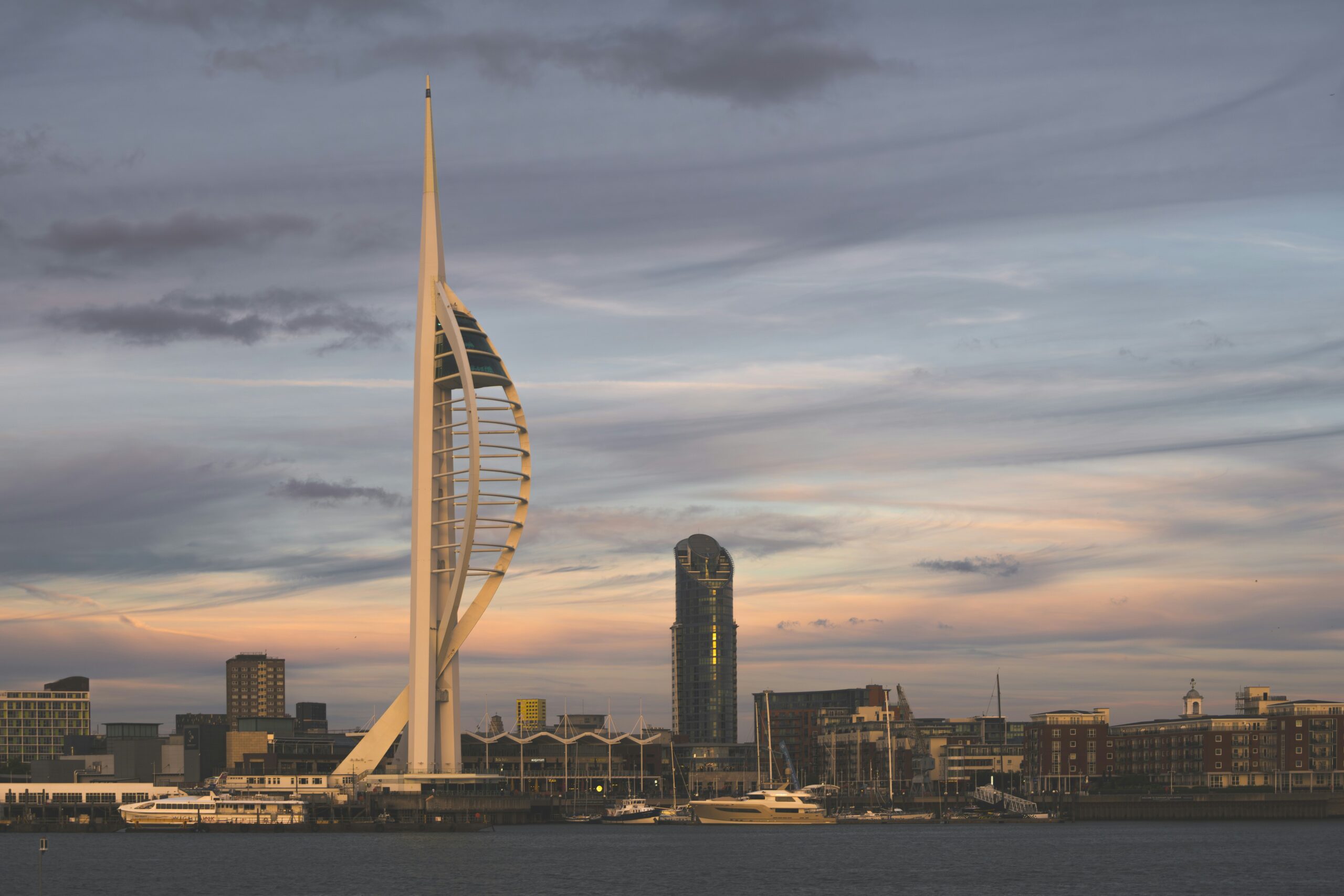
Photo by Johannes Heel
A pioneering project to deploy floating wetlands in Portsmouth’s coastal waters has been launched by the University of Portsmouth in partnership with Southern Water, the BBC reports, with researchers describing it as a practical, scalable response to the widespread loss of essential coastal ecosystems.
The project will see specially designed floating rafts hosting saltmarsh plants deployed in areas dominated by hard infrastructure such as seawalls and flood defences, environments where natural habitat has been almost entirely displaced. Marine species will be trialled on a floating system, an approach that has only been attempted six times globally. If successful, Southern Water says the technology could be deployed widely across the UK in both marine and freshwater settings.
The scale of the problem the project is addressing is significant. Researchers note that more than 85% of aquatic and marine vegetation – including saltmarsh, seagrass and kelp – has been lost over the past 50 years. By recreating floating saltmarsh habitat, the project aims to provide refuge for fish and marine life, improve water quality by absorbing nutrients and pollutants, and restore ecosystem function to some of the most heavily modified stretches of the English coast.
The wetlands have been installed at Southcoast Wake Park in Portsmouth as part of a long-term research programme using a before-and-after monitoring approach to track changes in water quality, biodiversity and ecosystem resilience over time.
Dr Ian Hendy, from the Institute of Marine Sciences at the University of Portsmouth and lead on the project, said: “By creating a floating saltmarsh, we are reintroducing habitat into spaces where it has been completely lost to development. These systems can provide refuge for marine species, improve water quality and help rebuild biodiversity in some of our most impacted coastal areas.”
Joff Edevane, environment and water quality lead for Southern Water, added: “This is a wonderful opportunity to pilot a floating wetlands approach to improving water quality and providing Natural Capital. The vision is to use this nature-based solution in protected areas in the future.”