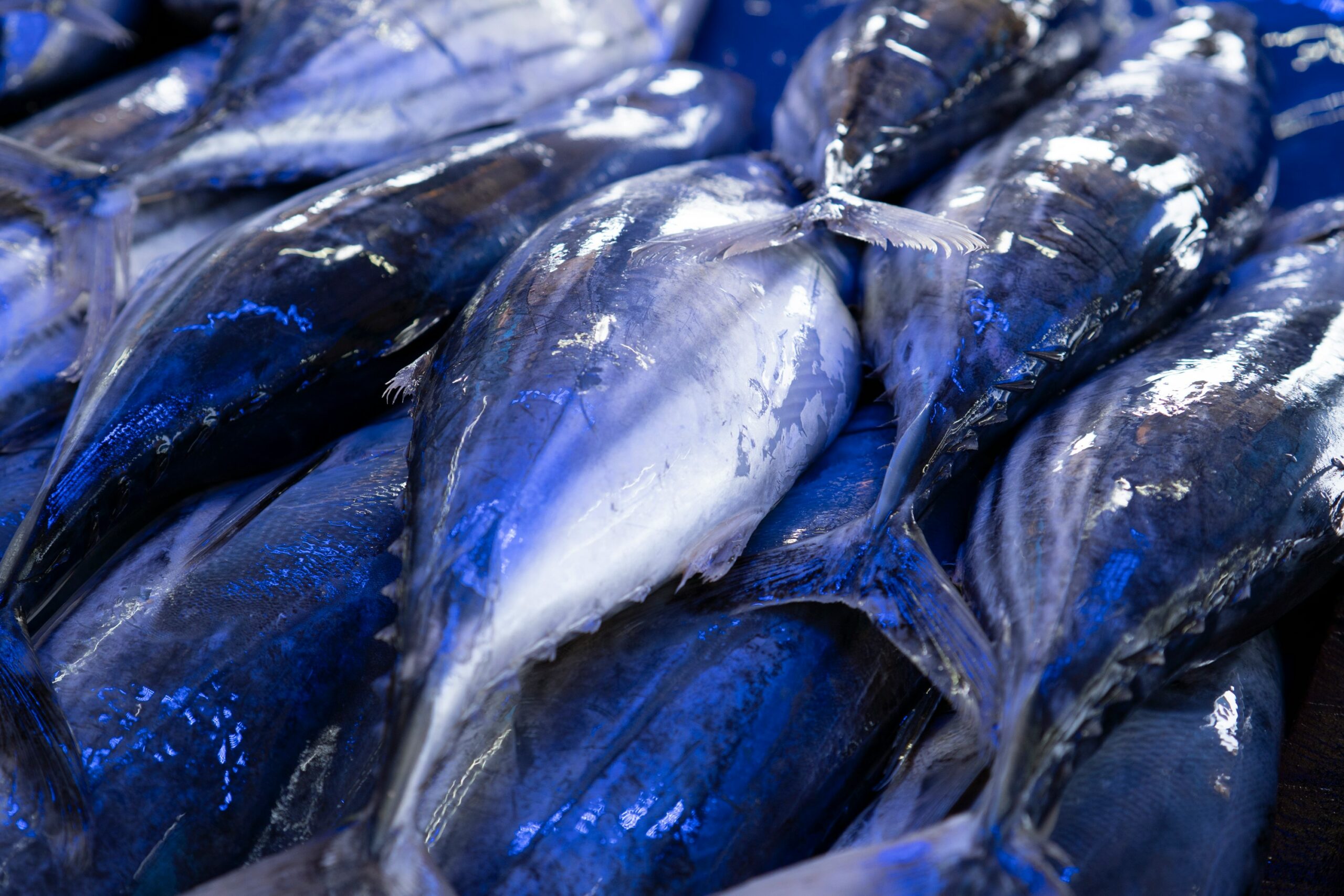
Photo by Hans Peter Traunig
The Marine Management Organisation (MMO) has allocated the 30 commercial licence authorisations for the 2026 bluefin tuna fishery following a ballot, after receiving 155 applications, more than five for every available place.
The fishery, which is restricted to UK vessels of 12 metres and under using low-impact rod and reel gear, runs from mid-July to 31 December 2026. Each of the 30 successful vessels receives a four-tonne allocation, drawn from 120 tonnes of quota set aside for the commercial sector.
A species returned from the brink
The appetite for licences reflects just how far the UK bluefin tuna fishery has come in a short space of time. Eastern Atlantic bluefin tuna declined sharply from the 1960s onwards, driven by overfishing, and were largely absent from UK waters for decades. Stock assessments since 2012 have shown positive trends in abundance, and in 2021 the IUCN moved the species from “endangered” to “least concern” on its Red List. Fish have been regularly sighted off the UK coastline, primarily around Cornwall and the southern coast, since around 2014.
WWF-UK describes the Atlantic bluefin as one of the ocean’s most remarkable fish, capable of growing over four metres long and crossing entire oceans, and notes that its return to UK waters is “a powerful reminder that, with the right protections, marine life can recover.” The caveat is familiar across conservation circles: that unsustainable fishing and poorly managed practice remain capable of reversing hard-won progress. WWF has been centrally involved in global bluefin tuna management for more than two decades, helping push ICCAT towards the science-based recovery plan introduced in 2009 that has driven the species’ resurgence.
The science of the comeback
The commercial fishery is also generating scientific opportunity. A University of Exeter project, backed by the Devon Environment Foundation, Cornwall Council, and Devon and Cornwall Wildlife Trusts, is working with MMO officers and commercial fishermen to study what bluefin tuna are eating when they return to UK waters each summer. Understanding prey availability, researchers argue, is fundamental to understanding whether the recovery will hold.
Dan Barrios-O’Neill, Head of Marine Conservation at Cornwall Wildlife Trust, said: “The return of bluefin tuna to our seas is a real sign of hope in a rapidly changing world. Understanding what these incredible ocean giants are eating is a critical first step towards understanding their role in our marine ecosystems, and what factors may affect their recovery in future.”
Blue Marine Foundation is also a partner on the research, with a focus on the policy implications. Jonny Hughes, Senior UK Marine Policy Manager at Blue Marine Foundation, said: “One of the most important elements of our policy work at Blue Marine Foundation is advocating for the inclusion of predator needs into the management of low trophic level or forage fish species, so we are delighted to be a part of this project.”
A rapidly expanding quota
Following the 2025 meeting of ICCAT, the UK secured an allocation of 230.56 tonnes per year for the 2026 to 2028 period, a near-fourfold increase on the previous allocation of 63 tonnes. In March 2026, ICCAT endorsed the UK’s fishing plan. Of the total quota, 120 tonnes supports the commercial fishery, 20 tonnes covers recreational catch-and-release permits, and the remainder covers bycatch allowances and tagging programmes.
The fishery has grown steadily from trials involving just 13 vessels in 2023 and 2024, rising to 15 in 2025 and 30 for the current season. A Defra-commissioned evaluation found that the 2024 commercial trial generated a direct economic impact of £392,007, with potential for substantially greater value as the fishery scales and relationships with downstream markets develop.
Ballot process
The MMO assessed all 155 applications against published criteria before removing identifying information, including vessel location, and entering qualifying applications into a ballot, designed to ensure fair distribution of quota in line with the objectives of the Fisheries Act 2020.
Isobel Johnston, MMO’s Head of Sustainable Fisheries, said: “As in previous years this fishery has been particularly popular. Whilst the UK has been able to double the number of authorisations available, demand has exceeded available opportunities. We welcome the increased value that the growth of the bluefin tuna fishery brings to fishers and wider coastal communities. We do however recognise the disappointment experienced by applicants who did not secure a licence authorisation this year.”
A Defra spokesperson added: “Our ambition is to continue to grow this developing sustainable inshore fishery around the UK over the next two years, and we look forward to continuing to work with commercial fishermen, Devolved Governments, and the Crown Dependencies to achieve this. We recognise that there will be disappointment for applicants who were unsuccessful.”
Tensions in the fishery
The rapid growth has not been without friction. When the MMO declined to renew half of its 2024 licences for the 2025 season, some affected fishermen spoke publicly about the impact on businesses that had invested significantly in gear and vessel modifications. One Devon fisherman described feeling that the process had been handled poorly, raising concerns about the consistency of vessel standards among newly selected operators and the MMO’s reluctance to explain individual decisions.
The Angling Trust has called for multi-year permits to give charter skippers greater investment confidence, alongside mandatory training standards and clearer fairness criteria. On training, the MMO responded in 2026, introducing compulsory accreditation for the recreational fishery for the first time.
The MMO guidance states that the TAC cycle will be reviewed annually, with the intention to expand the fishery gradually. Authorisations are non-transferable, valid for 2026 only, and do not constitute a track record or guarantee of future access to quota.