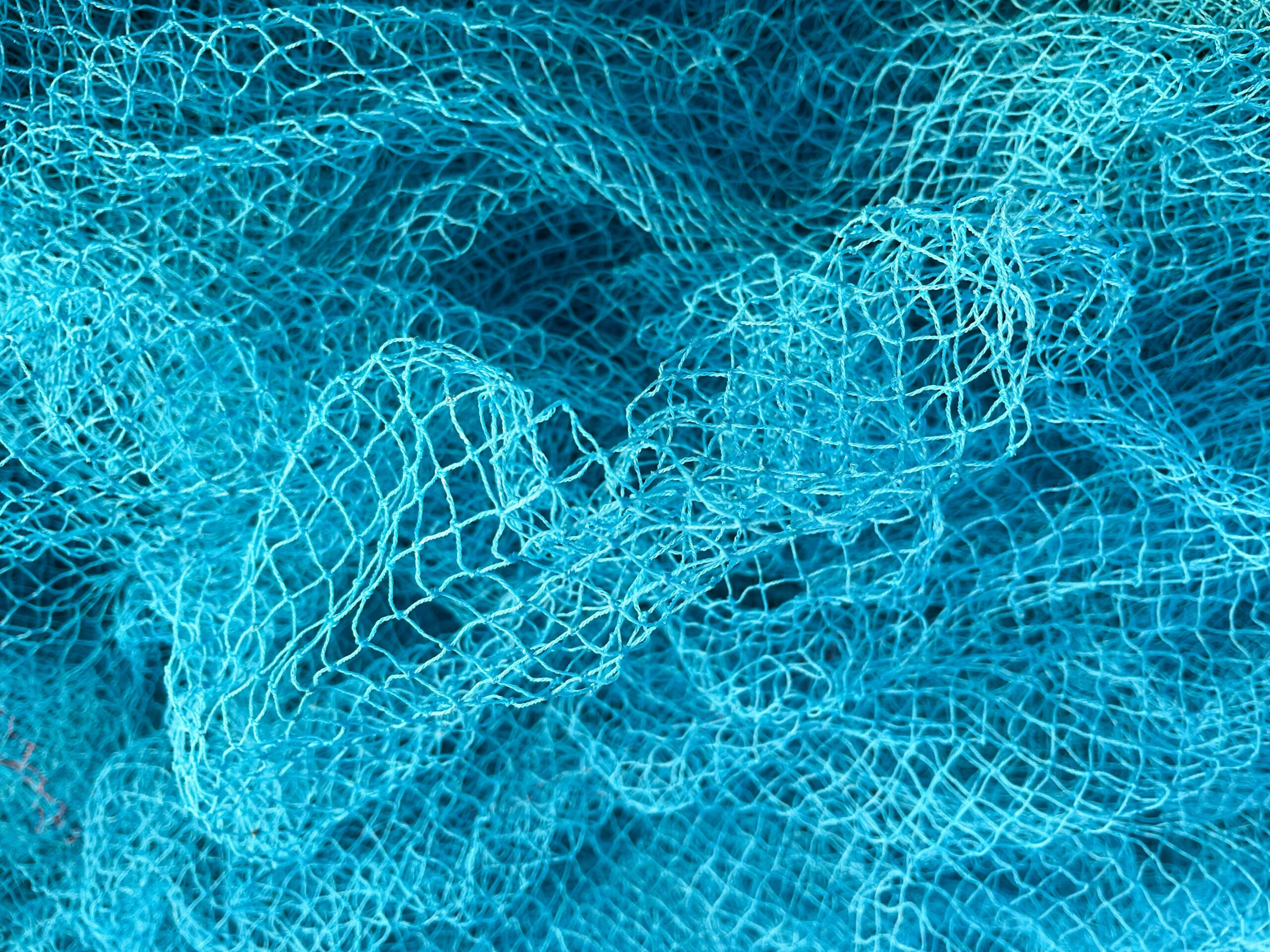
Photo by Pratik Patil
Fishing nets remain the most likely cause of death for common dolphins that strand on the Cornish coast, according to a seven-year post-mortem review that has prompted renewed calls for wider access to acoustic deterrent devices. The study, carried out by the University of Exeter, Cornwall Wildlife Trust and the Cornwall Marine Pathology Team (CMPT) under the Defra-funded Cetacean Strandings Investigation Programme, examined 175 of the more than 860 short-beaked common dolphins stranded around Cornwall between 2018 and 2024, and concluded that 39% had died after becoming entangled in fishing gear.
The findings, published this month in the journal Diseases of Aquatic Organisms, confirm Cornwall as what the study describes as the UK hotspot for common dolphin bycatch, likely a result of the large numbers of dolphins that visit the area combined with the density of fishing vessels working the same waters. Infectious disease was the second most common cause of death, at 25%, followed by live strandings of otherwise healthy animals (10%), non-bycatch trauma (8%) and starvation (7%).
Marks point to smaller vessels
James Barnett, of CMPT and the University of Exeter, who carried out most of the necropsies, said the gear marks found on the animals pointed to smaller boats as the likely source of most bycatch deaths. “Smaller vessels fishing with gill or possibly drift nets are the likely cause of the marks we found on most of the dolphins that died due to bycatch,” he said. “While diagnosed bycatch deaths have declined in the last 30 years, the bycatch cases in this study are still a significant concern in terms of potential conservation and welfare impacts.”
Barnett called for wider observer coverage across the fishing fleet to properly assess the true scale of the problem, saying monitoring needed to be improved through an “observer programme that encompassed the whole fishing fleet, from the smallest of fishing vessels to industrial-scale fisheries.” He pointed to a range of measures that have been shown to reduce bycatch, including modifying fishing gear and practices, using pingers and other acoustic deterrents, reducing the time nets are left in the water, and closing fisheries in key places to protect dolphins.
Writing on the ZSL blog to mark the paper’s publication, Barnett noted that Cornwall was first identified as a bycatch hotspot following a 1992 mass mortality event in which 30 of 38 necropsied dolphins were found to have died from entanglement, and that a subsequent study found bycatch responsible for two-thirds of common dolphin deaths examined in the county between 1990 and 2006. The current 39% figure represents a marked long-term improvement but, in Barnett’s words, “still remains concerningly high.”
Government and regulator respond
Rebecca Allen, of Cornwall Wildlife Trust, which coordinates the volunteer network that recovers stranded animals for examination, said that while many local fishermen were doing what they could, urgent action was still needed. “We need urgent, high-level action to achieve better management of the static net fishery and to support local fishers’ access to appropriate bycatch mitigation technology,” she said. “Reducing bycatch is a win-win for both fishers and wildlife; reducing interactions with fishing gear both prevents unnecessary deaths of ocean wildlife and helps protects fishers’ nets and catch.”
A Defra spokesperson told the BBC the department was taking action through its Clean Catch programme, which is trialling measures to warn dolphins away from nets in hotspot fishing areas including Cornwall. Defra added that acoustic deterrent devices could be an effective way to alert and keep some species out of nets, though it cautioned they could also carry adverse environmental consequences.
The Marine Management Organisation, which regulates the fishing industry, confirmed that acoustic deterrent devices are already required on vessels over 12 metres using bottom-set gill or entangling nets in areas where cetaceans are most common; smaller vessels not covered by that requirement must obtain a marine wildlife licence before using the devices, since disturbing cetaceans is otherwise against the law. An MMO spokesperson said: “We know fishermen never intentionally set out to catch or harm cetaceans. Their knowledge and experience working at sea is incredibly valuable, which is why we have a reporting mechanism in place.” Fishers in south-west England have separately campaigned for pingers to be made available to all fishing vessels, not just those above the current size threshold.
Other findings
The review also recorded a handful of less common causes of death. Of the 43 disease-related deaths, 32 dolphins had been severely affected by parasites, while starvation mostly affected young animals around the age of independence from their mothers. Two dolphins showed lesions consistent with attacks by bottlenose dolphins, including one 107kg adult male believed to be among the largest animals killed by bottlenose dolphins recorded in the UK; two showed injuries consistent with ship strike; and two had choked to death after flatfish became lodged in their nasal passages.