Photo by Mitili Mitili
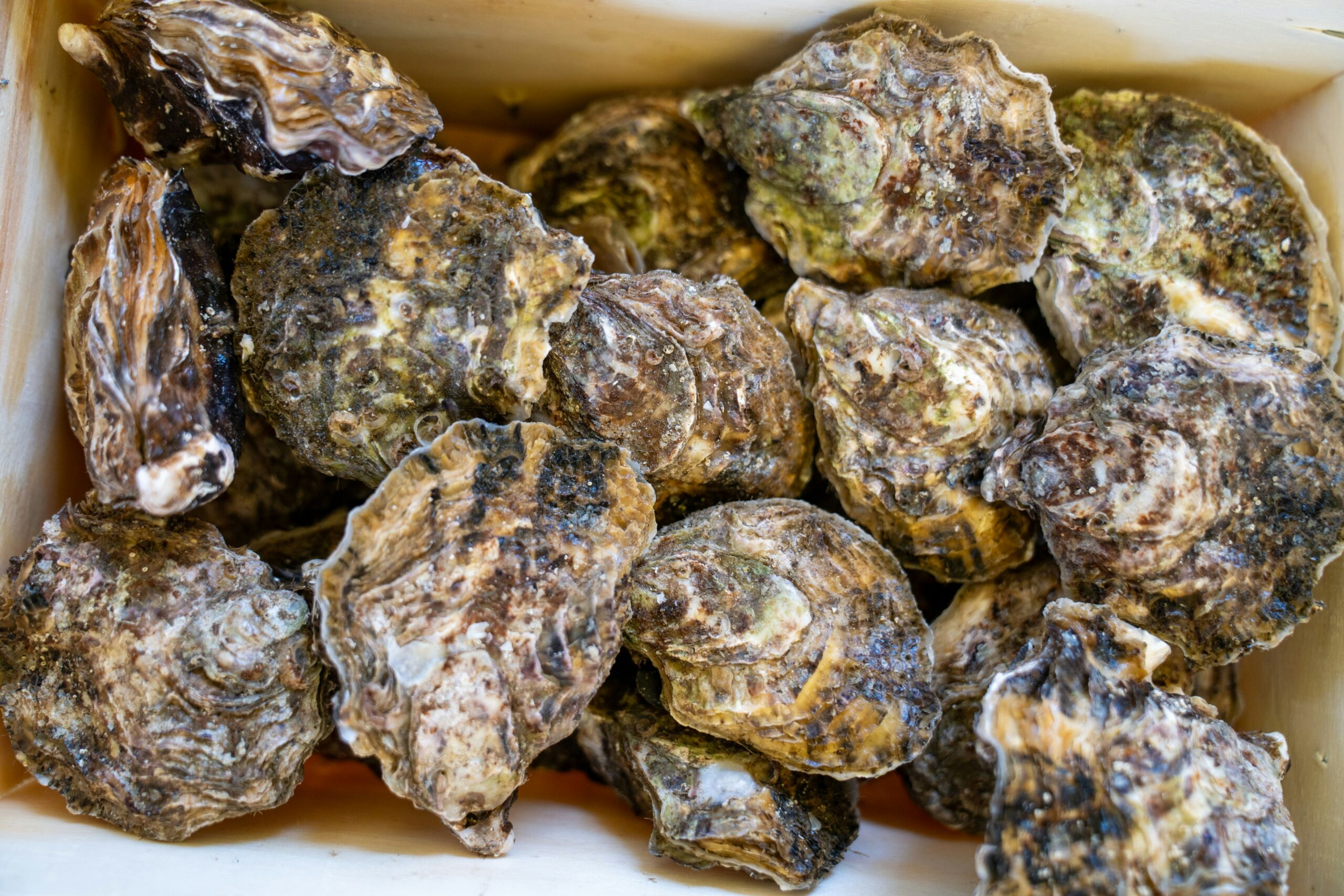
More than 15 million juvenile oysters are to be released into the North Sea off the coast of Orkney, in one of the largest rewilding projects ever undertaken in UK waters.
The scheme, run by the Green Britain Foundation, the Nature Restoration Fund, Marine Fund Scotland and North Bay Innovations, will use a unique onshore rearing process to cultivate juvenile oysters on calcium carbonate-enriched plates before transferring them offshore on long lines, shielding them from predators during their most vulnerable early stages. The goal is to re-establish a continuous oyster bed spanning more than 100 hectares, restoring ecological processes absent from these waters for generations.
A cascade of benefits
Richard Land, the marine expert leading the project, said the scheme would have a knock-on impact on the entire ecosystem. “It won’t just benefit fish and the bay, it will benefit sea mammals, seabirds and the whole environment,” he told the Guardian.
Experts describe this kind of ripple effect as a “trophic cascade,” a chain of ecological changes triggered when a keystone species is restored to a habitat. Once established, oyster reefs create hard-surface habitat in otherwise sandy seabeds, providing shelter and substrate for dozens of species including scallops, molluscs, algae, seaweeds and invertebrates. According to project documentation published by North Bay Innovations, a single oyster can filter up to 200 litres of water per day, improving water quality and clarity across the wider bay.
The project also has climate ambitions. Dale Vince, founder of the Green Britain Foundation and one of the scheme’s backers, said the restored bed could sequester up to 76 tonnes of CO₂ per year, but stressed this was not the primary driver. “This whole project actually came from: how do we get nature to do the carbon capture for us?” he told the Guardian. “Restoring native oyster beds is a perfect example of how we can work to restore nature and fight the climate crisis at the same time … By reintroducing them, we’re breathing life back into marine ecosystems – creating vital habitats for other marine life and reducing carbon in the atmosphere. It’s a perfect combination.”
Those behind the scheme said the real goal was to stimulate natural spawning, with established beds capable of dwarfing that carbon capture figure “by over a 1,000-fold per annum after about 15 years.” At an individual level, North Bay Innovations estimates each oyster sequesters around 5.5 grams of carbon per year – modest in isolation, but significant at the scale of millions.
A species all but lost
The European flat oyster (Ostrea edulis) once dominated vast stretches of UK coastline; at their peak, beds in the North Sea covered an area the size of Wales. Their collapse came swiftly. During the Industrial Revolution, oysters became a staple food for UK workers; between 1840 and 1850, Londoners alone consumed an estimated 700 million. That overfishing, combined with pollution, climate change and deliberate removal to clear shipping channels, triggered what scientists describe as a “negative cascade” that has decimated marine ecosystems ever since.
Philine Zu Ermgassen, from the University of Edinburgh’s Changing Oceans Group and one of Europe’s leading researchers on native oyster reef restoration, said human intervention was now essential to reverse that decline. “As oysters are now so few in number, they are unable to recover in many locations without human intervention,” she told the Guardian. “It is exciting that hatchery techniques are developing to meet the needs of the growing restoration community. This innovation is key to producing enough oysters from local genetic stocks to support restoration and recovery of this hugely valuable ecosystem.”
The Orkney project is part of a broader European effort. It sits within the Native Oyster Restoration Alliance (NORA), which has championed similar restoration schemes across the continent, and draws on a micro hatchery model, the first of its kind in Orkney, designed to cultivate oysters specifically adapted to their local marine environment.
A blueprint for wider recovery
Land said the project was designed with replication in mind. “This project is a blueprint for a wider plan to reintroduce oysters to the UK and to European waters,” he told the Guardian.
Alistair Carmichael, the Liberal Democrat MP for Orkney and Shetland, welcomed the plan. “Efforts to restore and recover historic wildlife in the isles are absolutely welcome,” he said, “particularly if there is an opportunity for carbon sequestration at the same time … Orkney has a long and productive history of working the seas that surround us. It is in all our interests to balance the needs and demands on our waters and our seabed so that everyone can benefit from it for generations to come.”