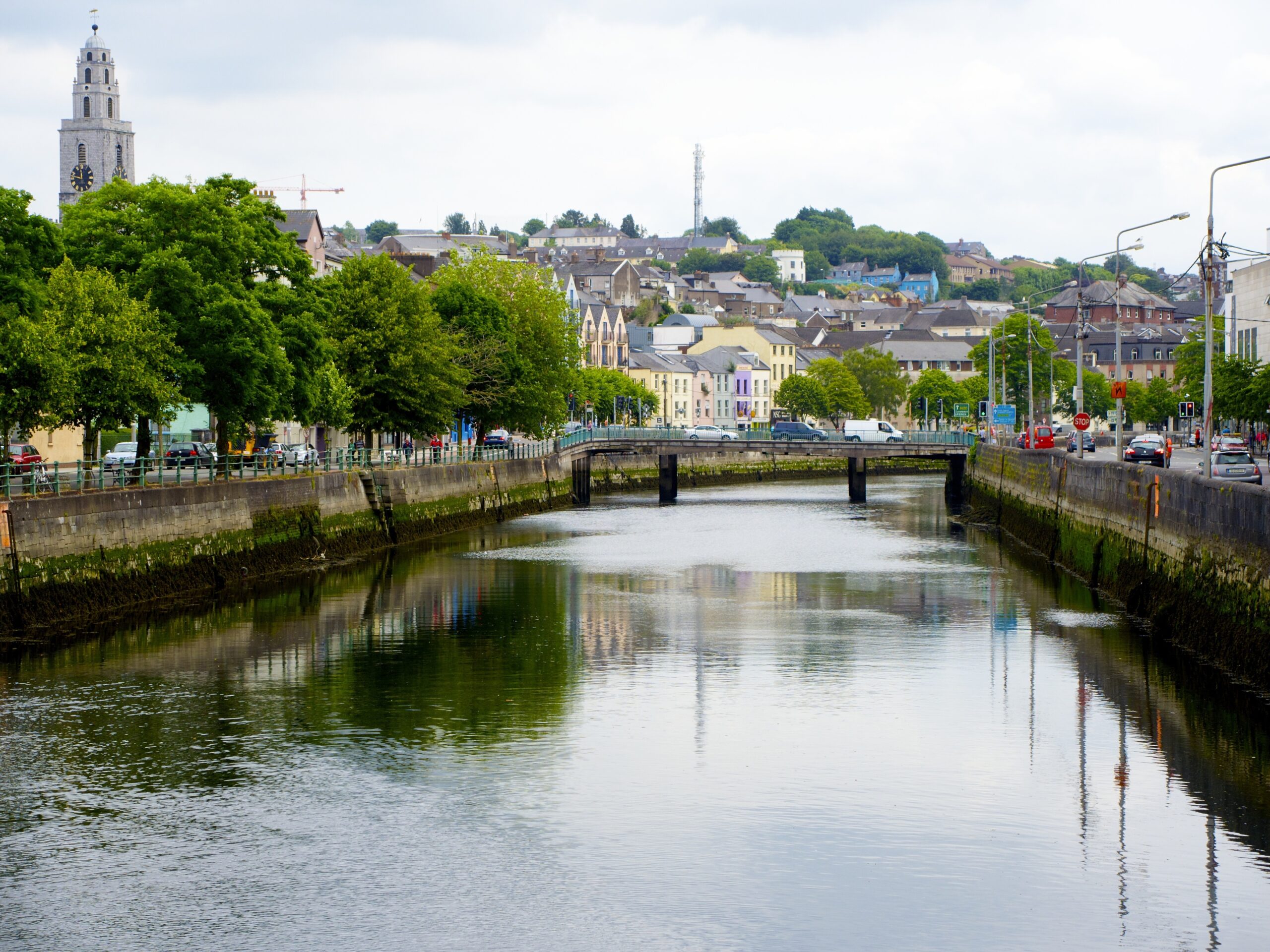
 Image description: River Lee running through Cork City. Image by Daniel Byram from Pixabay.
Ireland’s water quality remained largely unimproved in 2025, according to the EPA’s latest monitoring report. Excess nutrients, including nitrogen and phosphorus from agriculture, wastewater discharge and runoff, continue to degrade water bodies across the country. Improvements in some rivers and lakes were offset by declines elsewhere, leaving the overall picture flat.
High-status waters under pressure
Just over half of Ireland’s rivers and lakes now meet good biological status or better. The EPA highlighted the decline in high-status waters as the more troubling trend. These are the cleanest waters to begin with; once lost to degradation, they take years to recover and losing these sites reduces overall resilience as other waters come under pressure.
Agricultural runoff is a major pressure in many rural catchments, particularly in the midlands and south, while wastewater discharges concentrate around urban centres and treatment plants. Some coastal waters show recovery from historical sewage input, yet nutrient loading from farms upstream continues to drive algal growth and oxygen depletion in slower-moving estuaries.
Wexford’s case study
One notable case emerged in the Ballyteigue-Bannow catchment in Wexford, where six of 16 rivers surveyed showed improvement in biological quality. The EPA is investigating what changed there. If the improvement can be linked to specific farm management changes or treatment upgrades, that could inform similar measures in other catchments facing comparable pressures.
Faster action is needed
Roni Hawe, the EPA’s director of evidence and assessment, stated Ireland’s water quality is not improving overall. The agency called for faster, more targeted action. It noted that sectoral plans exist, but the pace of implementation needs to accelerate. Without faster rollout of nutrient-reduction measures, the EPA warned, water quality will remain flat.
The report covers monitoring data collected across rivers, lakes, estuaries, coastal waters and groundwater during 2025. Local water quality information and specific pressures affecting each water body are available through the catchments portal, which water managers and local authorities use to direct investments.