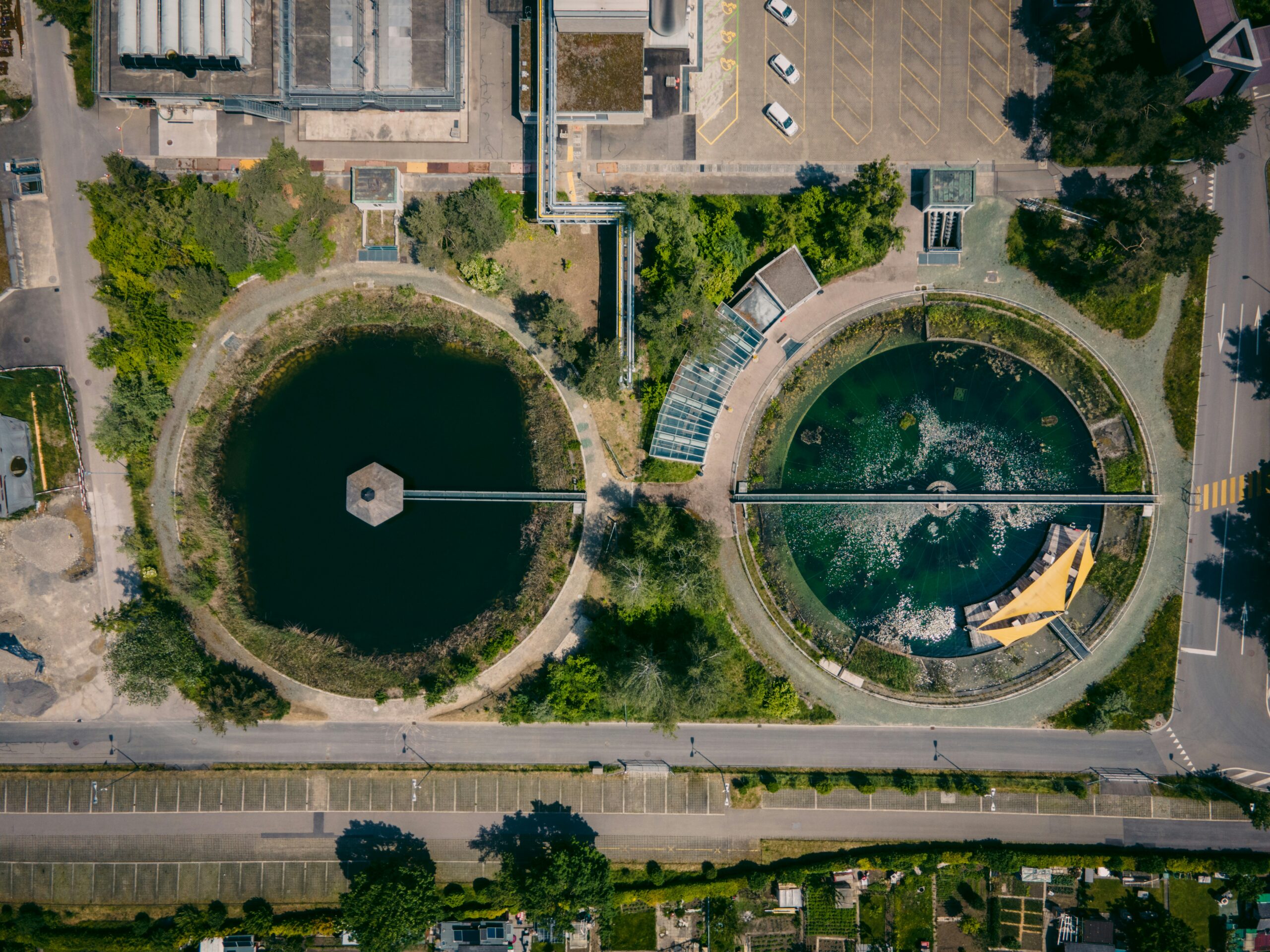
Image description: Aerial view of a water treatment facility. Photo by Patrick Federi on Unsplash
A step change in regulatory scrutiny
The Environment Agency (EA) confirmed it has completed over 10,000 inspections of water company assets in the past year, more than double the 4,600 carried out in 2024/25, marking a record level of surveillance. The government says it has deployed its largest-ever water enforcement workforce, with 500 additional staff dedicated to water regulation, allowing the EA to check treatment works, sewage pumping stations, and storm overflows across England at at an “unprecedented” scale.
Over 3,000 breaches uncovered – and challenged
The EA said inspections revealed more than 3,000 permit condition breaches, where companies are failing to comply with environmental regulation. Each breach has triggered a formal demand for improvement, covering actions such as repairing sewage works and upgrading infrastructure. As a result, the EA says it believes water company behaviour is beginning to shift. While 22% of site visits uncovered at least one issue, this is down from 25% the previous year, indicating that more diligent scrutiny of water company assets is pushing companies to maintain their assets more responsibly.
Wider reforms running in parallel
The inspections sit within a broader regulatory drive. From 1 April, water companies are legally required to publish Pollution Incident Reduction Plans under the Water (Special Measures) Act, setting out specific commitments to cut pollution. Storm overflow spill data published last week also showed sharp falls in both the number and duration of spills in 2025 compared to 2024. Water Minister Emma Hardy pointed to the government’s recently launched Water White Paper as the long-term framework underpinning these changes.
The Rivers Trust: progress welcomed, but ambition must go further
Responding to the announcement, The Rivers Trust welcomed the significant increase in inspections but was unequivocal that the volume of breaches remains “completely unacceptable.” Chief Executive Mark Lloyd argued that a breach rate of one-in-five inspections points to industry-wide neglect, with rivers and communities paying the price, and called on the EA to be “tenacious” in ensuring improvements are delivered urgently. Looking ahead, Lloyd also highlighted a significant gap in the current regime: pollution sources that are currently neither permitted nor inspected, including highway outfalls and intensive livestock farms, collectively account for a large proportion of river pollution incidents. He argued that the incoming water regulator must be given the resources and powers to bring these within the regulatory net if meaningful river recovery is to be achieved.