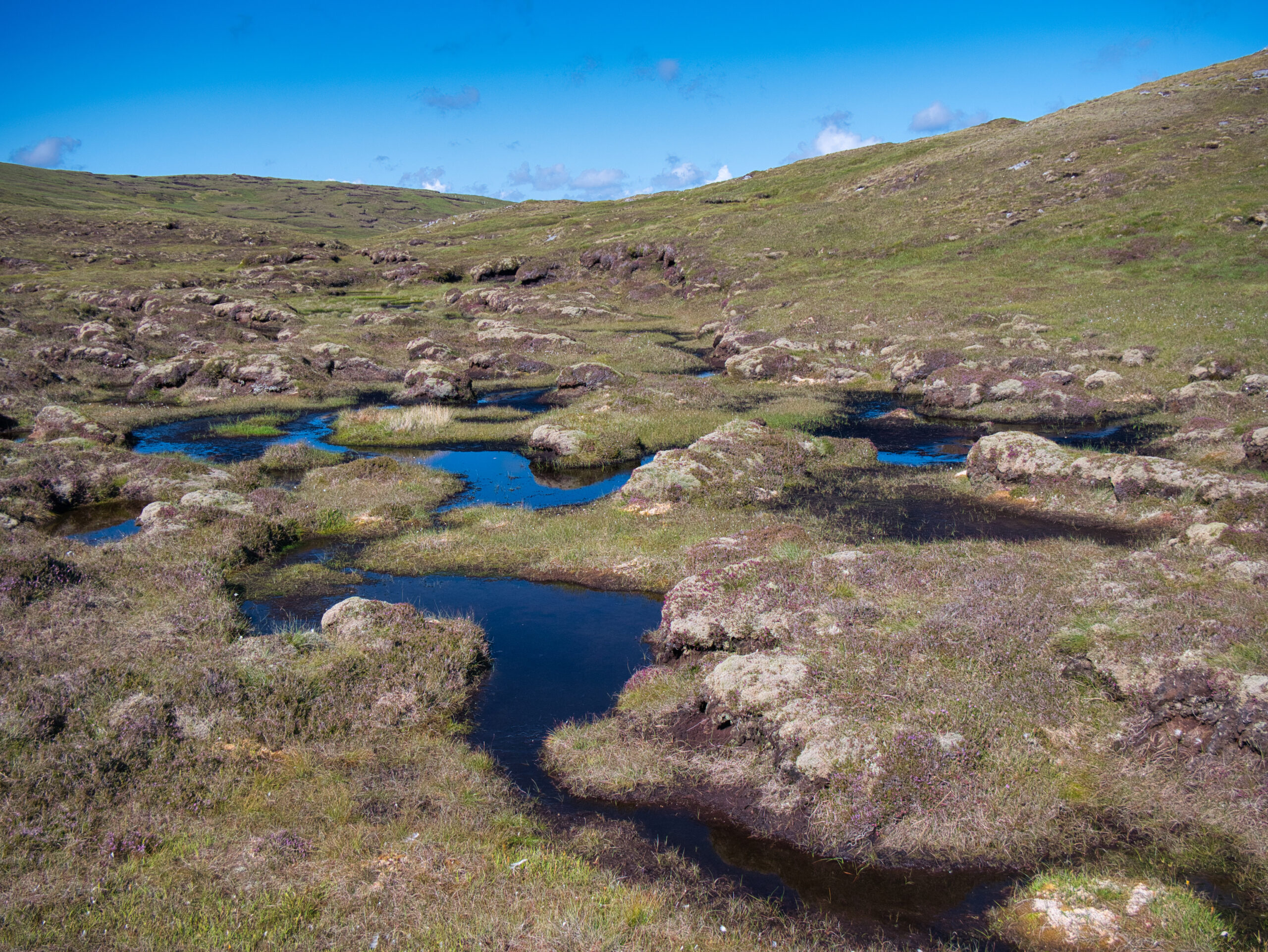
A wetland area forming peat near Hoo Field, Voe on Mainland, Shetland, UK
£30 million investment across England’s protected landscapes
England’s new Wildlife-Rich Habitat Fund will direct £30 million into restoring and creating habitats across National Parks, National Landscapes and the Broads. The money is split as £10 million a year between 2026 and 2029, and in its first year 36 of the 44 Protected Landscapes will take part, with each project shaped by local priorities.
Species expected to benefit include hedgehogs, water voles, curlews and hazel dormice, with the government citing habitat degradation as a key driver of wildlife decline. The fund is expected to deliver “thousands of hectares” of habitat over three years and will run through the existing Farming in Protected Landscapes framework, giving farmers and land managers a central delivery role.
Relevance for catchment management
Although the fund is primarily a nature-recovery measure, several of the interventions involved are also relevant to the water sector. Measures such as peatland re-wetting and wetland creation are widely used in catchment management, where they can influence how water moves through and is stored within a landscape, as trade coverage has noted.
This overlap matters because measures of this kind may complement engineered infrastructure. Healthy peatland, for example, is associated with lower dissolved organic carbon and reduced sediment, factors that can affect downstream water treatment. The water-sector relevance is best read as a practical overlap between habitat work and catchment priorities, rather than as a stated objective of the scheme itself.
Implementation and broader context
Projects will be prioritised in line with Protected Landscapes management plans and Local Nature Recovery Strategies across England. The fund sits alongside the Environmental Improvement Plan within the government’s wider nature agenda.
A Peak District project offers an early example: the National Park Authority and Staffordshire Wildlife Trust plan to restore wet heath, re-wet deep peat and establish native woodland on lower slopes, covering some 24 hectares. More broadly, the scheme feeds into longer-term commitments under the Environment Act, including the target to restore or create 500,000 hectares of wildlife-rich habitat by 2042 and to protect 30% of land for nature by 2030.