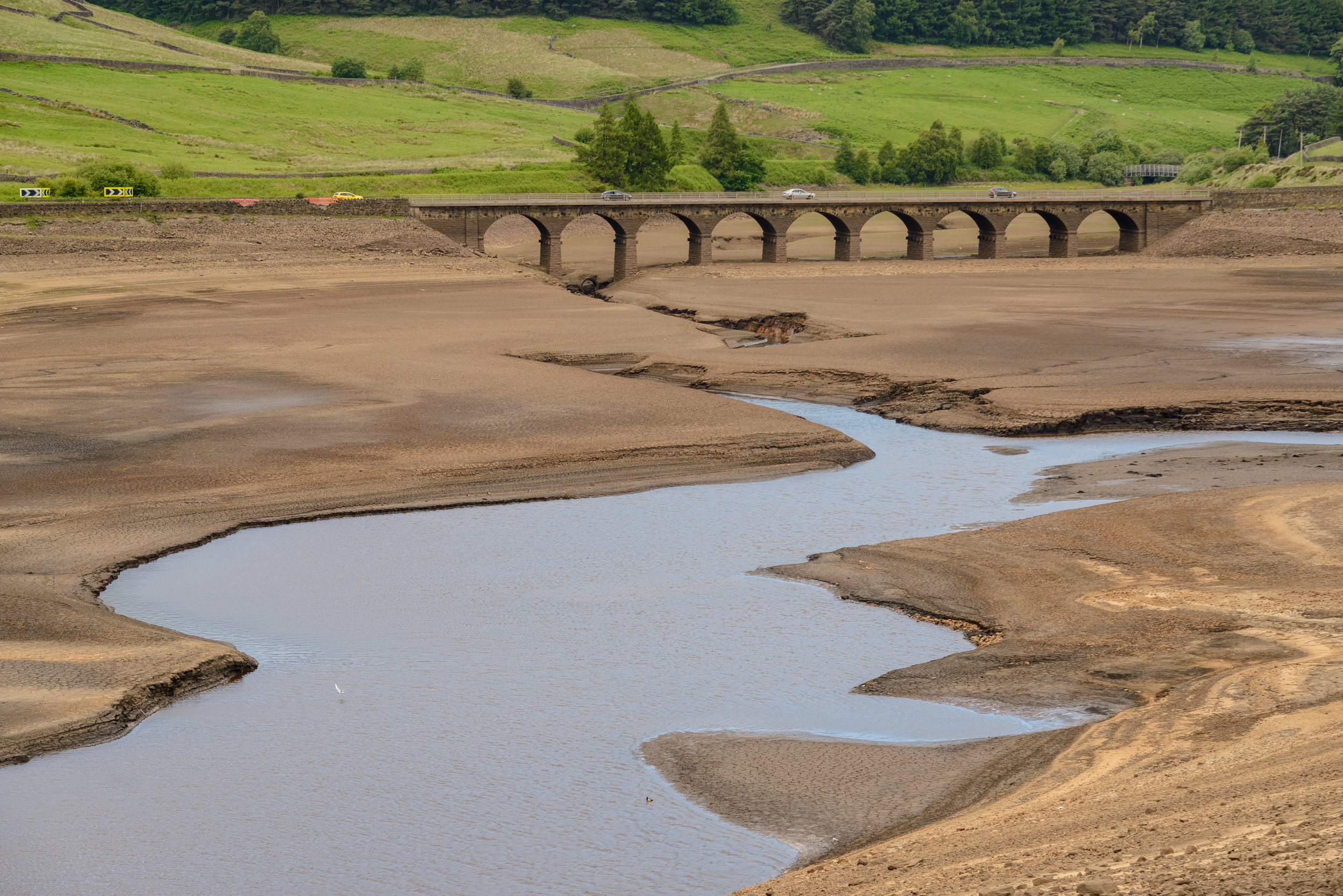
Image description: General view of low water levels in Woodhead Reservoir, Derbyshire, taken June 15 2025 following the driest spring in England since 1893. The reservoir supplies water to Greater Manchester. Image by Alastair Johnstone-Hack / Climate Visuals
An unprecedented climatic event taking shape
The World Meteorological Organisation (WMO) has confirmed that the current El Niño could be the strongest natural weather event of its kind since at least 1950, and potentially by a large margin. Monthly sea surface temperatures in the Pacific’s key monitoring region could approach 4°C above average, with subsurface temperatures in some areas already more than 8°C above normal. UN Secretary-General António Guterres warned that the planet is in “uncharted waters,” with the event expected to drive significant disruption to rainfall patterns, water availability and extreme weather events across much of the world well into 2027.
This announcement comes as the UN Environment Programme (UNEP) published their latest report warning global temperature rise is set to cross 1.5°C, likely within the next few years, pushing climate risks and impacts to increasingly dangerous heights. However, the report also emphasises it is still possible to bring temperatures down and achieve global goals in the Paris Agreement. The report, Limiting Overshoot, identifies an ‘overshoot, peak, and decline’ pathway as the best remaining option to minimise the magnitude and duration of this overshoot and try to return to below 1.5°C as soon as possible.
Drought, water scarcity and infrastructure stress
The most direct water resource implications will be felt across regions forecast to experience drier-than-usual conditions. Large areas of South East Asia, Central America and northern South America face elevated drought and wildfire risk. In a striking illustration of El Niño’s reach, the Panama Canal has already reduced vessel traffic by more than 10% in anticipation of lower rainfall, underlining how intimately linked water availability is with global trade and economic stability. Indonesia is battling wildfires across more than 107,000 hectares, with authorities resorting to cloud-seeding aircraft to trigger rainfall and suppress fires. Peru, Ecuador and parts of Brazil face the opposite challenge as excess rainfall drives flash flooding and landslides, particularly in urban areas where drainage infrastructure is inadequate.
Marine ecosystems and water quality under pressure
El Niño’s effects on ocean temperatures are generating significant concern for marine water quality and ecosystem health. Australia’s southern coastline faces intensified marine heatwaves this season, with previous events causing algal blooms, fish kills, coral bleaching and widespread ecological disruption. The WMO has undertaken a major mobilisation to circulate forecasts to vulnerable communities, and Australia has introduced early warning systems for marine crises, to mobilise financial relief for fisheries, species relocation and increased monitoring. However, researchers have acknowledged that the scale of the projected event goes beyond what existing response frameworks were designed to handle.
A compounding crisis for fragile water and sanitation systems
A key warning to emerge from expert analysis is that El Niño does not arrive in isolation. Miguel Aréstegui, climate resilience lead at Practical Action, cautioned that structural vulnerabilities, including fragile water and sanitation systems, housing in flood-exposed areas and weak healthcare infrastructure, significantly amplify the impact of extreme weather events on communities. The combination of El Niño-driven extremes with the underlying trajectory of human-induced climate change is, in the view of many scientists, creating conditions that could prove more severe than any previous event of this kind.
Implications for the UK water sector
While El Niño’s most acute impacts will be felt in the tropics and southern hemisphere, it also serves as a reminder of the degree to which water resource planning must account for increasingly volatile and unpredictable climatic conditions. The UK’s experience of a dry spring and summer in 2026, raising drought concerns in parts of southern and eastern England, sits within this broader global picture. The El Niño event reinforces the urgency of long-term resilience planning, demand management and investment in adaptive infrastructure, at a time when the regulatory and political pressure to do so has never been greater.