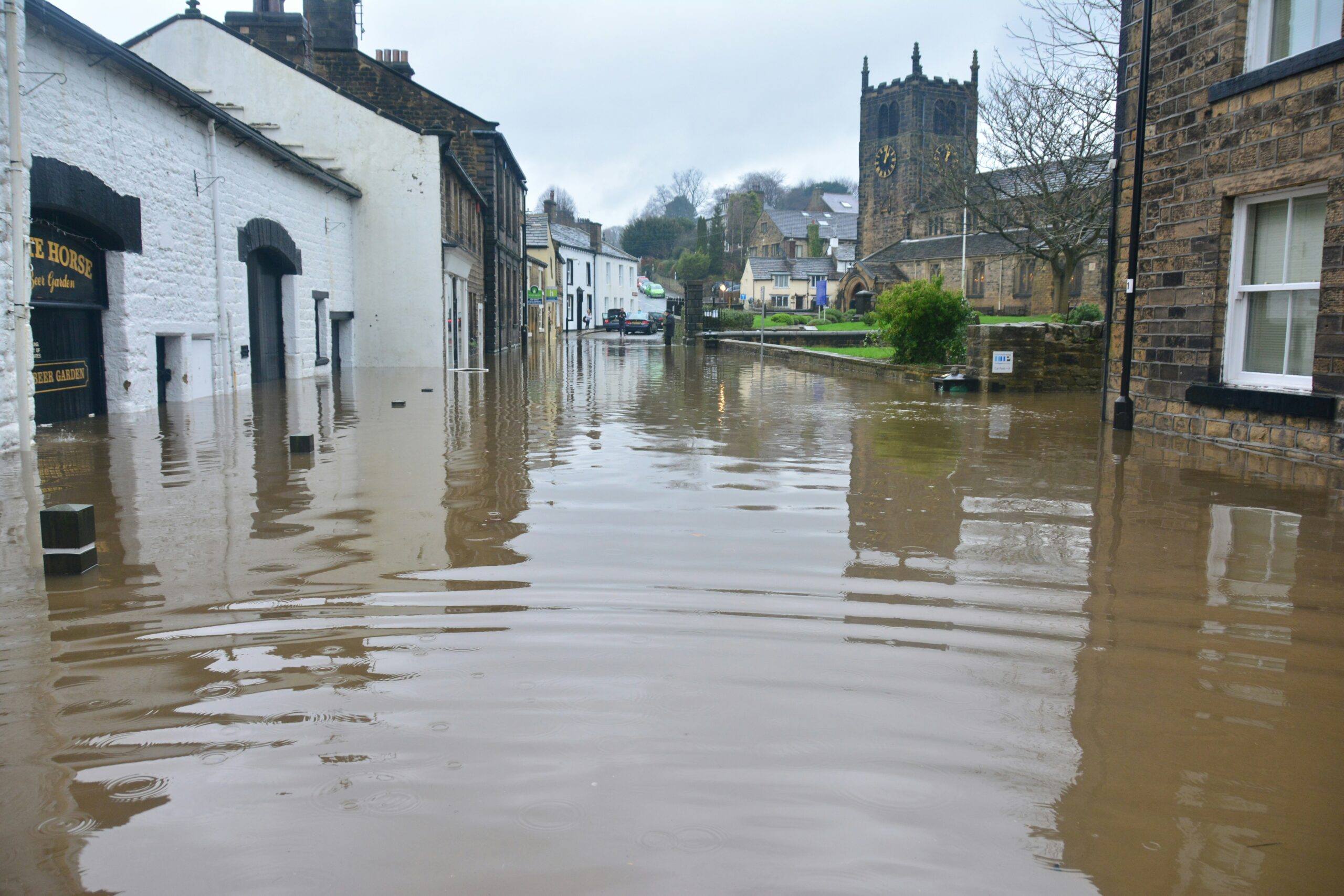
 Image description: A flooded town under a grey sky, taken during the Bingley Boxing Day floods in 2015. Photo by Chris Gallagher on Unsplash
A growing threat to critical infrastructure
The Environment, Food and Rural Affairs Committee has launched a call for evidence as part of its wider inquiry into climate adaptation and emergency response, with this first workstream focused specifically on how the UK responds in the immediate aftermath of severe flooding. The backdrop is stark: the winter of 2023/24 was the wettest October to March on record, flash floods are expected to become more frequent and intense, and NAO analysis has found that up to 51% of water supply infrastructure, 77% of rail infrastructure and 21% of electricity infrastructure are vulnerable to flooding. The Third National Adaptation Programme has already raised concerns about the risk of flooding triggering “cascading failures” across interconnected transport, water, food and energy systems.
Coordination across a fragmented system
A central focus of the inquiry is whether current arrangements for coordinating emergency response are fit for purpose. Responsibility for flood response in England is shared across a wide range of bodies, including MHCLG, the Cabinet Office, the Environment Agency, Defra and local authorities. The committee wants to understand how effectively these organisations work together during and immediately after major flood events. MPs are particularly interested in how water and energy companies, alongside other essential service providers, integrate into the broader emergency response, and whether the legislative framework underpinning these responsibilities, such as the Civil Contingencies Act 2004 and the Flood and Water Management Act 2010, remains adequate.
Rural communities at particular risk
The committee is placing significant emphasis on the impact of flooding on rural areas, where damaged bridges, roads, power networks and other infrastructure can leave communities physically cut off from essential services. Committee chair Alistair Carmichael noted that rural communities often include “people and businesses with the fewest means to protect themselves,” and argued that they deserved equal protection to towns and cities. The inquiry will also examine the economic impact on farming businesses, investigating damage to livestock, crops, soil and farm infrastructure, as well as the adequacy of local resources available for immediate recovery.
The deadline for submissions is 23.59 on Friday 9 October 2026
Full details of the call for evidence can be found here.