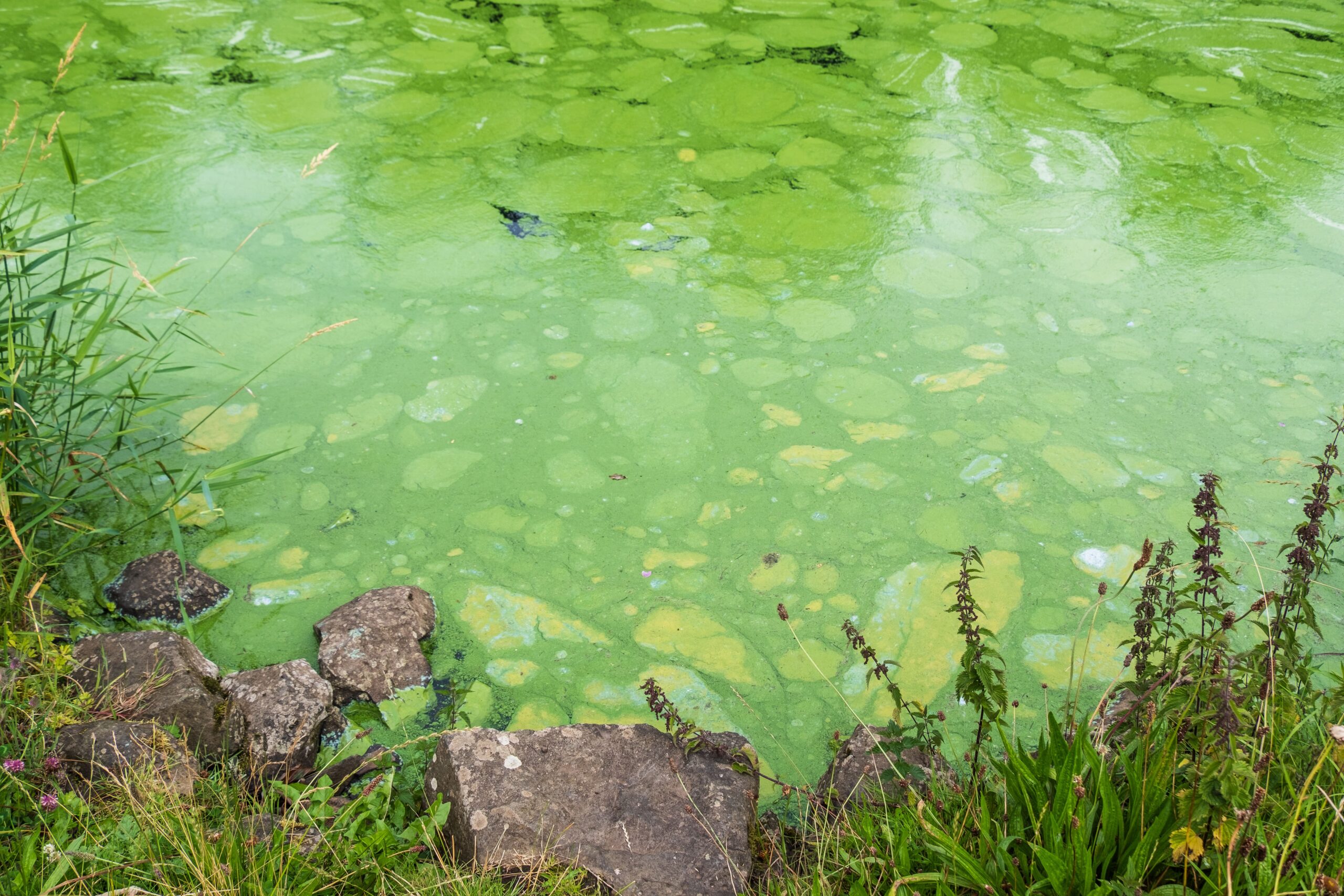
 Image description: Ecologically damaging Blue Green algae blooms (cyanobacteria), close up from river bank along Lough Neagh, Northern Ireland.
A High Court challenge has been launched by an eel fisherman against the Department of Agriculture, Environment and Rural Affairs (Daera) over the Lough Neagh pollution crisis.
The judicial review his being brought against DAERA by eel fisher Declan Conlon, whose family have for generations fished the inland lake in Northern Ireland that once hosted the largest wild eel fishery in Europe.
Lough Neagh, the largest lake in the United Kingdom and Ireland, providing approximately 40% of Northern Ireland’s drinking water, has suffered years of ecological decline, including severe blue-green algal blooms that can be seen from space. Eel fishing was suspended in 2025 and tourists have fled what was previously a freshwater haven for ecological diversity and an abundance of salmon and eels.
“I’m watching it die in front of my eyes”
The case argues that DAERA continues to rely on inadequate plans and unenforced pollution regimes despite clear evidence of ecological collapse over several years. It raises serious questions about how agricultural pollution is addressed by DAERA in Northern Irelan, and the impact this has had on Declan Conlon’s livelihood.
Speaking about the legal challenge Conlon said: “I’ve fished Lough Neagh all my life, just like my father and his father before him. Now I’m watching it die in front of my eyes. This isn’t just about my livelihood – it’s about justice for the lough before there’s nothing left for the next generation.”
eNGOs intervening in the case
Enda McGarrity, director at PA Duffy & Co, who are acting for Conlon, said the case reflected the lived experience of those whose livelihoods depend on the health of the lough.
River Action UK and Friends of the Earth Northern Ireland, both environmental organisations, will apply to intervene in Mr Conlon’s legal challenge concerning the ongoing pollution crisis affecting the lough. According to Friends of the Earth Northern Ireland, the toxins from the algae has killed swans, fish and even pet dogs. More than 50,000 people have reportedly supported FoE NI’s plan to save the lake, which includes bringing it back into community ownership.
A Daera spokesperson said: “Proceedings have now been issued in the matter and it would therefore be inappropriate to comment on the issues before the court.”