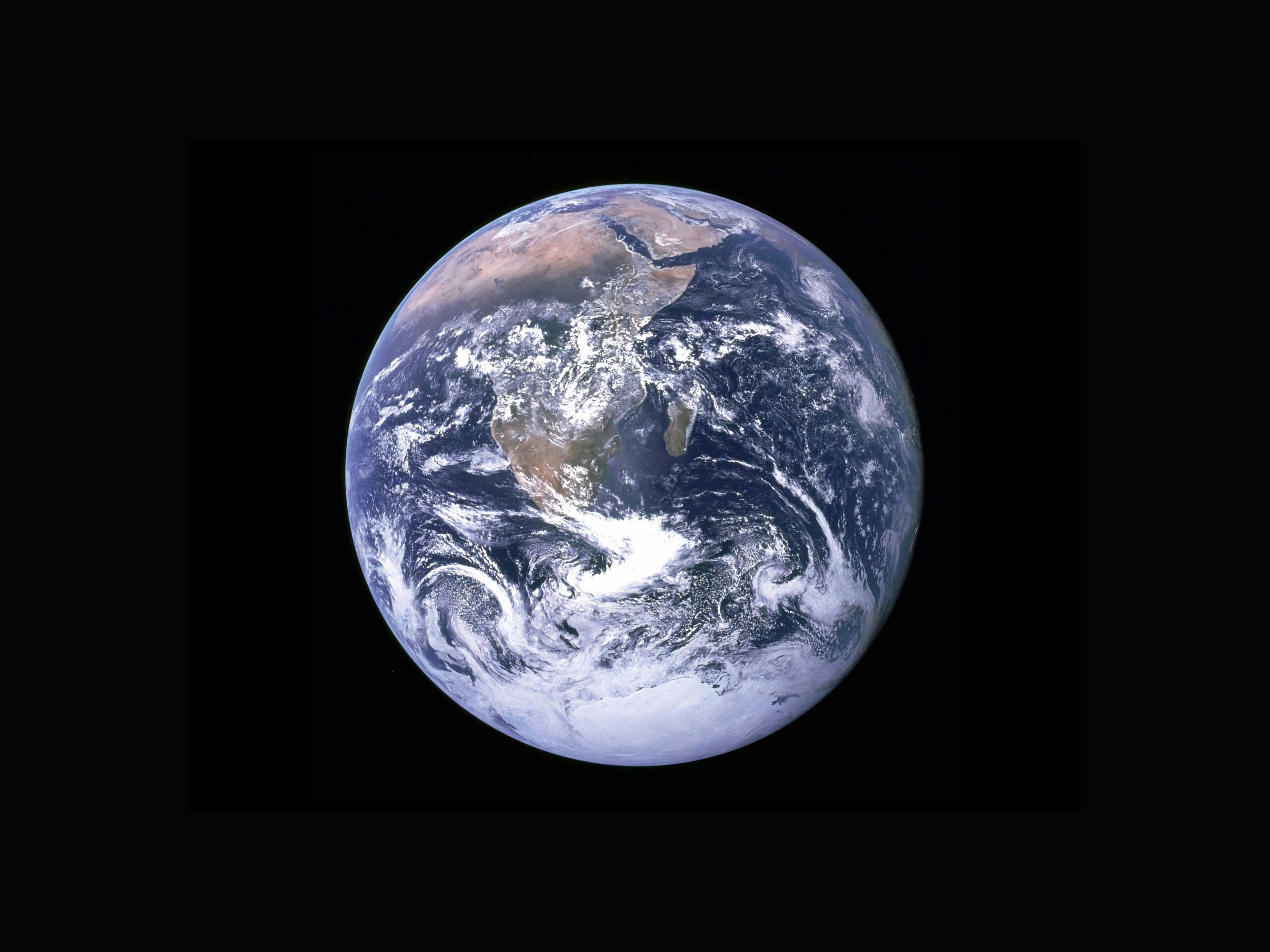
Photo by NASA
The Earth’s climate is more out of balance than at any point in recorded history, the World Meteorological Organization (WMO) has warned, with greenhouse gas concentrations driving accelerating warming of the atmosphere, oceans and ice sheets.
The WMO’s State of the Global Climate 2025 report confirms that 2015 to 2025 were the hottest 11 years ever recorded, with 2025 registering approximately 1.43°C above the 1850–1900 pre-industrial average — perilously close to the 1.5°C threshold beyond which scientists warn climate impacts will escalate dramatically. The full report is available to download here.
Oceans bearing the brunt
More than 90% of the excess heat trapped by greenhouse gases is absorbed by the oceans, which reached their highest recorded heat content last year. The ocean has been absorbing the equivalent of around 18 times total annual human energy use every year for the past two decades — a rate of warming that has more than doubled compared with the average over the preceding 45 years, the Guardian reported.
The new report tracks Earth’s energy imbalance, the gap between incoming and outgoing radiation, for the first time, finding it increased by around 11 zettajoules per year between 2005 and 2025. Last year’s figure was more than double that average.
Ice retreat and rising seas
Arctic sea ice extent was at or near a record low over the past year, while Antarctic sea ice was the third lowest on record. Glacier melt continued unabated, contributing to sea levels rising at an accelerating pace. The WMO noted that the rapid, large-scale changes observed over recent decades will carry harmful repercussions for hundreds, and potentially thousands, of years.
Extreme events including intense heat, heavy rainfall and tropical cyclones caused widespread disruption throughout 2025, highlighting what the WMO described as “the vulnerability of our inter-connected economies and societies.”
A call to act
UN Secretary-General António Guterres issued a stark warning in response to the findings. “The State of the Global Climate is in a state of emergency. Planet Earth is being pushed beyond its limits. Every key climate indicator is flashing red,” he said. “Humanity has just endured the eleven hottest years on record. When history repeats itself eleven times, it is no longer a coincidence. It is a call to act.”
WWF warned that climate action is not accelerating fast enough. Manuel Pulgar-Vidal, WWF Global Climate and Energy Lead, said: “We can bring balance back to the world’s climate, but the window for us to do so before climate impacts spiral out of control is closing fast. The window for climate action is not closing on its own – it is being closed by delay.”
“If we are serious about limiting the overshoot of 1.5°C this decade, we must focus on delivery, not debate. Every year of delay raises costs and deepens disruption,” he continued.
World leaders have acknowledged that a temporary breach of the Paris Agreement’s 1.5°C target is now considered inevitable, with consequences already visible in faltering harvests, worsening disease outbreaks and increasingly severe heatwaves, wildfires and storms.