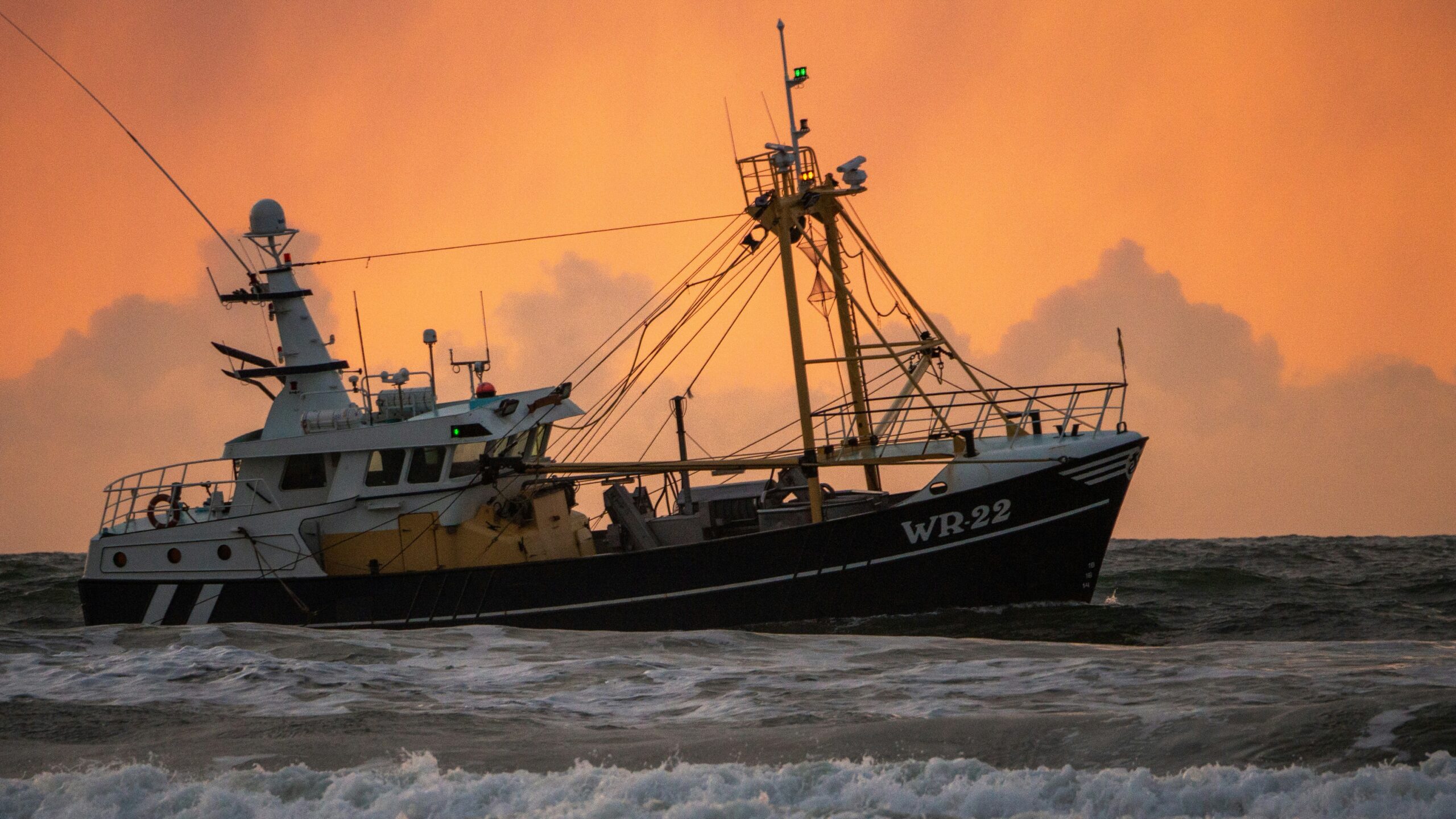
Photo by Wim van ‘t Einde
The Dutch Fishermen’s Association has called for greater research and monitoring of electromagnetic fields generated by offshore wind farm cables, warning that significant knowledge gaps remain even as cable networks expand rapidly across the North Sea. The concerns, reported by The Fishing Daily, follow new research carried out under the Dutch Offshore Wind Energy Ecological Programme (WOZEP), which examined how electromagnetic fields are distributed around subsea electricity cables and what effects they may have on marine life.
Species flagged for further study
As offshore wind developments increase in scale, so too does the network of export and inter-array cables laid on and beneath the seabed, generating electromagnetic fields whose strength depends on factors including electrical current, cable design, burial depth and distance from the cable. The WOZEP research found that newer offshore wind farms, which use larger turbines and transmit greater volumes of electricity, carry the potential for stronger electromagnetic fields around their cable infrastructure.
Species identified in the research as requiring further investigation include the European flat oyster, sand tube worm, sea lamprey, thornback ray, spotted ray and harbour porpoise, with researchers noting that significant uncertainty remains over the long-term effects of electromagnetic field exposure across a range of fish species more broadly. In its own statement, published on its website, the Dutch Fishermen’s Association said it was concerned by these knowledge gaps, warning that if electromagnetic fields influence fish migration routes, spawning grounds, reproduction or food availability, the consequences could ultimately be felt in fish stocks themselves.
Cumulative pressure a key concern
The association argues that fishermen are already operating under a range of measures designed to protect fish stocks, including quotas, bycatch reduction measures and spatial closures, and said it would be a serious concern if an additional pressure from expanding offshore energy infrastructure were found to undermine those efforts. Rather than assessing cables or wind farms individually, the association is calling for regulators to examine the cumulative effect of the growing number of electricity cables being laid across the North Sea seabed as a whole.
A shared concern with UK research
The gap identified by Dutch fishermen mirrors work already under way in UK waters. The Crown Estate and the Centre for Environment, Fisheries and Aquaculture Science (Cefas) have been examining the same question through the Offshore Wind Evidence and Change programme (OWEC), a £50m initiative bringing together 27 government bodies, industry groups and environmental NGOs to build a stronger evidence base on offshore wind’s interaction with the marine environment. Olivia Thomas, head of marine planning at the Crown Estate, has previously said that a lack of reliable data on cable impacts has been a contributing factor in delays to the offshore wind consenting process, underlining why programmes such as OWEC and its associated EMF workshops are considered important by developers as well as environmental groups.
With the North Sea hosting an increasingly dense network of interconnectors and wind farm cabling on both sides of UK and Dutch waters, and with the UK itself pursuing a rapid build-out of floating and fixed offshore wind capacity, the question of cumulative electromagnetic field exposure is one likely to recur across the sector as more capacity comes online.