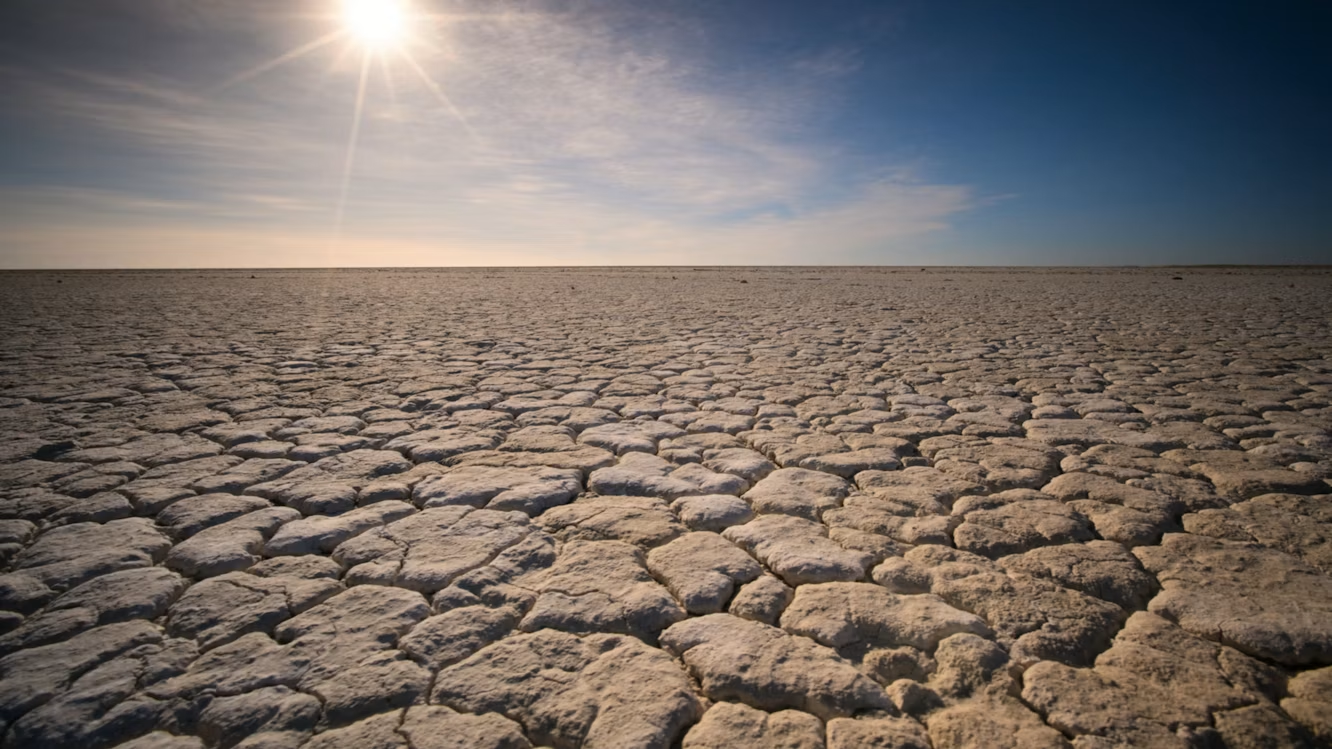
Photo credit: Oleksandr Sushko
The heat and rainfall deficit affecting the UK extends well across the North Sea, with Dutch authorities warning of a looming water shortage and the Rhine falling to levels that threaten to halt freight. The National Water Distribution Coordination Committee scaled the Netherlands up to level 1, an impending water shortage, on 1 July, and has since signalled that level 2, an actual shortage, may follow. Level 3 would constitute a water crisis.
The Dutch position
Harold van Waveren, who chairs the committee, told broadcaster NOS that river levels are remarkably low for the time of year, at a level seen on average only once every two decades, with the precipitation deficit running at a similar frequency. He drew a comparison with 1976, calling it the reference year and noting that climate change is raising the odds of a repeat. Summer still has two months to run.
Agriculture and shipping are feeling it first. Van Waveren said the task is fundamentally one of “distributing scarcity”, adding that nobody can be fully satisfied. Extra fresh water is already being released to combat salinisation in the west of the country, which comes at the cost of shipping, with vessels waiting longer at locks. He expects more regions to prohibit farmers from irrigating with surface water. Water boards have stressed that drinking water supplies remain sufficient while urging sparing use.
The environmental signs are mounting. Reports of blue-green algae are becoming more common, the first fish mortality incidents have been logged, and saltwater intrusion is increasing in the western Netherlands. Authorities activated a pumping station near Utrecht to divert water from the Amsterdam-Rhine Canal into the Leidse Rijn.
The Rhine chokepoint
Conditions upstream are driving the problem. The Kaub gauge on the Middle Rhine, the shallowest point on the river and the one that sets the maximum load for every barge moving between the ARA seaports and the industrial hinterland, has fallen to around 40cm, the lowest July reading in decades. The all-time record low is 25cm, set in October 2018. Analysts quoted by Reuters say that once the gauge reaches around 40cm or below, cargo shipping is usually suspended.
The commercial effects are already visible. Traders report, for example, that a tanker barge able to carry about 1,200 tonnes past Duisburg is restricted to roughly 460 tonnes through Kaub, while Deutsche Bank has calculated that a typical 500 TEU container vessel can pass with less than a fifth of its normal load. Tanker freight from Rotterdam to Karlsruhe has climbed to between €60 and €70 per tonne, up from around €45 in late June.
The industrial exposure
Petroleum products accounted for more than a fifth of Rhine cargo in 2024, and German factories rely on the river for up to 200 million tonnes of goods and fuel a year. Thomas Puls of the German Economic Institute estimated that a full closure would require around 3,000 additional road fuel tankers a day. Germany’s chemical industry association has said the sector is better prepared than in 2018 and that the effects are manageable for now.
The parallels with the UK are close: a rainfall deficit compounded by successive heatwaves, and water being rationed between competing users. Both countries face the same question of whether storage and distribution can cope with a drier norm.
Sources: