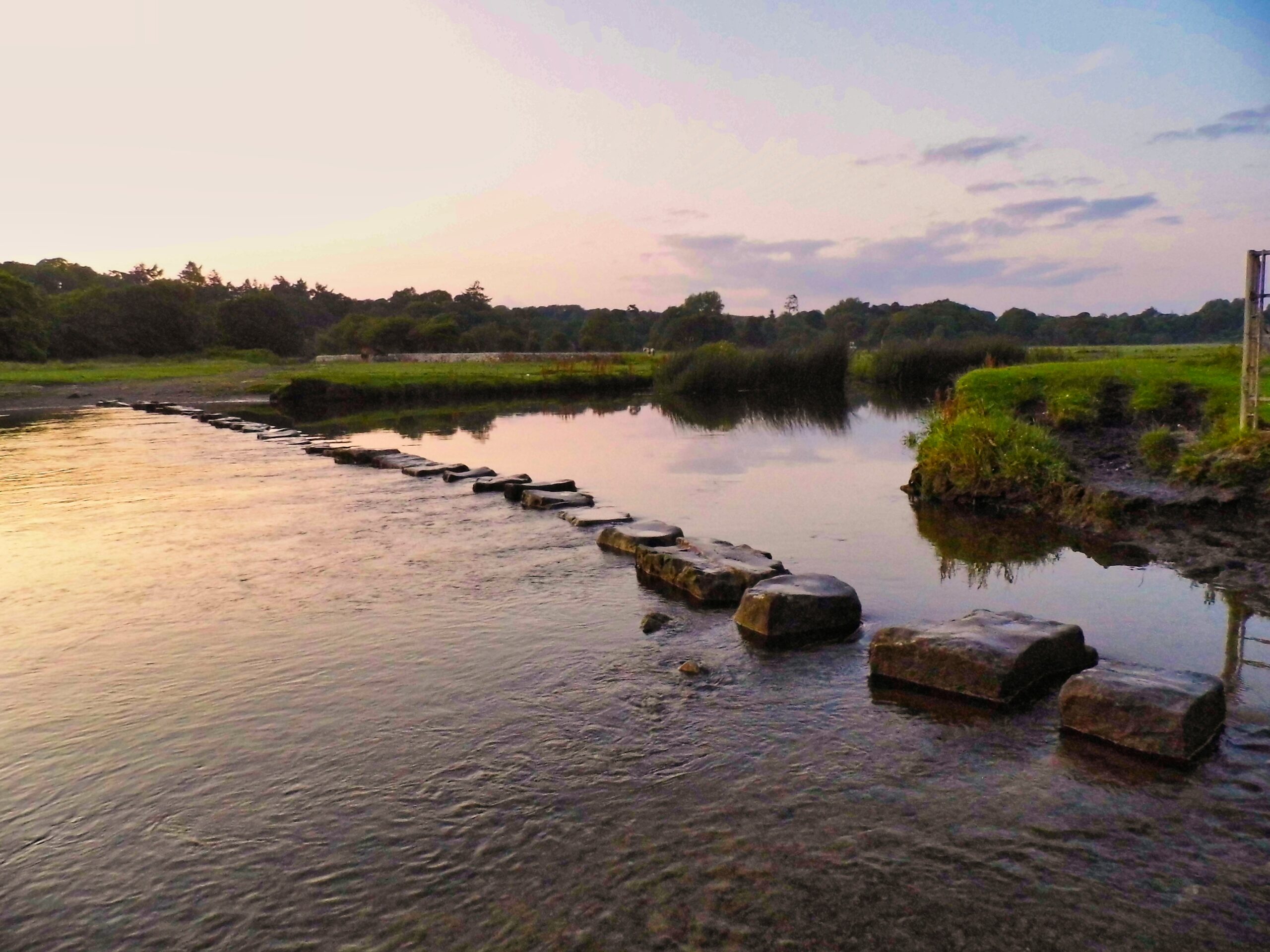
 Image description: A line of stepping stones cutting across Ogmore River near Bridgend. Photo by Lisa Baker on Unsplash
The Environment Agency’s latest weekly summary shows no change to drought status in England. Ten of its areas remain in drought and the rest are in prolonged dry weather. By 22 September, England had received 58% of its long-term average rainfall for the month. Water companies are still progressing drought permits and orders, and the Agency says many companies need further significant rainfall before their water resources return to normal. The National Drought Group was due to meet on 1 October.
South-west Wales moves into recovery
Natural Resources Wales confirmed on 25 September that south-west Wales will move into “recovery from drought” status. Many rivers in the region have responded well to recent rainfall and are approaching normal flows for the time of year. Rivers elsewhere have been slower to recover. South-east Wales, north Wales and the upper Severn remain in drought, and enhanced environmental monitoring continues there. Wales as a whole had received 78% of its expected September rainfall by the week of the announcement.
Drought was first declared in north Wales on 23 July and extended to the whole of Wales on 30 July. Summer 2026 brought the driest July since records began 190 years ago and the driest July–August period since 1976. The Met Office says it was also provisionally the hottest summer on record for the UK.
Rhian Thomas, Sustainable Water and Nature Manager at NRW, said the summer’s heatwaves had caused a rapid deterioration of the environment, with widespread impacts on waters, soils, wildlife and habitats. She said the signs of recovery were promising but that “we cannot be complacent”, and that full recovery would need time and more rainfall into the autumn. Wales has reached drought conditions in each of the last two summers, and she said the country should prepare for more frequent droughts and a shift towards hotter, drier summers and wetter winters. NRW continues to advise the Welsh Government’s Drought Liaison Group, including on impacts on crop production and supplementary feeding for livestock. It is also working with the Environment Agency on cross-border rivers such as the Severn and the Dee.
Thames Water ban stays in place
Thames Water has confirmed its hosepipe ban will remain for its roughly 10 million customers across London, the Thames Valley and the Home Counties. The company said September’s rainfall was very welcome but not enough to offset the prolonged dry weather since spring. Julie Morton, Head of Water Resources at Thames Water, said rainfall across the region between March and August had been less than half of normal. Some rivers had responded to the recent rain, she said, but groundwater and soil moisture remained significantly below average. “Significant and prolonged rainfall” over the coming weeks would be needed before the company could consider lifting restrictions. No end date has been set.
The outlook to spring 2027
Analysis presented to the National Drought Group on 15 September found that England would need 120% of typical rainfall over the next seven months for all areas to come out of drought. It also found that some regions could still be in drought when spring 2027 begins. The Environment Agency puts the chance of severe drought developing in the coming months at around 1%. Its Chief Executive, Philip Duffy, has told water companies to take every possible action to secure supplies into next year, including stepping up leakage reduction and following their drought plans.