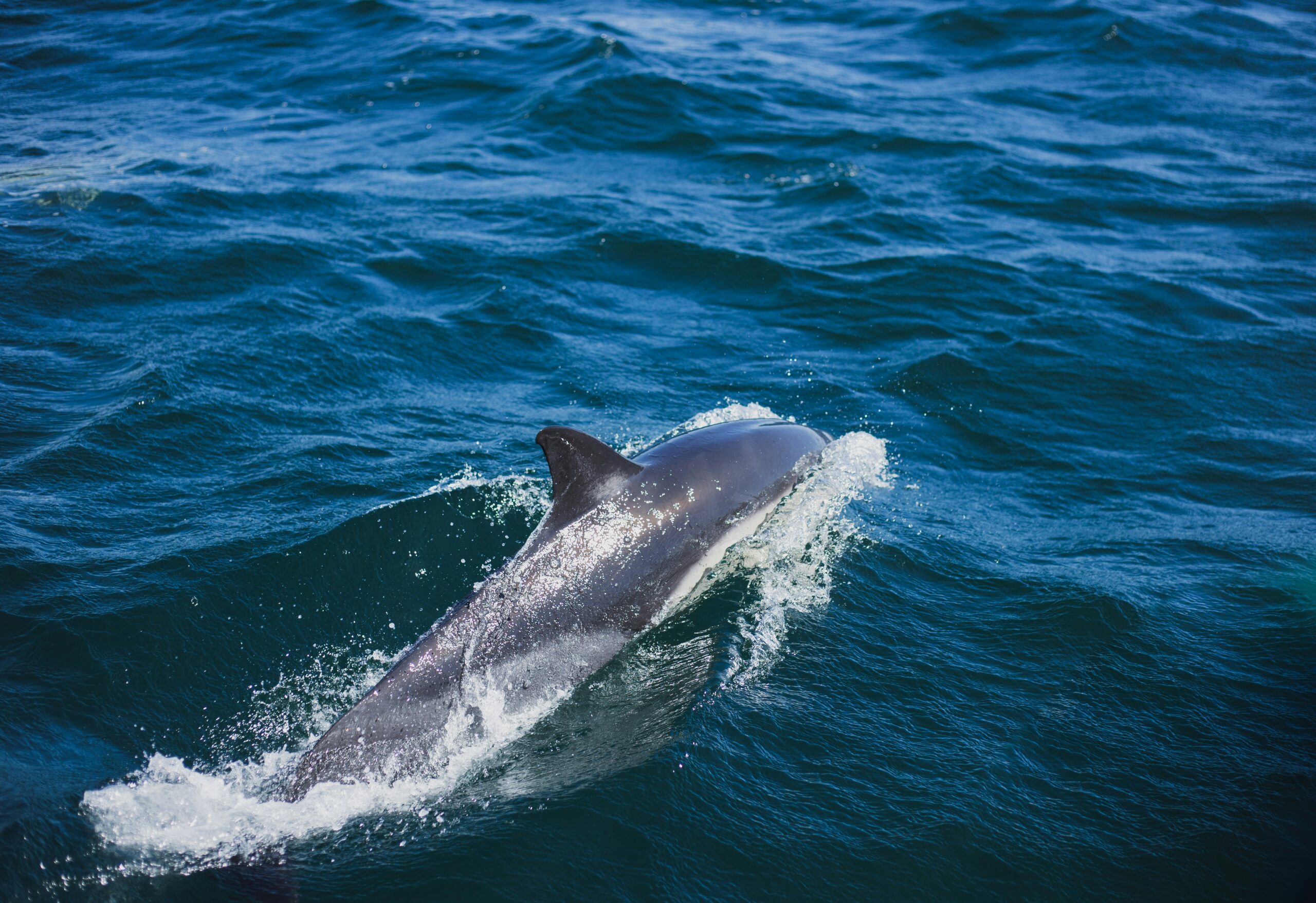
Photo by Jake Oates
Cornwall Wildlife Trust is calling for stronger government policy to protect dolphins and porpoises from fishing nets after 27 animals washed up dead on Cornish beaches in January alone. The charity said a number of the animals were confirmed to have died as a result of getting caught in fishing nets, known as bycatch.
Over a period of eight days, seven dolphins stranded and were recovered for post-mortem examination. Four of those were confirmed to have died as a result of bycatch, meaning the marine animals were accidentally caught in fishing gear. The charity says bycatch is one of the greatest threats to cetaceans worldwide, including in Cornish waters.
James Barnett, veterinary pathologist for the Cornwall Marine Pathology Team, said three animals were clearly caught in monofilament nets with fine cuts around their beaks, head, fins, and tail, while a fourth had clean cuts into its tail fluke which were consistent with other known bycatch cases.
Strandings doubled in last decade
The trust’s figures suggest stranding incidents have doubled in the last decade to about 200 each year, with more than one in four showing signs of bycatch. Rebecca Allen from Cornwall Wildlife Trust’s Marine Strandings Network saysstrandings have doubled over the last decade.
The trust said similar stranding levels were being reported across Europe, raising concerns about population impacts. Cornwall Wildlife Trust is calling on government and regulators to introduce the long-overdue management measures needed to better protect dolphins and porpoises and is urging concerned public to raise the issue with their MPs.
Fishermen respond to concerns
Fishermen in Mevagissey have taken their own steps to tackle the issue, including reducing the time nets are in the water. Nick West, chair of the Mevagissey Fisherman’s Association, said fishermen are fully committed to excluding the likelihood of bycatches completely, and have not given up with their goal of being able to use pingers, which are acoustic devices that deter dolphins.
A Marine Management Organisation spokesperson said “All cetaceans, including whales, dolphins and harbour porpoises, are protected under UK law. Current guidance on reducing cetacean bycatch requires vessels over a certain size, using certain gear types and operating in specified areas to use acoustic deterrent devices (ADDs), attached to their nets. In Cornish waters, these rules apply throughout the year.”
The MMO, which regulates marine activities including licensing, protecting the environment and managing fishing, saidguidelines for reducing bycatch applied throughout the year, adding “A reporting mechanism is in place to help us monitor and assess incidents.” The organisation stated “Fishing is a big part of the economy, heritage, and culture of Cornwall, and we know that fishermen never intentionally set out to harm cetaceans.”