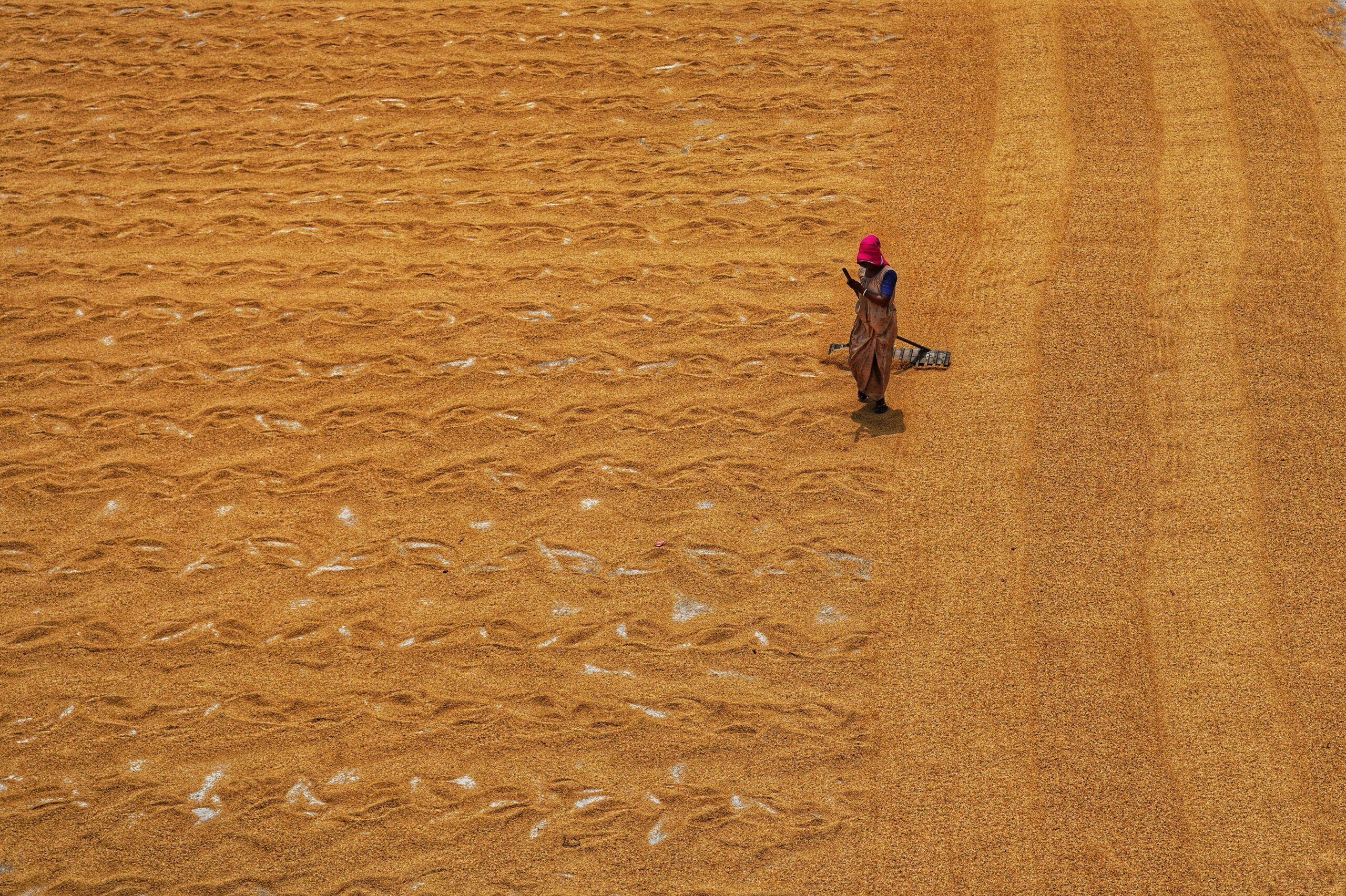
Photo by Dibakar Roy on Unsplash
Countries around the world are bracing for food price rises as a result of damage to harvests from record heat and lack of water, and the World Food Programme predicts that 50 million more people could be pushed into hunger by the “super El Niño” weather system currently developing.
It is within this context that the UN’s bi-annual talks on desertification have begun this week with a renewed sense of urgency at the 17th “conference of the parties” (Cop17 ) in Mongolia. Negotiators from almost 200 countries expected to attend the fortnight-long COP17 desertification summit, aimed at addressing a historic lack of investment in tackling land degradation and allocating more than $12bn (£8.9bn) to vulnerable countries to cope with the impacts of drought.
Yasmine Fouad, executive secretary of the UN Convention to Combat Desertification (UNCCD), said the negotiations, which began in Ulaanbaatar on 17 August, would “send a positive signal of multilateralism”.
Renewed recognition of the risks posed by drought driving accelerated action
At the core of the Cop17 talks, which will run until 28 August, will be the “operationalisation” of the Riyadh Global Drought Resilience Partnership, forged in 2024 under the leadership of Saudi Arabia. Under this fund and related initiatives, countries and institutions reportedly pledged $12bn over seven years to help 74 countries stricken by drought and the accompanying problem of land degradation.
The key aim is to put pledges of billions of dollars made two years ago into action through projects in the developing world.
While this amount is a fraction of what is needed – about $2.6tn cumulatively by the end of this decade, according to UNCCD estimates, to repair degraded land, halt desertification, protect against drought and restore soils – the pledges are considered a significant step forward.
Efforts aimed at restoring land and preventing drought have historically been poorly managed and badly funded, but according to Fouad that approach was changing rapidly as nations began to recognise the risk. “At the heart of our discussion is the topic of food security,” she said. “The more you work on restoring land, the more you have productive soil to ensure food security. That kind of narrative should be part of our finance [initiatives].” “More than 70 countries submitted their drought management plans, and we need to convert those plans into projects that would be implemented,” Fouad said.
Interventions could include overhauling irrigation systems to make them more efficient; replanting land with more drought-resistant crops; and improving rainwater storage facilities for farmers. All of the $12bn so far pledged is from the public sector, but the private sector is being looked at to secure the additional capital needed. Fouad said food companies, textile makers and others that are heavily reliant on water and crops should play a role.