Photo by Dear Sunflower
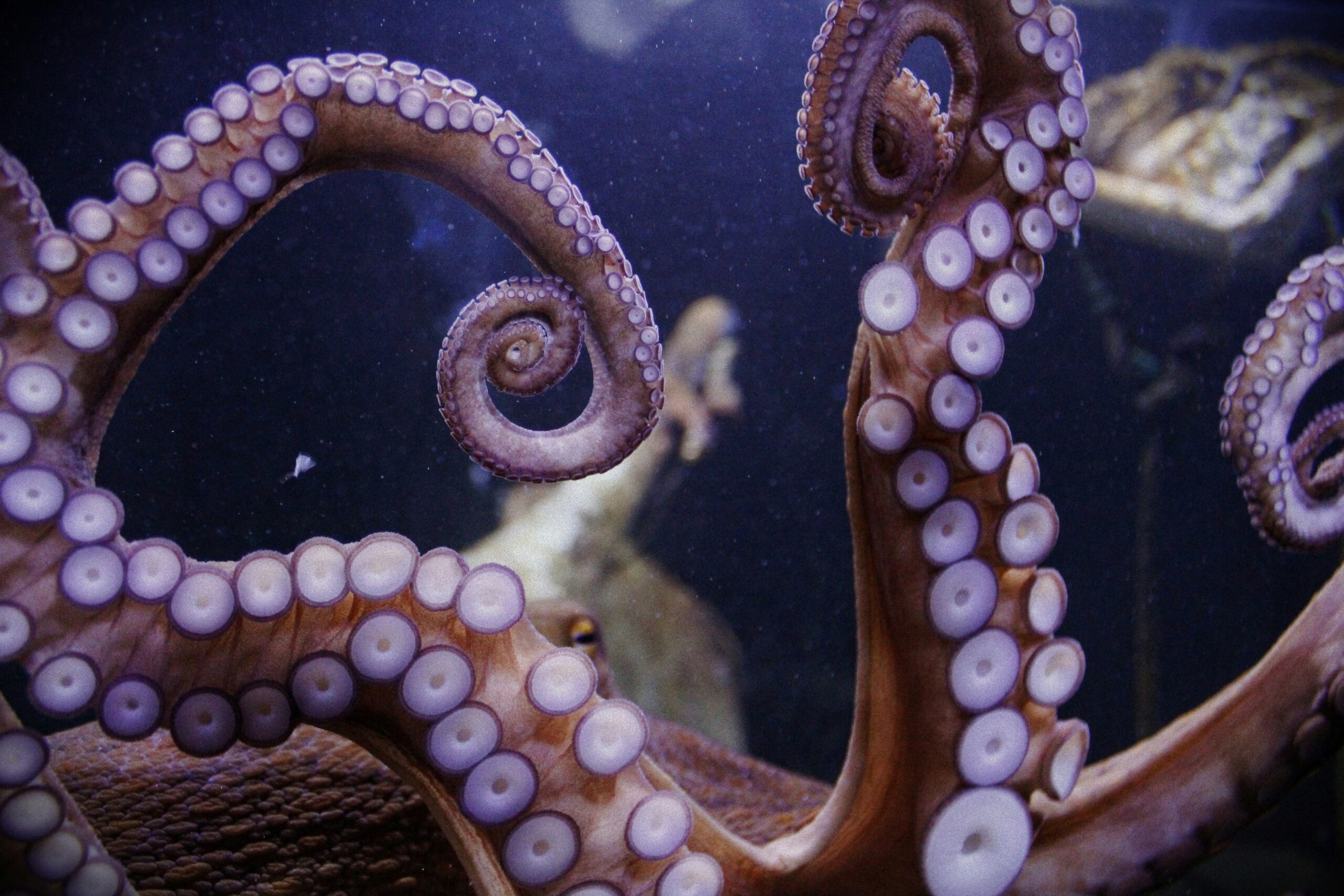
A dramatic surge in common octopus populations off the south-west coast of England has spread as far as Scotland and Wales, with sightings now reported across a range of coastal sites that would have been almost unthinkable just a few years ago. New findings from the Marine Biological Association (MBA) confirm that the bloom, the largest recorded in at least 75 years, is continuing into its second year, raising urgent questions about how warming seas are reshaping UK marine ecosystems, and triggering the first emergency fisheries regulation of its kind.
The common octopus (Octopus vulgaris) is native to UK waters but has historically been rare here, typically favouring the warmer seas of southern Europe and the Mediterranean. Only four major population blooms have been documented in the past 125 years, in 1899-1900, 1932-33 and 1950-51, and now from 2025 onwards. The current event, which accelerated from January 2025, appears to be at least as extensive as any previously recorded.
A bloom spreading north
The second major MBA study of the bloom – Fisheries Independent Estimates of Octopus Abundance and Behaviour, funded by Defra and conducted with the University of Plymouth – brings together scientific surveys, footage from Baited Underwater Remote Videos (BRUVs) and an extensive survey of recreational divers and snorkellers. Octopus have now been caught on both the south and north coasts of Devon and Cornwall, with sightings extending to Wales, Dorset, East Sussex and Scotland – a much wider geographic spread than any previous bloom. The study also confirmed successful breeding in UK waters during 2025, with eggs and juveniles observed in late spring and early summer – evidence that this is no longer simply a transient influx.
“It is pretty extraordinary,” Dr Bryce Stewart, Senior Research Fellow at the MBA and lead author of the study, told the Guardian. “We have had blooms before but everything I am seeing is telling me this is the biggest bloom we have seen, it is quite different. Now we have warmer waters much more suited to these animals, we are seeing a huge increase in numbers.”
Evidence from the first report, published in January 2026, suggests the population originated from breeding grounds near the Channel Islands and northern France, with ocean currents carrying juvenile octopus into UK waters. The absence of the cold winters that historically kept populations in check has proved critical. “If we got a really cold winter, it would probably really dent their populations,” Dr Stewart told the BBC. “But that hasn’t happened now for at least 15 years, we haven’t had the sort of cold winters that would kill off the octopus. The octopus definitely are now breeding in UK waters, which is quite new, and people are starting to see the juveniles, as well just little tiny ones. So, the whole circle of life is playing out now and that’s why I think this is a different bloom from what’s happened in the past. It seems like they’re probably here to stay now.”
Shellfish fisheries in crisis
The bloom’s impact on inshore fisheries has been severe. The first MBA report found that catch rates for brown crab, lobster and scallops fell by between 30% and 50% during 2025, largely due to octopus predation. Divers reported broken lobster claws on the seabed and observed octopus entering pots to consume trapped shellfish.
Will Jaycock, a third-generation lobster fisherman and Looe Harbour Commissioner, described the scale of the disruption. “This year the shellfish industry has been all but wiped out,” he told the BBC. “We are down by 90% to 100% some days and, on an absolute best day, you’re still 70% to 75% down.”
The long-term prognosis concerns Ian Perkes, of Ian Perkes Fish Merchants in Brixham. “These fish eat 6% to 8% of their bodyweight per day, so we’re talking about an estimate of 10,000kg of shellfish per day are being eaten by these octopus,” he said. “The experts say, at present, if the octopus were to disappear tomorrow, we’d be looking at eight to 10 years to return to the normal numbers.”
A new fishery and emergency regulation
The same bloom that has devastated shellfish landings has created an extraordinary commercial windfall for those who have adapted. Octopus catch volumes increased by 7,700% in 2025, and Brixham Fish Market recently sold a record 103 tonnes of octopus in a single day, valued at more than £500,000. Jaycock himself has made the switch. “They are absolutely right here. They’re thick on the seabed and, financially, it’s brilliant at the moment, there’s a huge export market for octopus,” he said. “Looe is the busiest it’s been since the fish market closed.”
Perkes observed the diverging fortunes across the fleet: “It’s devastating for the thoroughbred lobster fishermen but on the other side of the coin, they’re earning three or four times more money now with the octopus.” Dr Stewart was direct about the human cost of the division: “Some fishermen have had to sell their boats because of the impact on crab and lobster populations, while others are doing extremely well,” he told the Guardian.
The rush to fish octopus has itself prompted regulatory action. On 12 June, the Cornwall Inshore Fisheries and Conservation Authority (IFCA) voted nine votes to five to pass an emergency by-law prohibiting multihull vessels over 10 metres and monohull vessels over 12 metres from using pots to fish for octopus within the Cornwall IFCA district. The by-law is expected to come into force on 1 July for one year, subject to approval from the Secretary of State. Regulators warned that larger vessels deploying up to 2,000 pots were concentrating crabs and lobsters in the same areas and making them easier targets for octopus predation.
Sam Davis, Cornwall IFCA’s chief officer, said the measure would help “reduce the impact” of fishing on shellfish stocks. “Those vessels we are talking about are very capable, they can fish in all weathers, throughout the year and inside and outside of the six-mile limit. It’s reducing the impact of the pots that they are putting on the ground for octopus, on the crab and lobsters themselves. There is a lot more work to be done here, we need to move forwards to look at other ways of managing fishing effort that apply not just to the bigger vessels, but the smaller ones as well.”
An ecosystem in transition
The implications extend beyond fishing economics. Octopus are now providing a food source for seals, conger eels and Risso’s dolphins, reshaping predator-prey relationships along the south-west coast. “It is a shake-up of the whole ecosystem,” Dr Stewart said. The MBA is recommending expanded underwater video surveys, improved monitoring of fishing catches and a dedicated reporting app for divers and snorkellers to capture future events more effectively. Traditional trawl surveys, the study found, entirely failed to detect octopus during the bloom — a significant gap in existing monitoring infrastructure.
Professor Emma Sheehan of the University of Plymouth, whose long-term BRUV data helped establish the absence of Octopus vulgaris from the south-west coast prior to the bloom, said the underwater video monitoring had proved “an excellent non-destructive means of recording octopus abundance and behaviour.” Researchers now consider future blooms likely as the seas continue to warm, and Dr Stewart has called for fisheries management to plan accordingly: “We must plan for a future where these changes may become more frequent.”