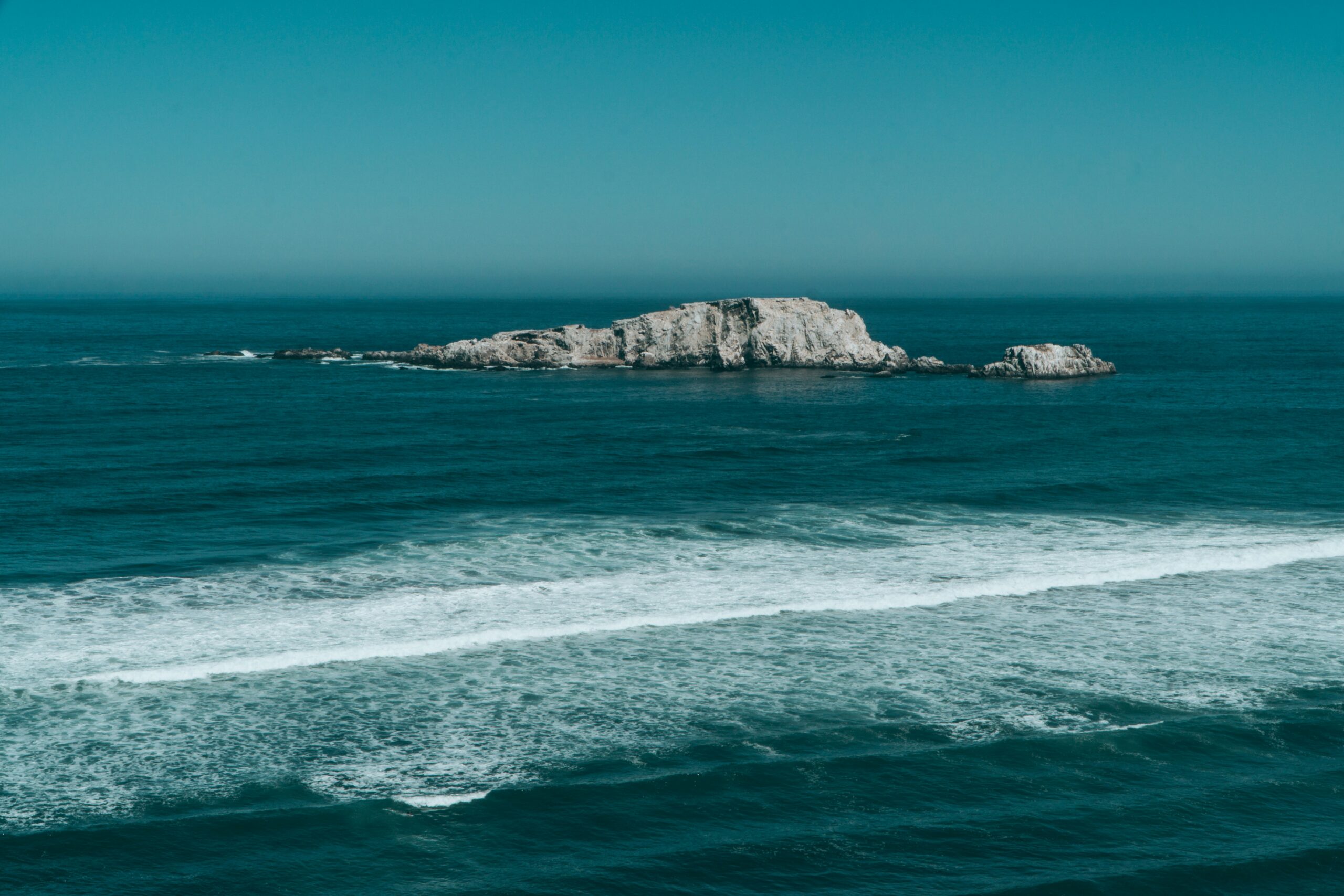
Photo by Cláudio Luiz Castro
Chilean President Gabriel Boric has signed a decree granting full protection to 360,000km² of waters surrounding the Juan Fernández Archipelago and the Nazca-Desventuradas Marine Park – one of his final acts before leaving office on 11 March. Once fully implemented, the designation will bring the total fully protected area in the region to 946,571km², making it the third largest fully protected marine area in the world, behind the Ross Sea and the Papahānaumokuākea Marine National Monument.
The move also means Chile now has nearly 54% of its exclusive economic zone under environmental protection, placing it among the five nations with the highest proportion of conserved marine territory globally, alongside French Polynesia and Panama.
Decades of community leadership
The designation did not originate in government. Over nearly two decades, the community of the Juan Fernández and Desventuradas islands, represented by the Organización Comunitaria Funcional Mar de Juan Fernández, led the effort to establish a network of protected waters first formalised in 2016 and 2018. The islanders have managed their iconic lobster fishery sustainably since 1890, and last year presented the Chilean government with a formal proposal to expand conservation across the archipelagos.
The fully protected areas prohibit all forms of extraction, including fishing and mining, and will safeguard habitat for whales, dolphins, endangered turtles, seabirds and fish species across this remote Pacific seascape. Environment Minister Maisa Rojas highlighted that the new parks protect ecosystems of “unique biodiversity” and “high endemism”, including the Juan Fernández fur seal, lobster, octopus and ancient corals on seamounts that serve as oases of biodiversity.
Julio Chamorro Solís, president of the Organización Comunitaria Funcional Mar de Juan Fernández, said: “For generations, our community has lived in harmony with the sea, relying on it for food, livelihoods, and identity. By expanding our marine protections, we ensure that future generations will inherit healthy oceans, thriving fisheries, and the cultural traditions that bind us to our home.”
Pablo Manríquez Angulo, mayor of Robinson Crusoe Island, added: “This commitment reflects the heart of our community. Expanding marine protections is not only about conserving biodiversity, it’s about safeguarding our culture, our traditions, and the future of our children. We are proud to have led the way in this globally significant contribution.”
Conservation partners welcome the decree
Blue Marine Foundation worked alongside Pew Bertarelli Ocean Legacy, Island Conservation and Fundación Patagonia Azul to support the community’s efforts. Dan Crockett, Executive Director of Blue Marine Foundation, said: “The community of Juan Fernández, president Gabriel Boric and the Chilean government are to be hugely congratulated for this legal designation. As the world advances towards 2030, fully protected areas of this scale are critically important. If every country could do what Chile has, the world would be able to effectively protect far more than 30% of the ocean by 2030.”
Max Bello, global MPA specialist at Blue Marine Foundation, described it as a “heart-warming moment” for local communities who had been rewarded “for their commitment and perseverance by the Chilean government. For the endemic marine species of the islands and their waters this represents a decisive win.”
A legacy of cross-party ambition
Unusually for a conservation milestone of this scale, the decree reflects ambition that has survived successive governments of opposing political orientations — beginning under President Michelle Bachelet, continuing under President Sebastián Piñera, and concluded by Boric hours before he left office.
Chile has been a strong supporter of the Kunming-Montreal Global Biodiversity Framework, the international agreement under which nations committed to protecting at least 30% of the world’s ocean by 2030 in order to halt and reverse biodiversity loss. With more than half its waters now fully protected, it has set a benchmark that few countries look likely to match.