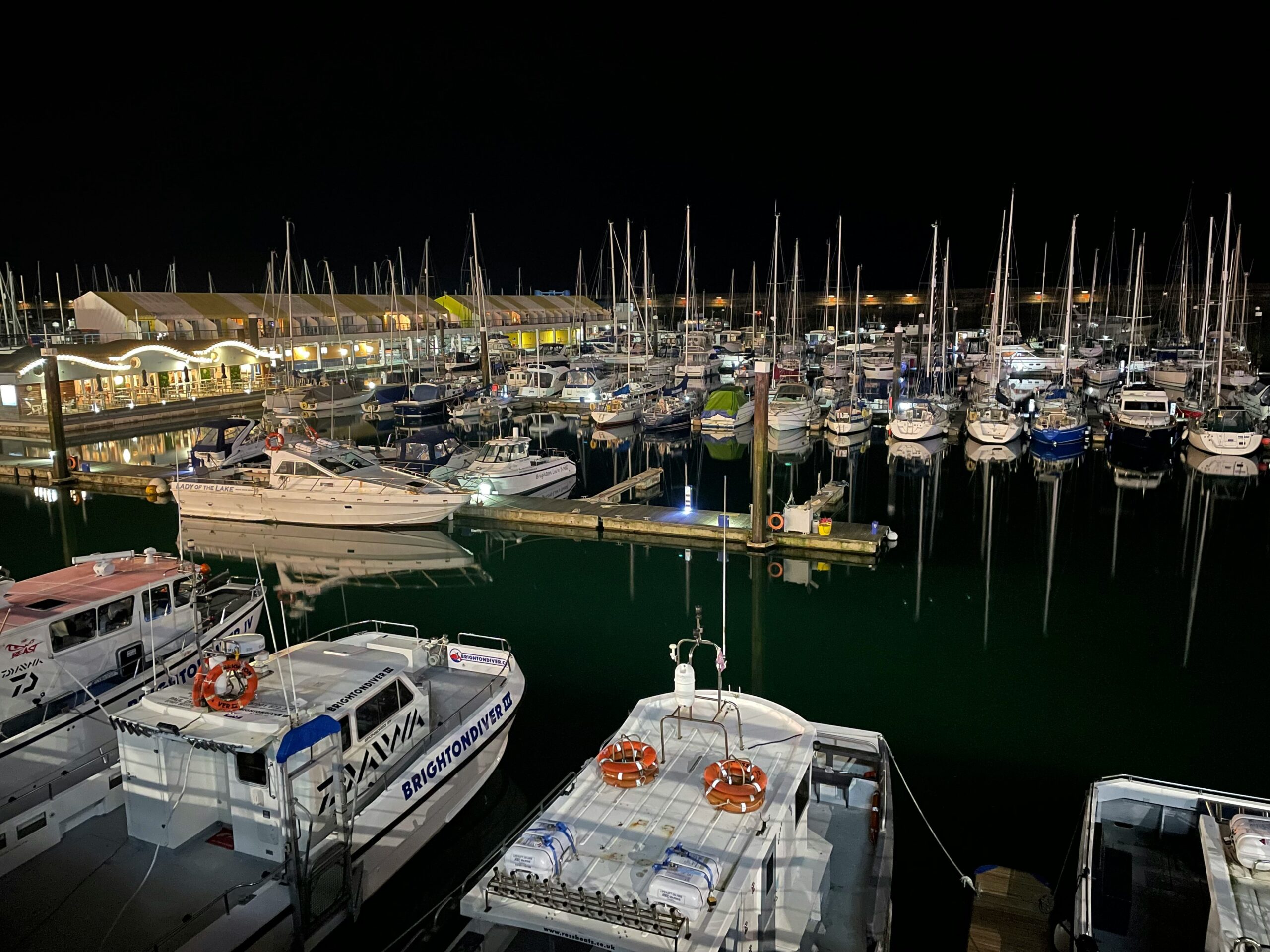
Photo by M S
Premier Marinas has applied for an interim one-year dredging licence for Brighton Marina after its previous ten-year permit was quashed last year following a successful legal challenge over the disposal of sediment within a Marine Conservation Zone.
The application, submitted to the Marine Management Organisation on 6 March, opened a 28-day public consultation period. Premier Marinas says the licence is essential to keep the marina operational while a longer-term solution is worked out.
A dispute three years in the making
The Beachy Head West Marine Conservation Zone, running from Brighton to Eastbourne, is designated for its chalk reef habitat, blue mussel beds and rare short-snouted seahorse population. Government reports describe it as containing “some of the best examples of chalk habitat in the South East region.” Brighton Marina’s dredging operation deposits sediment from the harbour entrance at the Rottingdean disposal site, which sits within the MCZ — and has done so for decades, pre-dating the zone’s designation.
When the MMO approved a new ten-year licence in May 2025, despite more than 1,500 public objections, it sparked immediate outrage. Chris Ward, MP for Brighton Kemptown and Peacehaven, said the decision “flies in the face of the local community’s views” and “directly undermines the MMO’s own remit to protect and enhance our precious marine environment,” vowing to take the matter to Parliament. Sussex Wildlife Trust called it “a dark day,” warning that pouring sludge into a protected site “makes a mockery of the government’s targets to improve the marine environment” and that fears had long existed that the sediment was smothering marine life including blue mussel beds, native oysters and short-snouted seahorses.
The MMO maintained it had reviewed the project thoroughly, consulting the public, experts and stakeholders, and found it compliant with the South Marine Plan. Premier Marinas similarly defended the process, noting that licences are “only granted by the MMO following a detailed assessment of the facts and their independent process confirming that works are compliant with current legislation.”
Sussex Wildlife Trust launched a judicial review in September 2025. Henri Brocklebank, the trust’s director of conservation, said: “Bold action is the only way to continue to fight for this protected area. Inaction will see the continued dumping of 100,000 tonnes of dredged sediment in our MCZ every year for the next 10 years — this is not acceptable.” Rowan Smith, senior associate solicitor at Leigh Day, which represented the trust, argued that “significant harm to this protected area resulting from the disposal could not be lawfully ruled out, because the Marine Management Organisation had failed to properly assess the impact.”
In November 2025, the MMO chose not to defend the challenge, accepting that it had concluded any adverse impacts were within acceptable limits “but did not consider whether the proposal triggered the need to avoid, minimise or mitigate the adverse impacts.” The licence was quashed. Brocklebank described the scale of what had been approved: “It’s 33,000 shipping containers worth of spoil — if that was on the South Downs everyone would lose it, but it’s at sea. It’s a really special, important, internationally rare habitat.”
The trust had mounted four separate legal challenges and remained “confident that all four challenges could have stood up in court.” It was the trust’s second successful judicial review defending marine designations, with Brocklebank warning the outcome has potential implications for how all 91 Marine Conservation Zones around England are managed in future.
Marina’s case for the interim licence
Premier Marinas maintains that dredging is a legal obligation, not a discretionary activity. Katie Sullivan, spokesperson for Brighton Marina, said: “As harbour authority, we have a legal duty to maintain safe navigational access to the marina. Maintenance dredging isn’t optional; it’s essential to ensuring vessels can enter and leave safely, and to ensure the marina continues to support local jobs and businesses.”
The company points out that the previous licence was quashed on procedural grounds only — the judgment did not conclude that dredging or dispersal at Rottingdean had caused environmental harm. Premier Marinas says the material is regularly sampled to confirm it is not harmful, and that the activity has historically operated within the same coastal sediment system. Local campaigners, however, have reported that the sediment creates “black, thick, slimy, petrochemically smelling sludge” in local rock pools.
Sullivan said the company was “mindful of local concerns” and committed to ensuring “the debate is based on evidence.” Premier Marinas has also confirmed that ongoing licensing uncertainty has already had material economic consequences, including redundancies.
What happens next
The interim application will go through the MMO’s full statutory process, including consultation with Natural England, Cefas and the Environment Agency. Sussex Wildlife Trust has made clear it expects any reassessment to properly examine ecological impacts. As Brocklebank put it: “Designation should mean protection, surely?”