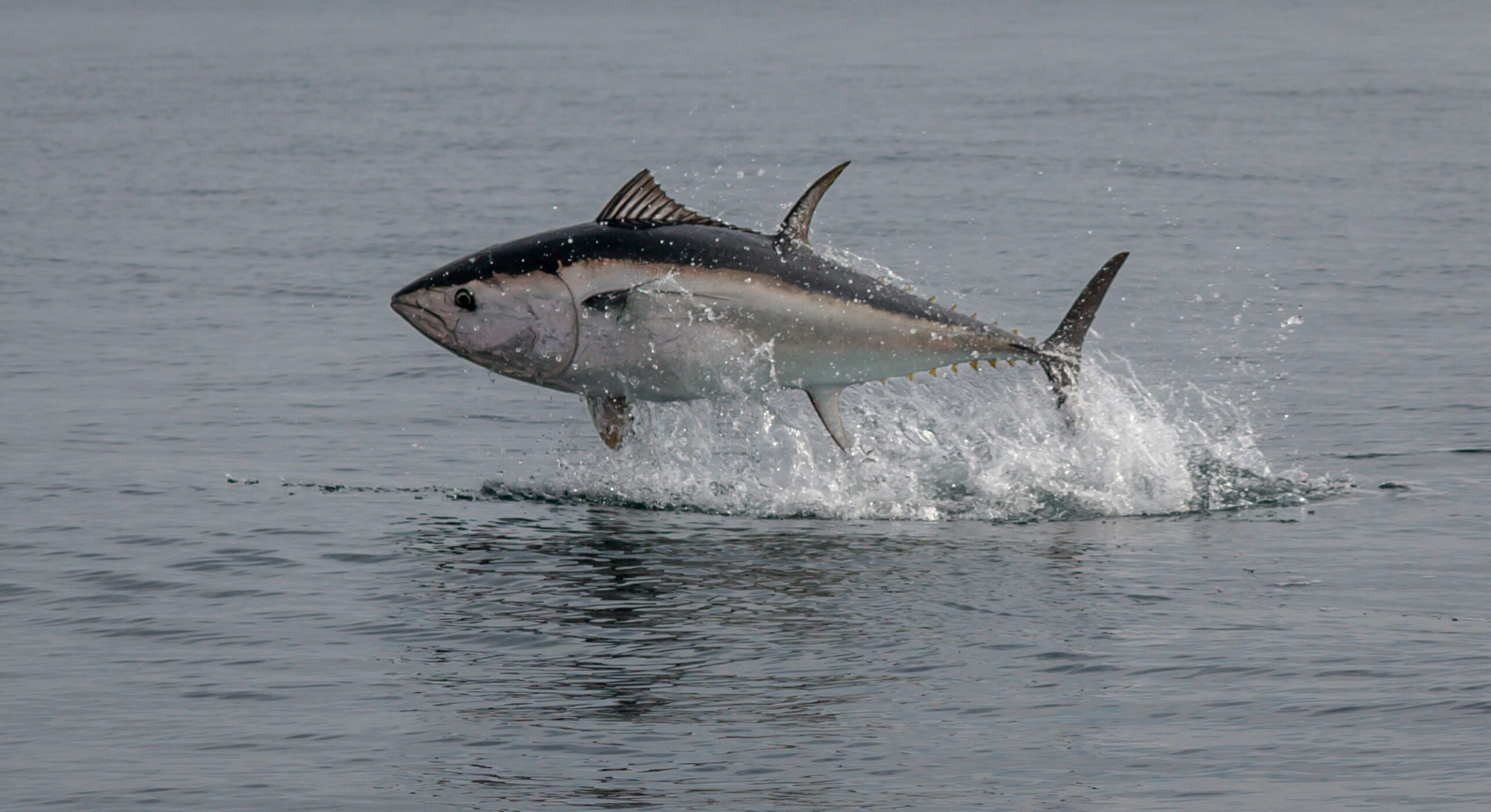
Photo by Ray Harrington
Atlantic bluefin tuna have recolonised the waters off north-east England for the first time in around 60 years, in a moment researchers are calling a genuine conservation success, albeit one with caveats. The milestone came in two stages: a historic catch off Whitby in mid-August, followed by a University of Exeter tagging expedition later that month confirming the species’ return in earnest.
A historic catch
On 17 August, the crew of the trawler The Dominator landed a 338kg bluefin tuna about 10 miles off Whitby — the first bluefin brought to shore on the Yorkshire coast since the 1960s, and the first landed for market from the North Sea since licences were issued in July. Crew member Jack Gardner, 28, said: “It jumped out of the water, we all just looked at each other in awe. We couldn’t believe that we had actually hooked into one.” A second bluefin of similar size followed the next day; both fish weighed around 320kg, roughly double the size of typical south-coast catches. Buyer Lance Varrell, of Hook to Plate, called them “good quality”, describing bluefin as “the Rolls Royce of the sea.”
Boom, bust, and back again
Scarborough and Whitby were world-famous “tunny” fishing destinations in the interwar years, drawing stars including John Wayne and Errol Flynn, with a British record of 386kg set at Whitby in 1933. Bluefin had been largely absent from the North Sea since the 1960s, fished, in the words of Rodney Forster, professor at the University of Hull, almost to the point of extinction in their Mediterranean spawning grounds through the 1970s and 80s.
A success story, with a caveat
Forster called the tuna’s reappearance “a success story about the management of fisheries” in Britain, noting minke whales and bottlenose dolphins had also increased around the North Sea over the past decade. Bryce Stewart, of the Marine Biological Association, called the return “fantastic”: “It seemed like an era that had gone for ever… normally if we lose a large species like this from an area of sea, they don’t come back.” But both scientists pointed to rising sea temperatures as a secondary factor, with Stewart explaining that warmer waters benefit the herring and sprat tuna feed on — consistent with how well-fed the Whitby fish were. Calum Duncan of the Marine Conservation Society welcomed the news while urging more action: “We’ve got a long, long way to go, but it’s really encouraging to have achieved this… we just need to do a lot more of it and need to ramp it up.”
The tagging picture
Later in August, a University of Exeter team tagged bluefin off Whitby for the first time — five fish according to Oceanographic Magazine, six according to the BBC. Each tag records light, temperature and depth for up to two years before transmitting data by satellite. Dr Lucy Hawkes, who leads the research, said: “Bluefin tuna is a native British species… The fact they’re back has been thanks to some careful and judicious management of fisheries,” adding that the UK’s current quota remains “really small” relative to overall stock. “We have no idea where they’ve come from – which is why tagging is so important.”
Since 2018, the Exeter team has tagged 165 bluefin off south-west England, Wales and Jersey; the Whitby fish are considerably larger and may prove genetically distinct. That tagging data feeds directly into ICCAT’s quota-setting process, meaning findings from Whitby could shape bluefin management well beyond Yorkshire.