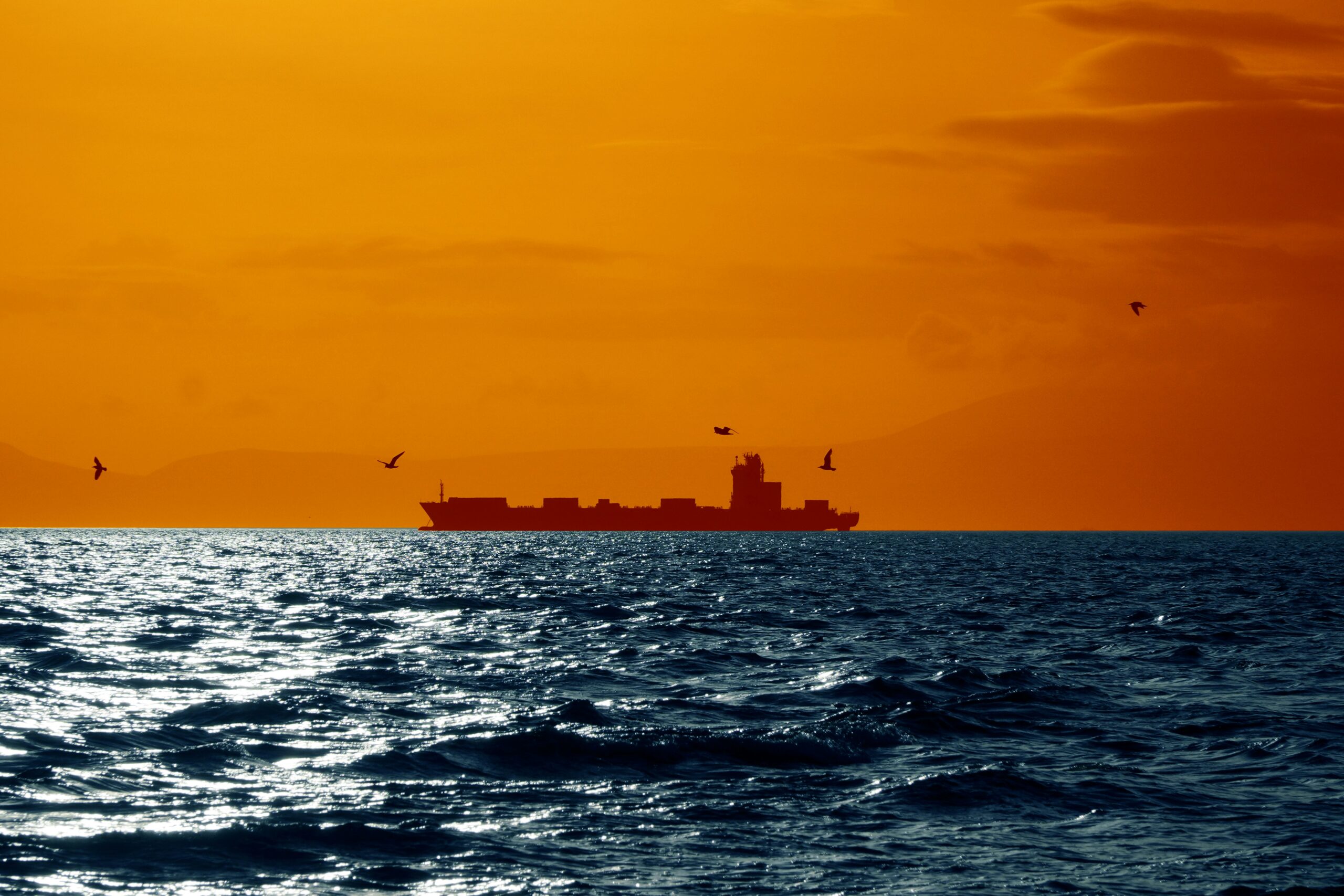
Photo by Jacob Fryer
Standing in a harbourmaster’s office on the Danish island of Bornholm, Tom Nielsen surveys walls lined with sepia photographs of a busier era. “We used to have 55 boats at one time, and now we have one left,” he told BBC Future. “You could walk across the harbour from one fishing boat to another. It was absolutely full.”
Commercial cod fishing around Bornholm has been banned since 2019 following the collapse of local stocks. In 2024, the island’s 141-year-old fishermen’s association closed down. Some experts believe it may take more than 400 years for the maritime environment to recover. Others think a full recovery may never happen.
The story of Bornholm is, in miniature, the story of the Baltic Sea itself — a body of water facing an environmental crisis so severe, and now so entangled with geopolitics, that those working to save it are struggling to keep hope alive.
The spreading dead zones
The core ecological problem is eutrophication. Nutrients from agricultural fertilisers and sewage drain into the Baltic from a catchment area four times the size of the sea itself, home to some 90 million people. These nutrients feed explosive algal blooms which, when they die, sink to the sea floor and decompose – consuming dissolved oxygen and leaving areas of seabed with little or no oxygen at all. The result is what marine scientists call dead zones.
“We have a situation in which 97% of the Baltic Sea is in some way affected by eutrophication,” Rüdiger Strempel, Executive Secretary of the Baltic Marine Environment Protection Commission (HELCOM), told BBC Future. “The ‘dead zones’ vary seasonally from roughly the size of Denmark to larger than Ireland.”
The Baltic’s physical characteristics make it uniquely vulnerable. It is the world’s largest brackish water body, with an average depth of just 54 metres compared to the Mediterranean’s 1,500 metres, and water can remain resident for up to 30 years before exchanging with the North Sea through the narrow Danish Straits. HELCOM’s own assessment covering 2016 to 2021 found no clear signs of recovery compared to the previous period, despite significant reductions in nutrient inputs since the 1980s.
“The Baltic is one of the most polluted sea areas in the world,” said Annamari Arrakoski-Engardt, CEO of Finland’s John Nurminen Foundation. “The main problem in the Baltic Sea is eutrophication.”
What was once a problem confined to deep water is now reaching the shore. Marine biologist Marie Helene Miller Birk, co-founder of Bornholm environmental education charity Ivandet, described an oxygen-depleted layer she calls a “corpse sheet”, a white film that smothers the sea floor, spreading into increasingly coastal areas. “Normally it’s out in the deep sea,” she said. “Now it’s getting more and more coastal. This is a new thing.”
The shadow fleet threat
Layered on top of the ecological crisis is a geopolitical one. Russia’s 2022 full-scale invasion of Ukraine gave rise to a shadow fleet of ageing, often poorly maintained tankers used to bypass Western sanctions and the oil price cap. Around 70 to 80 loaded oil tankers now depart from Russian Baltic ports every week, many operating without Western protection and indemnity insurance.
The dangers are not hypothetical. In December 2025, two Russian tankers broke apart during a storm in the Kerch Strait, spilling up to 8,500 metric tonnes of heavy fuel oil into the Black Sea. Cleanup costs were estimated at up to $73 million. Another disabled tanker had to be towed from the Baltic Sea by German maritime crews before it caused a spill. A full spill from a large tanker in the central Baltic, analysts calculate, would cause the region’s worst environmental disaster since the Second World War.
“It would be a disaster if any of the Russian shadow fleet of tankers hit rocks and caused a massive oil spill in the Baltic Sea,” Arrakoski-Engardt said. “That’s the biggest threat, and therefore our biggest problem.”
Ksenia Vakhrusheva, an analyst at environmental NGO Bellona, warned that shadow fleet tankers typically lack sufficient insurance to cover the costs of cleaning up a potential spill, meaning that in the event of a disaster it is unclear who would bear the environmental liability.
Strained cooperation
The political dimension runs deeper still. Russia has remained a member of HELCOM, the intergovernmental commission set up in the 1970s to protect the Baltic, but the other nine member states agreed after the invasion of Ukraine that “business as usual” was no longer possible. Formal meetings with Russia were suspended in favour of a “strategic pause.” Communication now happens only through written exchanges via HELCOM’s secretariat.
“Contacts have become more difficult and are greatly diminished,” Strempel said. “We are not getting any information from them, and there is no way we can monitor what they are doing.”
The Russian embassy in London, responding to the BBC’s reporting, said Russia remained committed to its obligations under the Helsinki Convention and that “environmental issues in the Baltic Sea should not be politicised,” adding that Western allegations about the shadow fleet were “largely based on hypothetical scenarios.”
Signs of progress and their limits
Progress has nonetheless been made. Nutrient inputs to the Baltic have fallen significantly since the 1980s, with HELCOM data showing total nitrogen inputs reduced by 12% and phosphorus by 28% between the reference period of 1997–2003 and 2020. Detected oil spills in the sea fell from 763 in 1989 to just 32 in 2023. Poland recently eliminated the last of its pollution hotspots.
The John Nurminen Foundation is working with Finnish farmers to apply gypsum treatments to fields, which locks phosphorus in the soil and has been shown to cut phosphorus runoff by 50%. The approach is now being tested across the wider Baltic region.
Grassroots organisations have sprung up across the shoreline nations. In 2024, the Save the Baltic Sea expedition completed a 6,000km, nine-month hike around the sea to raise public awareness. Ivandet, operating out of Bornholm’s former ice factory, runs marine education programmes for families, aiming to reconnect communities with a sea they can see but no longer quite understand.
Yet those closest to the water are clear-eyed about the scale of the challenge. “I couldn’t live without the hope that we can restore the Baltic Sea,” said Magnus Heide Andreasen, Ivandet co-founder and PhD student in marine ecology at Copenhagen’s National Institute of Aquatic Resources. “But it will not be the Baltic Sea we had 150 years ago.”