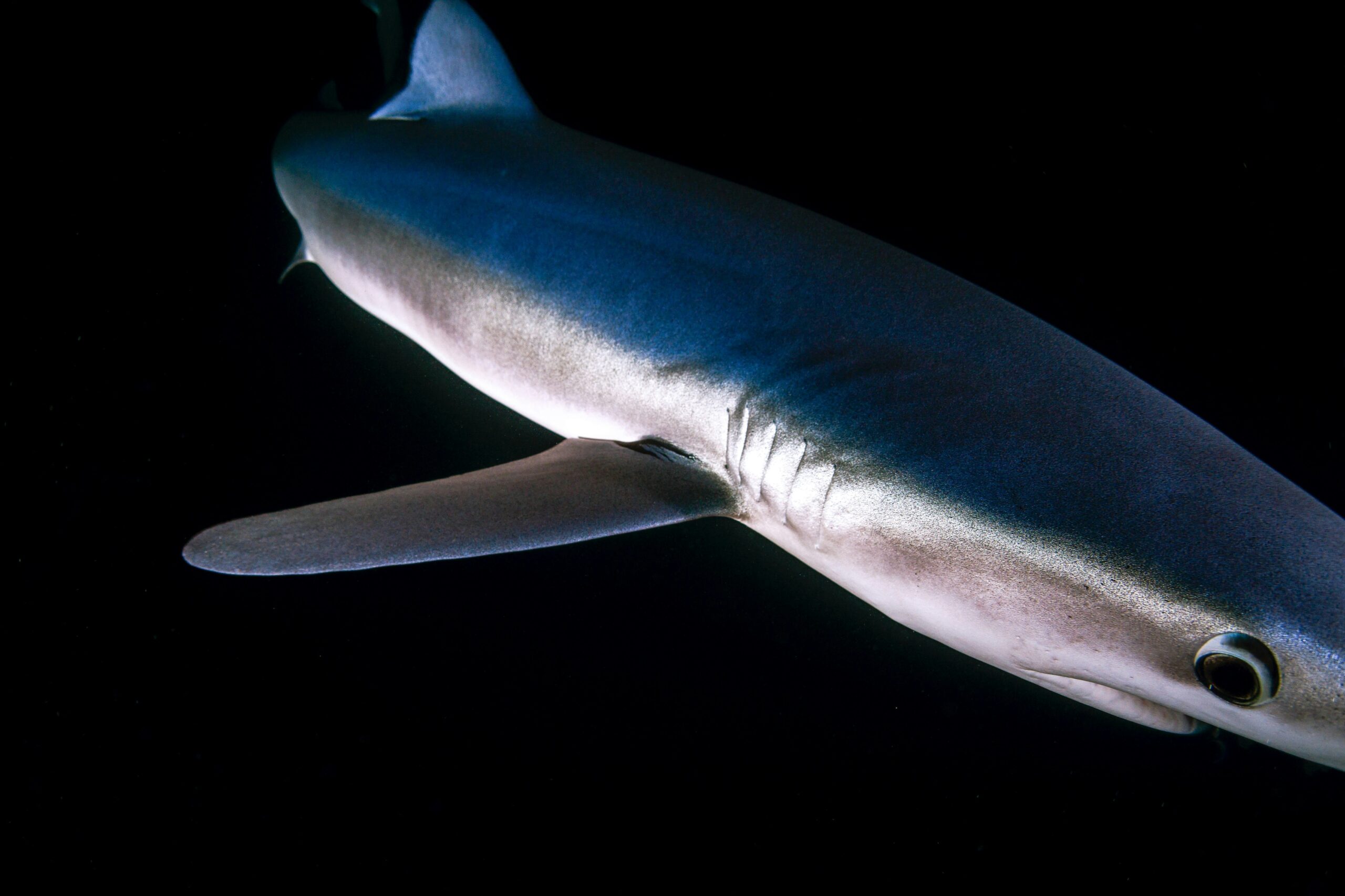
Photo by Juanma Ciemente Alloza
More than 40 species of shark live in British waters, yet scientists know remarkably little about most of them. A new three-year research project, led by Dr Lucy Hawkes and Dr Matthew Witt at the University of Exeter, aims to close that gap for three of the most vulnerable: porbeagle, tope and blue sharks. The lab was awarded almost £1m by Natural England’s Species Recovery Programme, working alongside the Marine Biological Association, the Angling Trust and the Pat Smith Database, a record of shark catches dating back to 1953.
The project leans heavily on the UK’s roughly three million recreational anglers, combining their catch data and sightings with satellite tagging and DNA sampling to work out where and when these sharks feed, mate and migrate. Forty tags costing £1,500 each will stay on the fish for around 45 days, revealing how well sharks survive after being caught and released, while a further 30 tags costing £4,500 each will track individual sharks for up to a year. Dr Francesco Garzon, a marine biologist on the team, said angler records were indispensable to the effort. “Even if all the shark researchers in England got together, we just couldn’t have the same level of records,” he said. “Angler records are an essential tool, helping us understand shark populations.” He added that direct commercial fishing and accidental bycatch remain the biggest threats facing UK sharks.
Writing for The Conversation, Witt described the value of that partnership in practice. In July he spent six days on a boat in the Channel trying to catch a thresher shark alongside two experienced anglers; fourteen trips later, the team succeeded, tagging the shark electronically for the first time in England and the north-east Atlantic. Witt argued anglers hold a kind of expertise that structured science often overlooks, built up over decades of watching seasonal arrivals and feeding behaviour on the water. “That’s insight scientists couldn’t gather alone,” he wrote. “It’s why the future of shark conservation runs through harbours and jetties as much as laboratories.”