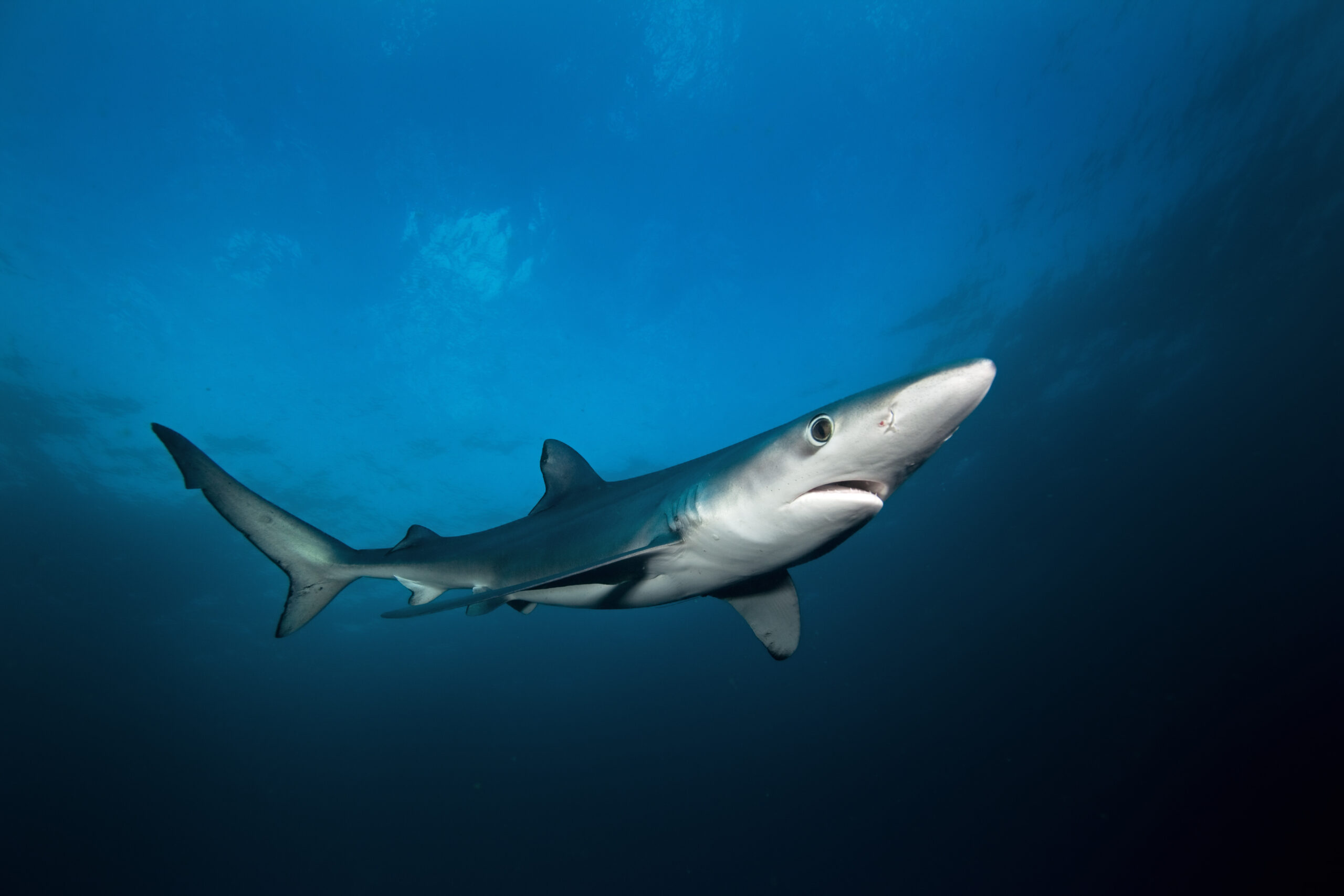
Photo Credit: AdobeStock
A team led by the University of Exeter has been awarded £939,434 by Natural England to run one of the most detailed investigations yet in English waters into three of the country’s most vulnerable shark species. The three-year project, which will run from July 2026 to March 2029, will focus on the blue shark, porbeagle and tope, following their movements around English waters and building the evidence base for future conservation decisions.
How the science will work
Researchers from Exeter, working with the Marine Biological Association, the Angling Trust and the Pat Smith Database, will deploy 75 electronic tags across the three species, including long-term satellite tags capable of tracking individuals for up to two years. Non-invasive ultrasound scanning will be used to identify pregnant sharks and locate potential pupping and nursery grounds, in place of blood sampling. Alongside the tagging, the team will conduct workshops and structured interviews with at least 45 anglers at hubs including Looe, Falmouth and Brightlingsea to draw on decades of catch records and local knowledge. The findings will feed into updated England Red List assessments for the species and produce best-practice guidance for anglers on improving post-release survival.
Why the species matter
The porbeagle is listed as Critically Endangered in the north-east Atlantic and the tope as Vulnerable in Europe, but relatively little is known about how either uses English waters. Dr Matthew Witt, Associate Professor at Exeter, said “coastal and open ocean sharks are among the most threatened groups of animals” and had significant ecological, cultural and economic value. The grant is part of Natural England’s Species Recovery Programme, which supports action for more than 350 threatened species under the government’s Wild Again initiative. Environment Secretary Emma Reynolds described it as the “largest-ever investment in species recovery”. A separate £230,000 award to the University of Portsmouth will fund complementary work on tope in the Solent, focusing on habitat use in inshore waters.
Sources:
- University of Exeter: scientists awarded nearly £1 million to protect England’s sharks
- BBC News: Shark scientists get £1m to help protect them
- Marine Biological Association: MBA to play key role in project to improve protection for sharks in English waters
- University of Portsmouth: Funding to protect one of the UK’s biggest sharks