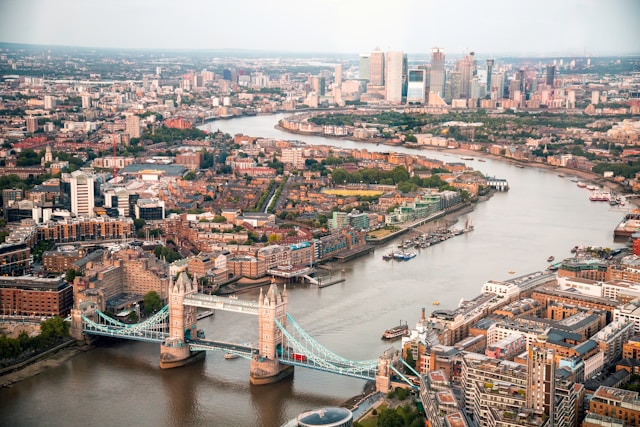
Photo credit: Sander Crombach
None of London’s rivers is currently rated as being in good condition. That is the backdrop to a ten-year plan launched by the Mayor of London to clean up the capital’s waterways, backed by £1.8 billion of partner funding over five years. The Clean Rivers and Waterways plan brings together more than 50 organisations, including boroughs, water companies, charities and community groups, in what City Hall calls a first for London.
The scale of the problem
London has more than 600 kilometres of rivers and waterways. City Hall says five times more sewage flowed into them in 2023 than the year before, and that the equivalent of 1.8 Olympic-sized swimming pools of sewage-polluted water is discharged every day from misconnected properties, where household waste pipes are wrongly plumbed into surface water drains. Sadiq Khan framed access to nature as a matter of social justice, arguing that the communities worst affected by polluted rivers are often those already facing the greatest environmental inequality.
What the plan funds
The strategy focuses on ten locations where work can deliver the fastest benefits, spanning catchments including the Brent, the Upper and Lower Lea, the Roding, the Wandle and the Lower Crane valley. Measures include cutting sewage pollution, restoring wetland habitat, installing natural drainage to reduce road runoff, and creating riverside spaces, with some waterways potentially made clean enough for swimming.
To start the plan, the Mayor has pledged a further £2.7 million over three years, on top of £13.55 million already committed. Of the new money, £1.25 million supports work around the River Wandle, Grand Union Canal, Lower Lea, Royal Docks and Lower Roding, and £1.48 million funds large-scale rewilding in Redbridge and Hillingdon. Thames Water is providing the bulk of the wider £1.8 billion, including a programme to tackle 26 sewage overflows on the Roding, Wandle, Lea and Brent, building on the Tideway tunnel now in operation.
Sources: