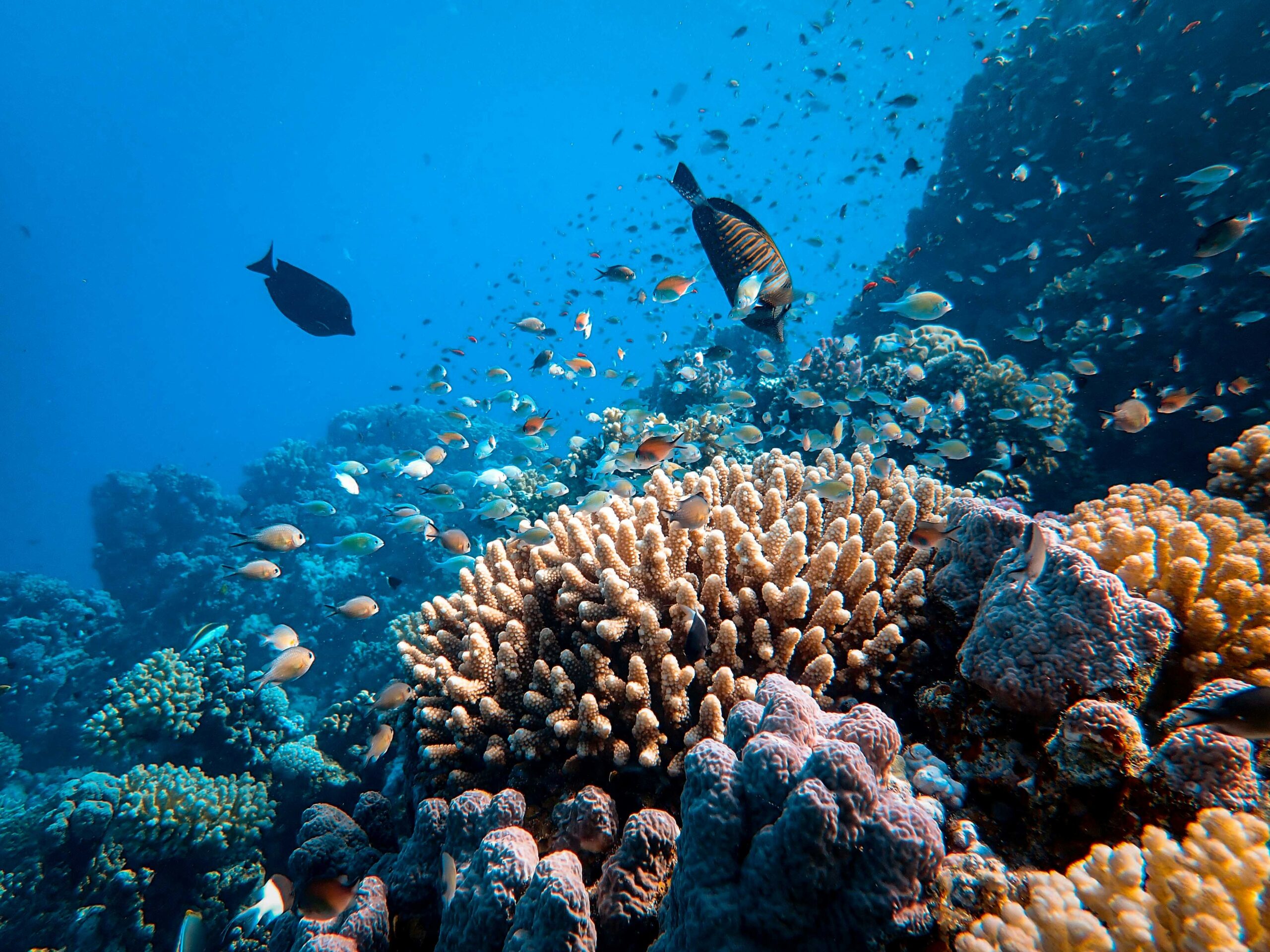
Photo by Francesco Ungaro
More than a tenth of the global ocean is now officially designated as protected or conserved, marking a historic milestone in the race to safeguard marine biodiversity. The figure — confirmed at 10.01% through the latest update to the World Database on Protected and Conserved Areas — represents a significant leap from the 8.6% recorded in 2024. Over the past two years alone, roughly five million square kilometres of ocean have been brought under formal protection, an area larger than the European Union.
But the milestone comes six years behind schedule — protecting 10% of the ocean was first agreed under the Aichi Biodiversity Targets, with a deadline of 2020 — and experts are clear that the headline figure obscures a more troubling reality.
Much of the 10% is not truly protected
According to MPAtlas, which tracks protection levels using the same underlying data, only around 3.3% of the ocean is fully or highly protected, meaning extraction and other destructive activities are entirely prohibited. In all other designated areas, fishing and other activities are often still permitted. That figure could fall further: Lance Morgan, president of the Marine Conservation Institute, told Mongabay that recent US decisions to allow commercial fishing in four large Pacific marine national monuments, previously highly protected, could reduce the fully and highly protected figure by 0.5 to 0.7%, if the decisions survive legal challenges.
The crossing of the 10% threshold was itself triggered by the addition of 284 marine or coastal protected areas in Indonesia and Thailand to the global database, alongside recent large-scale designations including the Tainui Atea MPA, which covers nearly the entirety of French Polynesia’s exclusive economic zone and is currently the world’s largest MPA. Australia also contributed through a 400% expansion of its Heard Island and McDonald Islands Commonwealth Marine Reserve in sub-Antarctic waters.
Neville Ash, Director of UNEP-WCMC, welcomed the progress while stressing what it does not yet measure: “We all depend on the ocean for our survival; over half of the world’s oxygen is produced by life in the ocean. The great strides at the national level over the past two years to protect more than 10% of the marine realm is therefore a moment for celebration. But reaching this milestone is a reminder of how much work there is still to do.”
In a direct communication to Mongabay, Ash sharpened the point: “Target 3 doesn’t just call for 30% of the ocean to be within PCAs. It calls for 30% of the ocean to be within effectively conserved and managed, and equitably governed, PCAs. Although we have good data on the extent of PCAs, the data on how effective they are is much more limited. It’s vital that this aspect of the target receives equal attention to coverage over the coming years.”
The OECM question
Adding complexity to the picture, the World Database on Protected Areas recently merged with a separate database tracking “other effective area-based conservation measures” — OECMs — areas not necessarily designated for conservation purposes but which may deliver environmental benefits. Some experts argue many OECMs fall short of conservation standards. OECMs currently account for only around 0.22% of total ocean protection, but their inclusion in the headline figure has generated debate about what genuinely counts.
Dan Crockett, executive director of the Blue Marine Foundation, told Mongabay that the quality of protection is what matters: “There’s a lot of different levels of protection, and different labels that people apply to ocean protection. The same applies for OECMs — they can both be a good or a bad thing. It all depends on what they do, the sort of activities that are permitted within them, and whether they are genuinely working to protect marine life.”
The high seas challenge
Under the Kunming-Montreal Global Biodiversity Framework, governments committed to protecting 30% of the Earth’s land and seas by 2030. An area approximately the size of the Indian Ocean still needs to be designated in the next four years to meet that target.
The most glaring gap remains the high seas, which cover more than 60% of the ocean’s surface and account for an estimated 95% of habitat on Earth by volume, yet where only around 1% of ocean currently falls within protected zones. The UN High Seas Treaty, which entered into force in January 2026, provides the first international mechanism specifically designed to establish protected areas in international waters — but Morgan cautioned that the process would be slow: “There’s quite a lot of hope, but it’s going to be a lengthy process. If that can all happen in the three to four years from 2027 to 2030, that would be great, but probably a pretty Herculean effort.”
IUCN Director General Dr Grethel Aguilar struck a more hopeful note, pointing to the breadth of actors involved: “Together, we have the skills, knowledge and partnerships to equitably and meaningfully conserve 30% of the Earth by 2030.”
The next official evaluation of global progress will come with the Protected Planet Report 2027. Morgan was blunt about the scale of the task: “If 2030 is really the deadline, we are extremely far behind. And we really need to up our efforts.”